News / National
Mnangagwa's 'friend to all' stance under fire
08 Feb 2026 at 21:10hrs |
1329 Views
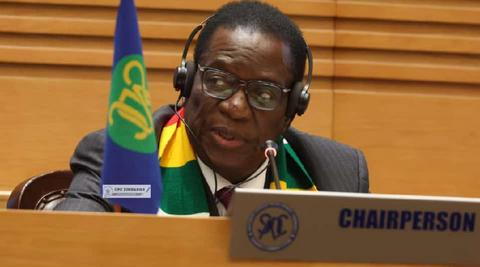
President Emmerson Mnangagwa's cautious approach to contentious global issues has drawn mixed reactions from analysts, with some arguing that his ambiguity risks weakening Zimbabwe's campaign for a non-permanent seat on the United Nations Security Council (UNSC) for the 2027–2028 term.
Zimbabwe formally launched its bid with Mnangagwa pledging to promote global peace, strengthen counterterrorism efforts and advance African interests on the international stage. The candidature has already secured endorsements from the Southern African Development Community (SADC), the African Union (AU) and several countries, including Venezuela, Russia, Cuba, Iran and Senegal.
However, questions have arisen following Mnangagwa's appearance at the World Government Summit held in the United Arab Emirates last week, where he declined to take a clear position on the political crisis in Venezuela. He was asked about a deadly United States military operation that last month toppled long-serving president Nicolás Maduro, after which interim leader Delcy Rodríguez aligned with several demands from Washington. US President Donald Trump has since said his administration was working "really well" with Rodríguez.
In response, Mnangagwa described Venezuela as "very far away from Zimbabwe" and spoke in broad, non-committal terms about developments he said he had only heard about, a stance that has sparked debate at home.
Political analyst Ibbo Mandaza said the remarks represented a missed diplomatic opportunity at a critical moment for Zimbabwe's UNSC bid.
"While the statement has been greeted, particularly in official circles in Zimbabwe, as logical given the Trump threat, it might have put paid to Zimbabwe's bid for a non-permanent seat in the UN," Mandaza said.
Another analyst, Reuben Mbofana, said clarity and decisiveness were important when a country is seeking a role on the Security Council.
"When a country is campaigning for a UNSC seat, it is effectively asking the international community to trust its judgment and leadership on global crises. Clear, thoughtful positions matter in that context," Mbofana said.
He added that Venezuela's backing of Zimbabwe's bid made the moment particularly sensitive.
"Given that Venezuela has supported Zimbabwe's bid, a more deliberate and diplomatic response could have reinforced mutual goodwill and shown that Zimbabwe takes its international partnerships seriously. Evasiveness, by contrast, risks sending the signal that Zimbabwe either lacks a firm foreign-policy stance or prefers to avoid difficult issues," he said.
Australian-based analyst Reason Wafawarova was more critical, arguing that the President's stance undermined Zimbabwe's historical ideological positioning.
"It sends a message that moral clarity is subordinate to diplomatic convenience — a message hardly befitting a nation that once stood at the forefront of liberation struggles and anti-hegemonic solidarity," he said. "Neutrality without principle is not wisdom; it is cynicism dressed up as realpolitik."
Politician Linda Masarira echoed similar concerns, saying every international platform should be treated as part of Zimbabwe's UNSC campaign.
"Ambiguity in such moments weakens Zimbabwe's ability to present itself as a principled, reliable and values-driven actor in global peace and security affairs," she said.
Others, however, defended Mnangagwa's approach as pragmatic. Analyst Rashweat Mukundu said the President's response reflected caution in an increasingly volatile global environment.
"The world is becoming a dangerous place and powerful countries such as the USA are often disrespectful of less powerful ones. President Mnangagwa's response was a self-preservation response," Mukundu said, adding that Zimbabwe had aligned itself with positions taken by multilateral bodies such as the UN, AU and SADC.
Former legislator Temba Mliswa also praised the President's handling of the issue, describing it as tactful and statesmanlike.
"President Mnangagwa's responses epitomised the tact and acumen of a genuine statesman," Mliswa wrote on Facebook, saying the President balanced intellect with simplicity, even if his style differed from that of his predecessor, Robert Mugabe.
If elected, Zimbabwe would join the UNSC's 10 rotating non-permanent members, which serve two-year terms alongside the council's five permanent members — China, France, Russia, the United Kingdom and the United States.
Zimbabwe formally launched its bid with Mnangagwa pledging to promote global peace, strengthen counterterrorism efforts and advance African interests on the international stage. The candidature has already secured endorsements from the Southern African Development Community (SADC), the African Union (AU) and several countries, including Venezuela, Russia, Cuba, Iran and Senegal.
However, questions have arisen following Mnangagwa's appearance at the World Government Summit held in the United Arab Emirates last week, where he declined to take a clear position on the political crisis in Venezuela. He was asked about a deadly United States military operation that last month toppled long-serving president Nicolás Maduro, after which interim leader Delcy Rodríguez aligned with several demands from Washington. US President Donald Trump has since said his administration was working "really well" with Rodríguez.
In response, Mnangagwa described Venezuela as "very far away from Zimbabwe" and spoke in broad, non-committal terms about developments he said he had only heard about, a stance that has sparked debate at home.
Political analyst Ibbo Mandaza said the remarks represented a missed diplomatic opportunity at a critical moment for Zimbabwe's UNSC bid.
"While the statement has been greeted, particularly in official circles in Zimbabwe, as logical given the Trump threat, it might have put paid to Zimbabwe's bid for a non-permanent seat in the UN," Mandaza said.
Another analyst, Reuben Mbofana, said clarity and decisiveness were important when a country is seeking a role on the Security Council.
"When a country is campaigning for a UNSC seat, it is effectively asking the international community to trust its judgment and leadership on global crises. Clear, thoughtful positions matter in that context," Mbofana said.
He added that Venezuela's backing of Zimbabwe's bid made the moment particularly sensitive.
Australian-based analyst Reason Wafawarova was more critical, arguing that the President's stance undermined Zimbabwe's historical ideological positioning.
"It sends a message that moral clarity is subordinate to diplomatic convenience — a message hardly befitting a nation that once stood at the forefront of liberation struggles and anti-hegemonic solidarity," he said. "Neutrality without principle is not wisdom; it is cynicism dressed up as realpolitik."
Politician Linda Masarira echoed similar concerns, saying every international platform should be treated as part of Zimbabwe's UNSC campaign.
"Ambiguity in such moments weakens Zimbabwe's ability to present itself as a principled, reliable and values-driven actor in global peace and security affairs," she said.
Others, however, defended Mnangagwa's approach as pragmatic. Analyst Rashweat Mukundu said the President's response reflected caution in an increasingly volatile global environment.
"The world is becoming a dangerous place and powerful countries such as the USA are often disrespectful of less powerful ones. President Mnangagwa's response was a self-preservation response," Mukundu said, adding that Zimbabwe had aligned itself with positions taken by multilateral bodies such as the UN, AU and SADC.
Former legislator Temba Mliswa also praised the President's handling of the issue, describing it as tactful and statesmanlike.
"President Mnangagwa's responses epitomised the tact and acumen of a genuine statesman," Mliswa wrote on Facebook, saying the President balanced intellect with simplicity, even if his style differed from that of his predecessor, Robert Mugabe.
If elected, Zimbabwe would join the UNSC's 10 rotating non-permanent members, which serve two-year terms alongside the council's five permanent members — China, France, Russia, the United Kingdom and the United States.
Source - The Standard
Join the discussion
Loading comments…





