News / National
From Mugabe to Mnangagwa: The unfinished coup and the curse of power
09 Feb 2026 at 21:09hrs |
0 Views
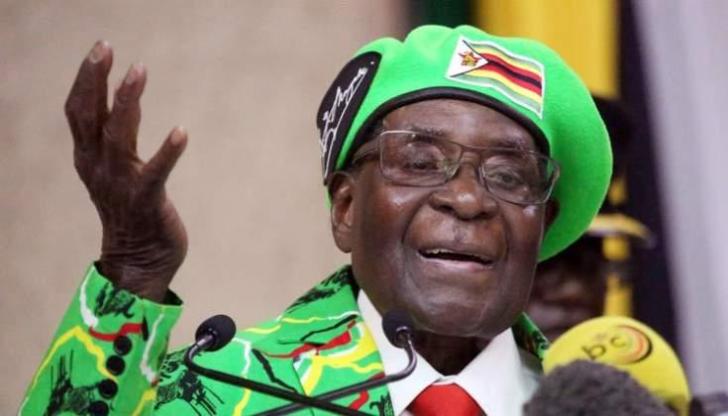
When President Emmerson Mnangagwa and his political cabal, backed by the military, removed the late former president Robert Mugabe in November 2017, the justification was clear: Mugabe had overstayed his welcome. After 37 years in power, Zimbabwe was mired in deep social and economic decay, and the ruling elite argued that the country could no longer afford leadership paralysis.
The military intervention — euphemistically branded Operation Restore Legacy — was carefully framed not as a coup, but as a corrective measure. In a nationally televised address, the late Major General Sibusiso Busi Moyo assured Zimbabweans that the army was merely targeting a clique of "criminals" around the President whose actions were allegedly causing suffering and threatening national stability. Left unchecked, he warned, the situation risked descending into violent conflict.
At the heart of the intervention was a power struggle within Zanu-PF. The military high command, dominated by liberation war veterans, accused the so-called G40 faction of hijacking the party, marginalising those with liberation credentials and undermining the revolution. Then army commander Constantino Chiwenga declared that the military was a major "stockholder" in the revolution and would not hesitate to take "corrective measures" to protect it.
A central grievance — though rarely stated explicitly — was the perception that First Lady Grace Mugabe was positioning herself to succeed her husband, exploiting Mugabe's frailty and exercising power without constitutional mandate. Mugabe's prolonged rule, widely seen as a disastrous failure marked by authoritarian repression, economic collapse and mass poverty, had become untenable.
Mnangagwa and his faction presented themselves as the antidote. They promised renewal, constitutionalism and respect for presidential term limits. According to Moyo, there was an understanding between Mnangagwa and Chiwenga that the former would serve a single term before handing over power. Chiwenga, confident of succession, supported the transition.
That understanding collapsed almost immediately.
No sooner had Mnangagwa settled into office than he began consolidating power. His supporters launched an aggressive "Mnangagwa 2023" campaign, signalling his intention to seek a second term. Many assumed that would be the end of the road — that after two terms, Mnangagwa would depart.
They underestimated him.
Mnangagwa did not represent change; he represented continuity. In that sense, he remained Mugabe's most faithful student. Having completed the remainder of Mugabe's term, his second term already meant he would be in power for more than a decade. Yet even that proved insufficient.
The old Mugabe syndrome resurfaced: the obsession with staying longer.
The pursuit of presidential term extension — euphemistically dressed up as "tenure elongation" — has since emerged as Mnangagwa's new political project. It is not uniquely Zimbabwean. It is a continental disease that has infected African politics for decades, undermining democratic consolidation and constitutionalism.
Across sub-Saharan Africa, presidents have amended, abolished or creatively reinterpreted term limits to entrench themselves in power. Despite widespread public support for two-term limits, incumbents routinely manipulate legal frameworks to prolong their rule — often at the cost of stability, institutional credibility and democratic norms.
Zimbabwe's tragedy is that the 2017 coup, sold as a reset, merely replaced one overstaying ruler with another in waiting. The promise to end Mugabe's elongated rule was honoured in form, but betrayed in substance. What was interrupted in 2017 was not authoritarianism itself — only its occupant.
History, it seems, was not overturned. It was postponed.
The military intervention — euphemistically branded Operation Restore Legacy — was carefully framed not as a coup, but as a corrective measure. In a nationally televised address, the late Major General Sibusiso Busi Moyo assured Zimbabweans that the army was merely targeting a clique of "criminals" around the President whose actions were allegedly causing suffering and threatening national stability. Left unchecked, he warned, the situation risked descending into violent conflict.
At the heart of the intervention was a power struggle within Zanu-PF. The military high command, dominated by liberation war veterans, accused the so-called G40 faction of hijacking the party, marginalising those with liberation credentials and undermining the revolution. Then army commander Constantino Chiwenga declared that the military was a major "stockholder" in the revolution and would not hesitate to take "corrective measures" to protect it.
A central grievance — though rarely stated explicitly — was the perception that First Lady Grace Mugabe was positioning herself to succeed her husband, exploiting Mugabe's frailty and exercising power without constitutional mandate. Mugabe's prolonged rule, widely seen as a disastrous failure marked by authoritarian repression, economic collapse and mass poverty, had become untenable.
Mnangagwa and his faction presented themselves as the antidote. They promised renewal, constitutionalism and respect for presidential term limits. According to Moyo, there was an understanding between Mnangagwa and Chiwenga that the former would serve a single term before handing over power. Chiwenga, confident of succession, supported the transition.
That understanding collapsed almost immediately.
No sooner had Mnangagwa settled into office than he began consolidating power. His supporters launched an aggressive "Mnangagwa 2023" campaign, signalling his intention to seek a second term. Many assumed that would be the end of the road — that after two terms, Mnangagwa would depart.
Mnangagwa did not represent change; he represented continuity. In that sense, he remained Mugabe's most faithful student. Having completed the remainder of Mugabe's term, his second term already meant he would be in power for more than a decade. Yet even that proved insufficient.
The old Mugabe syndrome resurfaced: the obsession with staying longer.
The pursuit of presidential term extension — euphemistically dressed up as "tenure elongation" — has since emerged as Mnangagwa's new political project. It is not uniquely Zimbabwean. It is a continental disease that has infected African politics for decades, undermining democratic consolidation and constitutionalism.
Across sub-Saharan Africa, presidents have amended, abolished or creatively reinterpreted term limits to entrench themselves in power. Despite widespread public support for two-term limits, incumbents routinely manipulate legal frameworks to prolong their rule — often at the cost of stability, institutional credibility and democratic norms.
Zimbabwe's tragedy is that the 2017 coup, sold as a reset, merely replaced one overstaying ruler with another in waiting. The promise to end Mugabe's elongated rule was honoured in form, but betrayed in substance. What was interrupted in 2017 was not authoritarianism itself — only its occupant.
History, it seems, was not overturned. It was postponed.
Source - online
Join the discussion
Loading comments…


