News / National
BCC allays fears over discoloured tap water
10 Feb 2026 at 19:07hrs |
0 Views
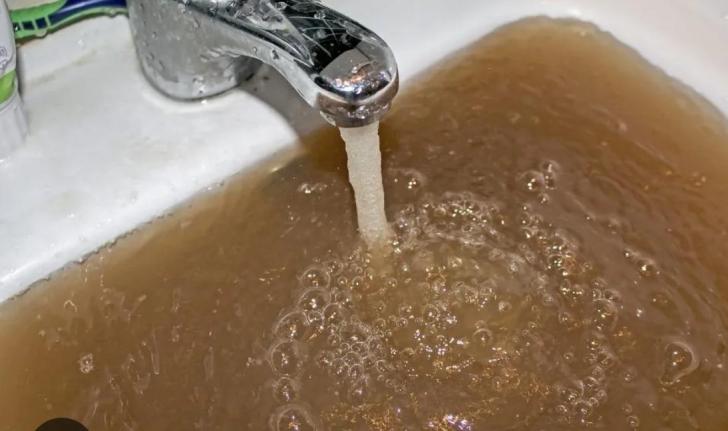
Bulawayo residents have raised alarms over brownish tap water and unusual odours in several suburbs, prompting the Bulawayo City Council (BCC) to respond, attributing the issue to increased turbidity in raw water from Umzingwane Dam following recent heavy rains.
In a statement, Bulawayo Town Clerk Christopher Dube said the council had received numerous complaints but reassured residents that, despite its unpleasant appearance, the water remained largely safe for domestic use.
"Our monitoring and laboratory tests at the treatment plants show that most chemical parameters, including pH, conductivity and alkalinity, are within acceptable limits," Mr Dube said.
He explained that heavy rainfall had increased turbidity in the dam, making it harder for treatment processes like sedimentation and sludge removal to work efficiently. Residual sediments can move through the distribution system, causing visible discolouration and occasional odours at consumers' taps.
To address the problem, the council said it had intensified monitoring of the distribution system, begun flushing affected pipelines, and improved sludge removal processes at the treatment works. Additional equipment and spare parts are also being procured to enhance plant efficiency during high-turbidity periods.
Bulawayo United Residents Association (BURA) chairperson Winos Dube welcomed the explanation but urged the council to treat the situation as a genuine emergency. "Water is life, and any change in its quality naturally creates fear among residents. We urge communities to remain vigilant and report any water-based issues urgently," he said.
The discolouration has also forced many families to spend extra on bottled water. Mr Dube emphasised the importance of communication, saying residents need to know what is happening, how long it will last, and what precautions to take.
Bulawayo has long struggled with water supply challenges due to its semi-arid climate and reliance on a limited number of dams. Rainy season inflows often carry silt and organic matter into reservoirs, increasing turbidity and straining ageing treatment infrastructure. Dry spells frequently lead to water shortages and rationing.
Environmental experts warn that climate change, catchment degradation, and rapid urban expansion have worsened the situation, highlighting the urgent need to modernise water treatment facilities. A local health practitioner advised households to boil or disinfect water if in doubt and avoid using visibly dirty water for drinking or preparing infant food.
Civic groups have renewed calls for long-term investments, including the delayed Lake Gwayi–Shangani project, rehabilitation of ageing pipelines, and adoption of modern filtration technologies, to ensure consistent access to safe and clean water in Bulawayo.
In a statement, Bulawayo Town Clerk Christopher Dube said the council had received numerous complaints but reassured residents that, despite its unpleasant appearance, the water remained largely safe for domestic use.
"Our monitoring and laboratory tests at the treatment plants show that most chemical parameters, including pH, conductivity and alkalinity, are within acceptable limits," Mr Dube said.
He explained that heavy rainfall had increased turbidity in the dam, making it harder for treatment processes like sedimentation and sludge removal to work efficiently. Residual sediments can move through the distribution system, causing visible discolouration and occasional odours at consumers' taps.
To address the problem, the council said it had intensified monitoring of the distribution system, begun flushing affected pipelines, and improved sludge removal processes at the treatment works. Additional equipment and spare parts are also being procured to enhance plant efficiency during high-turbidity periods.
Bulawayo United Residents Association (BURA) chairperson Winos Dube welcomed the explanation but urged the council to treat the situation as a genuine emergency. "Water is life, and any change in its quality naturally creates fear among residents. We urge communities to remain vigilant and report any water-based issues urgently," he said.
The discolouration has also forced many families to spend extra on bottled water. Mr Dube emphasised the importance of communication, saying residents need to know what is happening, how long it will last, and what precautions to take.
Bulawayo has long struggled with water supply challenges due to its semi-arid climate and reliance on a limited number of dams. Rainy season inflows often carry silt and organic matter into reservoirs, increasing turbidity and straining ageing treatment infrastructure. Dry spells frequently lead to water shortages and rationing.
Environmental experts warn that climate change, catchment degradation, and rapid urban expansion have worsened the situation, highlighting the urgent need to modernise water treatment facilities. A local health practitioner advised households to boil or disinfect water if in doubt and avoid using visibly dirty water for drinking or preparing infant food.
Civic groups have renewed calls for long-term investments, including the delayed Lake Gwayi–Shangani project, rehabilitation of ageing pipelines, and adoption of modern filtration technologies, to ensure consistent access to safe and clean water in Bulawayo.
Source - The Chronicle
Join the discussion
Loading comments…


