News / National
Mangwana defends plan for Parliament to elect President
12 Feb 2026 at 08:47hrs |
1050 Views
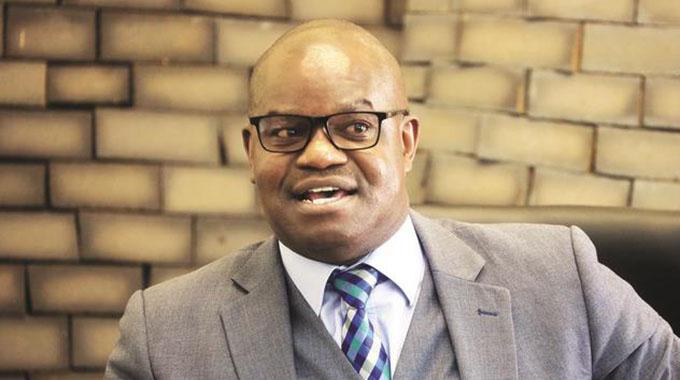
Permanent Secretary for Information, Publicity and Broadcasting Services Ndavaningi Mangwana has defended proposals to scrap Zimbabwe's direct presidential vote, arguing that electing a Head of State through Parliament is consistent with democratic practice in countries such as South Africa and Botswana.
Mangwana's remarks follow Cabinet's approval on Tuesday of a draft Constitutional Amendment Bill that seeks to extend presidential and parliamentary terms from five to seven years.
Among its most significant proposals is the removal of the current system in which the President is elected by popular vote. Under the proposed changes, the President would instead be chosen by Members of Parliament.
Writing on X, Mangwana said critics of the proposal were applying double standards, noting that Botswana and South Africa — often praised for stability and democratic governance — use parliamentary systems to elect their presidents.
"Botswana, lauded for its stability and governance, elects its president not by direct popular vote, but through its Parliament," Mangwana wrote.
"South Africa, with its world-celebrated constitution, uses the exact same method: its president is chosen by the National Assembly.
"Yet, when Zimbabwe discusses moving toward a similar parliamentary-based system, the very same commentators who praise Botswana and South Africa suddenly decry it as ‘undemocratic'.
"The mechanism is identical. The reaction is not. The inconsistency speaks volumes about perception, narrative, and perhaps, a different set of rules for different players."
The proposed amendment has already sparked debate, with critics arguing that changing the mode of electing the President could weaken direct citizen participation in choosing the country's leader.
President Emmerson Mnangagwa's spokesperson, George Charamba, also weighed in on the matter, suggesting that direct presidential elections under the first-past-the-post system often trigger political tensions and violence in parts of Africa.
"HAS ANYONE POSED TO REFLECT: that our electoral politics generate polarising DISPUTES at the level of electing a President?" Charamba said.
"Not just in Zimbabwe, but also in the Region, most notably in Mozambique, Tanzania and Uganda.
"The proposed amendment now means that level no longer is a flashpoint of our electoral politics, to the extent the President may be voted by Parliament, and to the extent the fate of the nation now gets decided at a more dispersed level to do with contestation at parliamentary seat level.
"Also we will not have persons who waste the Nation's time by declaring themselves presidential candidates when they have nil following, party machinery or parliamentary representation."
The draft Bill is expected to be tabled before Parliament for debate. If passed, it would mark one of the most significant constitutional shifts since the adoption of the 2013 Constitution, fundamentally altering how Zimbabwe selects its Head of State and potentially reshaping the country's electoral landscape.
Mangwana's remarks follow Cabinet's approval on Tuesday of a draft Constitutional Amendment Bill that seeks to extend presidential and parliamentary terms from five to seven years.
Among its most significant proposals is the removal of the current system in which the President is elected by popular vote. Under the proposed changes, the President would instead be chosen by Members of Parliament.
Writing on X, Mangwana said critics of the proposal were applying double standards, noting that Botswana and South Africa — often praised for stability and democratic governance — use parliamentary systems to elect their presidents.
"Botswana, lauded for its stability and governance, elects its president not by direct popular vote, but through its Parliament," Mangwana wrote.
"South Africa, with its world-celebrated constitution, uses the exact same method: its president is chosen by the National Assembly.
"Yet, when Zimbabwe discusses moving toward a similar parliamentary-based system, the very same commentators who praise Botswana and South Africa suddenly decry it as ‘undemocratic'.
"The mechanism is identical. The reaction is not. The inconsistency speaks volumes about perception, narrative, and perhaps, a different set of rules for different players."
The proposed amendment has already sparked debate, with critics arguing that changing the mode of electing the President could weaken direct citizen participation in choosing the country's leader.
President Emmerson Mnangagwa's spokesperson, George Charamba, also weighed in on the matter, suggesting that direct presidential elections under the first-past-the-post system often trigger political tensions and violence in parts of Africa.
"HAS ANYONE POSED TO REFLECT: that our electoral politics generate polarising DISPUTES at the level of electing a President?" Charamba said.
"Not just in Zimbabwe, but also in the Region, most notably in Mozambique, Tanzania and Uganda.
"The proposed amendment now means that level no longer is a flashpoint of our electoral politics, to the extent the President may be voted by Parliament, and to the extent the fate of the nation now gets decided at a more dispersed level to do with contestation at parliamentary seat level.
"Also we will not have persons who waste the Nation's time by declaring themselves presidential candidates when they have nil following, party machinery or parliamentary representation."
The draft Bill is expected to be tabled before Parliament for debate. If passed, it would mark one of the most significant constitutional shifts since the adoption of the 2013 Constitution, fundamentally altering how Zimbabwe selects its Head of State and potentially reshaping the country's electoral landscape.
Source - Pindula
Join the discussion
Loading comments…




