News / National
Zimbabwe amending election cycle not term limits
20 Feb 2026 at 07:13hrs |
0 Views
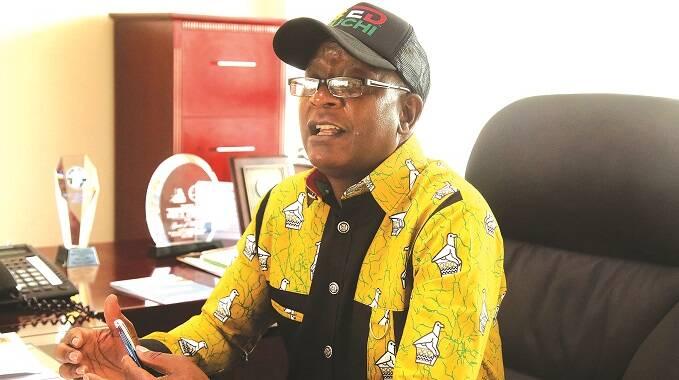
Justice, Legal and Parliamentary Affairs Minister Ziyambi Ziyambi has defended the Constitution of Zimbabwe Amendment Bill (No. 3), saying it seeks to extend election cycles - not presidential term limits - and therefore does not require a national referendum.
Speaking during an interactive meeting with journalists in Harare yesterday, Minister Ziyambi said Sections 91(2) and 328 of the Constitution, which govern presidential term limits, remain unchanged under the proposed amendments.
"The Bill elongates the electoral cycle from five to seven years," he said. "That's all it's doing — to elongate the election cycle from five to seven years for everyone, from councillors to the President. It's not specific to a person. It's the office of the President."
Section 91(2) of the Constitution states that a person is disqualified from election as President or appointment as Vice-President if he or she has already held office as President for two terms, whether continuous or not, with three or more years' service deemed a full term.
Minister Ziyambi emphasised that the Bill does not seek to amend that provision or Section 328(7), which also relates to term limits. He said any amendment to those sections would require a referendum, but the current Bill only proposes changes to Section 95 and related clauses governing election cycles.
"In essence, we elected to uphold the Presidential term limit in its entirety, refraining from any alteration to section 91(2) or any facet of section 328, particularly subsection (7)," he said.
He noted that in 2007, Government reduced the presidential election cycle from six to five years to harmonise it with parliamentary elections without holding a referendum.
According to Minister Ziyambi, referendums are only required for amendments affecting Chapter 4 (Declaration of Rights), Chapter 16 (Agricultural Land), and Section 328 itself, as provided for under Section 328(6) and (9) of the Constitution.
"These assertions are profoundly misguided and demand unequivocal repudiation," he said, dismissing claims that the Bill necessitates a referendum.
He further argued that even if Parliament were to extend presidential term limits to three terms, such a change would not require a referendum, although it would not benefit the incumbent President.
Minister Ziyambi said the proposed extension of election cycles was partly informed by the need to achieve Vision 2030 targets, which he said were affected by a two-year slowdown caused by the Covid-19 pandemic.
He maintained that Section 95(2) deals with the duration of an election cycle rather than term limits.
"In this light, section 95(2)(b) establishes a standardised duration for the presidency as an enduring institution, ensuring administrative continuity and a rhythmic five-year electoral cadence without imposing cumulative constraints on incumbents," he said.
On proposals for the election of the President by Parliament, Minister Ziyambi said the move would promote national cohesion and shield the office from divisive political contestation.
He cited countries such as South Africa and Botswana as examples where presidents are elected by Parliament, as well as established democracies including United Kingdom, Germany and United States, which he said use indirect electoral systems.
He added that direct presidential elections had been a source of tension in some countries, citing recent developments in Mozambique and Tanzania.
Reflecting on Zimbabwe's liberation history, Minister Ziyambi said the armed struggle was primarily about reclaiming land and restoring rights rather than establishing universal suffrage as its sole objective.
"We went to war because the coloniser took our land and our rights and we wanted to liberate ourselves from the coloniser so that we can govern and decide how we govern," he said, noting that from 1980 to 1990 Zimbabwe did not hold direct presidential elections.
The Bill is expected to be debated in Parliament amid ongoing public discussion over its constitutional implications.
Speaking during an interactive meeting with journalists in Harare yesterday, Minister Ziyambi said Sections 91(2) and 328 of the Constitution, which govern presidential term limits, remain unchanged under the proposed amendments.
"The Bill elongates the electoral cycle from five to seven years," he said. "That's all it's doing — to elongate the election cycle from five to seven years for everyone, from councillors to the President. It's not specific to a person. It's the office of the President."
Section 91(2) of the Constitution states that a person is disqualified from election as President or appointment as Vice-President if he or she has already held office as President for two terms, whether continuous or not, with three or more years' service deemed a full term.
Minister Ziyambi emphasised that the Bill does not seek to amend that provision or Section 328(7), which also relates to term limits. He said any amendment to those sections would require a referendum, but the current Bill only proposes changes to Section 95 and related clauses governing election cycles.
"In essence, we elected to uphold the Presidential term limit in its entirety, refraining from any alteration to section 91(2) or any facet of section 328, particularly subsection (7)," he said.
He noted that in 2007, Government reduced the presidential election cycle from six to five years to harmonise it with parliamentary elections without holding a referendum.
According to Minister Ziyambi, referendums are only required for amendments affecting Chapter 4 (Declaration of Rights), Chapter 16 (Agricultural Land), and Section 328 itself, as provided for under Section 328(6) and (9) of the Constitution.
"These assertions are profoundly misguided and demand unequivocal repudiation," he said, dismissing claims that the Bill necessitates a referendum.
He further argued that even if Parliament were to extend presidential term limits to three terms, such a change would not require a referendum, although it would not benefit the incumbent President.
Minister Ziyambi said the proposed extension of election cycles was partly informed by the need to achieve Vision 2030 targets, which he said were affected by a two-year slowdown caused by the Covid-19 pandemic.
He maintained that Section 95(2) deals with the duration of an election cycle rather than term limits.
"In this light, section 95(2)(b) establishes a standardised duration for the presidency as an enduring institution, ensuring administrative continuity and a rhythmic five-year electoral cadence without imposing cumulative constraints on incumbents," he said.
On proposals for the election of the President by Parliament, Minister Ziyambi said the move would promote national cohesion and shield the office from divisive political contestation.
He cited countries such as South Africa and Botswana as examples where presidents are elected by Parliament, as well as established democracies including United Kingdom, Germany and United States, which he said use indirect electoral systems.
He added that direct presidential elections had been a source of tension in some countries, citing recent developments in Mozambique and Tanzania.
Reflecting on Zimbabwe's liberation history, Minister Ziyambi said the armed struggle was primarily about reclaiming land and restoring rights rather than establishing universal suffrage as its sole objective.
"We went to war because the coloniser took our land and our rights and we wanted to liberate ourselves from the coloniser so that we can govern and decide how we govern," he said, noting that from 1980 to 1990 Zimbabwe did not hold direct presidential elections.
The Bill is expected to be debated in Parliament amid ongoing public discussion over its constitutional implications.
Source - The Herald
Join the discussion
Loading comments…





