News / National
Jonathan Moyo schools Constitution lawyer
20 Feb 2026 at 08:02hrs |
0 Views
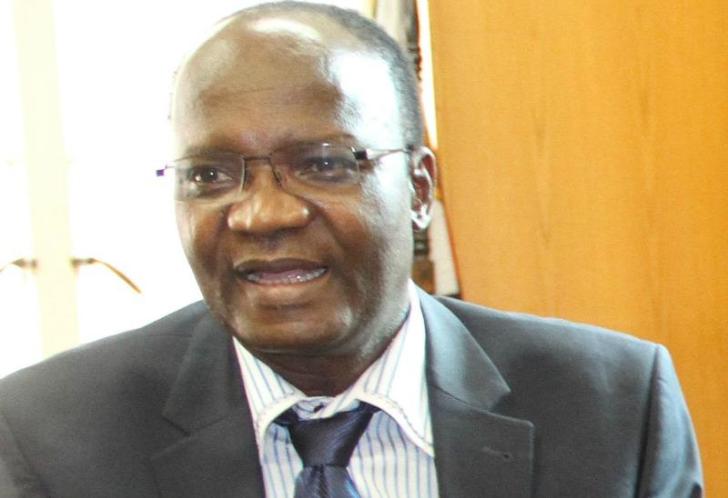
Exiled former Cabinet minister Jonathan Moyo and constitutional lawyer Justice Mavedzenge clashed during a heated debate over the proposed Constitutional Amendment No. 3 Bill, with Mavedzenge questioning Moyo's interpretation of constitutional provisions and likening his reasoning to that of a first-year law student.
The two were panellists on a Twitter Space (X) discussion hosted by CITE ZW, where they exchanged sharply contrasting views on whether the proposed amendments require a referendum.
Moyo spent nearly an hour criticising Mavedzenge's position, arguing that calls for a referendum were premature and not grounded in the Constitution. He accused critics of pre-empting Parliament's legislative process and making arguments unsupported by law.
"You are saying there must be a referendum. There should not be a referendum because you say so? There should be one because the Constitution says so," said Moyo.
"The legal making exercise in Parliament only started on Tuesday with the counting of the 90 days during which you, me and other people should engage, debate and so forth and then Parliament will be seized."
He argued that Cabinet was constitutionally empowered to introduce a Bill and that gazetting it did not amount to any violation of the law.
"What is it that has been done right now in relation to this which is not following the Constitution? Is it wrong for Cabinet to come up with a Bill? Is it violating any particular law for Cabinet to give that Bill to the Speaker, to gazette it?" Moyo asked.
Moyo is backing proposals that would effectively extend President Emmerson Mnangagwa's stay in office beyond the current five-year electoral cycle without a referendum. He maintains that the amendment seeks to lengthen the electoral cycle rather than extend presidential term limits.
Mavedzenge, however, anchored his argument on Sections 91(2), 95(2) and Section 328(7) of the Constitution, as well as a Constitutional Court ruling in Marx Mupungu v Minister of Justice, which he said made it clear that any changes affecting term limits require approval through a referendum.
He accused the Attorney-General's Office of issuing what he termed a "mischievous and misleading" public flier suggesting that Section 95 was the only provision governing presidential term limits.
"I can understand when persons without basic legal knowledge fail to make a connection between Section 91(2) and 95, but I struggle to understand how a whole AG's office can miss this," said Mavedzenge.
He questioned whether the Attorney-General was failing to advise the President correctly or was complicit in what he described as efforts to subvert the Constitution.
Addressing arguments that parts of the Constitutional Court's ruling were merely obiter dictum — non-binding commentary — Mavedzenge rejected that interpretation.
"The court drew a distinction between age limit provisions on one hand and term limit provisions on the other hand," he said.
"Age limit provisions are those clauses in the Constitution which limit the oldest age at which one can occupy an office, while term limit provisions are clauses which limit the length of time one can occupy an office."
He argued that the court's distinction between age limits and term limits was central to its ruling and therefore binding.
"The court did not just make a passing comment or mere suggestion when it identified section 95(2); it made a binding ruling which simply says you can change age limit provisions but you cannot touch term limit provisions without seeking the approval of Zimbabweans."
In a pointed remark directed at Moyo, Mavedzenge said he would expect such confusion from a first-year law student, not from someone who had served as a minister and dealt with constitutional matters.
The Constitutional Amendment No. 3 Bill proposes extending the electoral cycle from five to seven years and would, if passed, push the next general elections to 2030. It also seeks to lengthen parliamentary terms to seven years.
Critics argue that the amendments effectively alter term-limit provisions and would benefit the incumbent, contrary to Section 328(7) of the Constitution, which prohibits amendments that extend the length of time a person may hold public office from benefiting the incumbent.
Supporters, including Moyo, insist that the Bill deals with election cycles rather than term limits and does not trigger the requirement for a referendum.
The debate reflects growing divisions within political and legal circles over the constitutional implications of the proposed amendments, as public consultations on the Bill get underway.
The two were panellists on a Twitter Space (X) discussion hosted by CITE ZW, where they exchanged sharply contrasting views on whether the proposed amendments require a referendum.
Moyo spent nearly an hour criticising Mavedzenge's position, arguing that calls for a referendum were premature and not grounded in the Constitution. He accused critics of pre-empting Parliament's legislative process and making arguments unsupported by law.
"You are saying there must be a referendum. There should not be a referendum because you say so? There should be one because the Constitution says so," said Moyo.
"The legal making exercise in Parliament only started on Tuesday with the counting of the 90 days during which you, me and other people should engage, debate and so forth and then Parliament will be seized."
He argued that Cabinet was constitutionally empowered to introduce a Bill and that gazetting it did not amount to any violation of the law.
"What is it that has been done right now in relation to this which is not following the Constitution? Is it wrong for Cabinet to come up with a Bill? Is it violating any particular law for Cabinet to give that Bill to the Speaker, to gazette it?" Moyo asked.
Moyo is backing proposals that would effectively extend President Emmerson Mnangagwa's stay in office beyond the current five-year electoral cycle without a referendum. He maintains that the amendment seeks to lengthen the electoral cycle rather than extend presidential term limits.
Mavedzenge, however, anchored his argument on Sections 91(2), 95(2) and Section 328(7) of the Constitution, as well as a Constitutional Court ruling in Marx Mupungu v Minister of Justice, which he said made it clear that any changes affecting term limits require approval through a referendum.
He accused the Attorney-General's Office of issuing what he termed a "mischievous and misleading" public flier suggesting that Section 95 was the only provision governing presidential term limits.
"I can understand when persons without basic legal knowledge fail to make a connection between Section 91(2) and 95, but I struggle to understand how a whole AG's office can miss this," said Mavedzenge.
Addressing arguments that parts of the Constitutional Court's ruling were merely obiter dictum — non-binding commentary — Mavedzenge rejected that interpretation.
"The court drew a distinction between age limit provisions on one hand and term limit provisions on the other hand," he said.
"Age limit provisions are those clauses in the Constitution which limit the oldest age at which one can occupy an office, while term limit provisions are clauses which limit the length of time one can occupy an office."
He argued that the court's distinction between age limits and term limits was central to its ruling and therefore binding.
"The court did not just make a passing comment or mere suggestion when it identified section 95(2); it made a binding ruling which simply says you can change age limit provisions but you cannot touch term limit provisions without seeking the approval of Zimbabweans."
In a pointed remark directed at Moyo, Mavedzenge said he would expect such confusion from a first-year law student, not from someone who had served as a minister and dealt with constitutional matters.
The Constitutional Amendment No. 3 Bill proposes extending the electoral cycle from five to seven years and would, if passed, push the next general elections to 2030. It also seeks to lengthen parliamentary terms to seven years.
Critics argue that the amendments effectively alter term-limit provisions and would benefit the incumbent, contrary to Section 328(7) of the Constitution, which prohibits amendments that extend the length of time a person may hold public office from benefiting the incumbent.
Supporters, including Moyo, insist that the Bill deals with election cycles rather than term limits and does not trigger the requirement for a referendum.
The debate reflects growing divisions within political and legal circles over the constitutional implications of the proposed amendments, as public consultations on the Bill get underway.
Source - newzimbabwe
Join the discussion
Loading comments…


