News / National
Mutsvangwa struggles to convince media over why Zanu-PF is skirting referendum
21 Feb 2026 at 14:09hrs |
0 Views
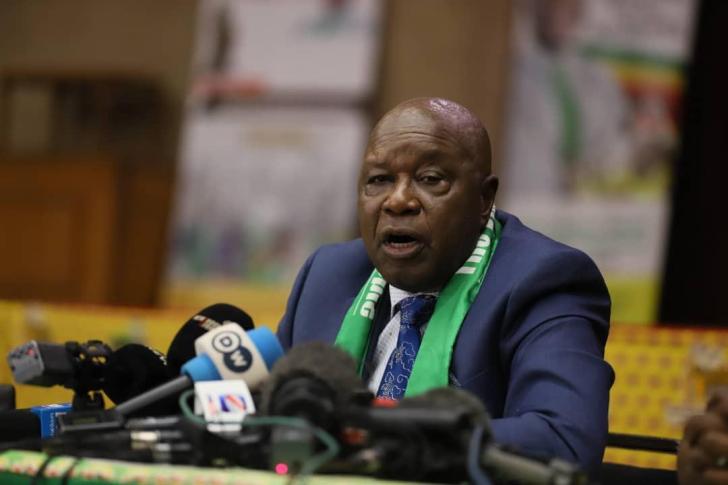
Christopher Mutsvangwa appeared visibly jittery Thursday as he faced questions from journalists over why his principal is avoiding a national referendum to approve the contentious Constitutional Amendment Bill Number 3.
The Zanu-PF spokesman insisted that the ruling party is acting within the confines of the Constitution of Zimbabwe, claiming that even the judiciary would confirm the bill as legally binding.
Gazetted by Parliament on Monday, the bill seeks to introduce sweeping changes to the country's supreme law, including a proposal to extend President Emmerson Mnangagwa's term by two years, effectively granting him extra time in power without an election.
Political analysts argue that Zanu-PF has opted for this route after observing Mnangagwa's declining popularity, particularly in comparison with Nelson Chamisa. They point to underwhelming performances in the 2018 and 2023 elections, both of which were fiercely disputed. For the first time in Zimbabwean electoral history, the Southern African Development Community (SADC) Observer Mission noted that the plebiscite failed to meet minimum credibility standards.
At one point, Zanu-PF reportedly considered raising the minimum age for presidential candidates to 55, a move widely interpreted as an attempt to sideline the youthful and popular Chamisa.
Despite opposition and civil society criticism, Mutsvangwa maintained that Zanu-PF remains firmly in command of public support. He argued that ongoing by-elections, which the party is reportedly winning "without a hustle," are indicative of public endorsement, effectively equating them to a referendum.
"We are not afraid of a referendum. If by-elections which are going on now are an indication, we will still sweep in the referendum if that become the way to go," he said.
Following the dramatic internal changes in the Citizens Coalition for Change (CCC), which saw Sengezo Tshabangu take effective control from Chamisa, Zanu-PF now enjoys an overwhelming majority in Parliament. This came after Tshabangu recalled opposition MPs and barred them from contesting subsequent by-elections, leaving Zanu-PF largely unchallenged.
Mutsvangwa argued that the current Parliament embodies democratic representation and should be trusted to reflect the will of the people. "But for the present time, we are the going route of Parliament. In a democracy, representatives of the people are in Parliament. Let's give that process a chance," he said. Ironically, Tshabangu's MPs endorsed the bill even before it was formally gazetted.
The Zanu-PF spokesman further claimed the party has strong legal grounds to defend the amendments, despite Section 328 of the Constitution explicitly stating that certain constitutional changes require a public referendum.
"We have no fear of any avenue which may be availed to us by the interventions of the other two wings of the Zimbabwe governing people — Parliament and the judiciary. We have no fear. We feel that legally we have solid grounds on the issue. We are working in sync with the constitution," Mutsvangwa said.
Critics, however, argue that the nation's supreme law is being treated as clay in the hands of politicians, moulded to suit those in power. Analysts warn that Zimbabwe now stands on a constitutional knife-edge, with the bill undergoing the mandatory 90-day public process — a period some grimly liken to the constitution "lying in state," awaiting its potential burial in May 2026.
The Zanu-PF spokesman insisted that the ruling party is acting within the confines of the Constitution of Zimbabwe, claiming that even the judiciary would confirm the bill as legally binding.
Gazetted by Parliament on Monday, the bill seeks to introduce sweeping changes to the country's supreme law, including a proposal to extend President Emmerson Mnangagwa's term by two years, effectively granting him extra time in power without an election.
Political analysts argue that Zanu-PF has opted for this route after observing Mnangagwa's declining popularity, particularly in comparison with Nelson Chamisa. They point to underwhelming performances in the 2018 and 2023 elections, both of which were fiercely disputed. For the first time in Zimbabwean electoral history, the Southern African Development Community (SADC) Observer Mission noted that the plebiscite failed to meet minimum credibility standards.
At one point, Zanu-PF reportedly considered raising the minimum age for presidential candidates to 55, a move widely interpreted as an attempt to sideline the youthful and popular Chamisa.
Despite opposition and civil society criticism, Mutsvangwa maintained that Zanu-PF remains firmly in command of public support. He argued that ongoing by-elections, which the party is reportedly winning "without a hustle," are indicative of public endorsement, effectively equating them to a referendum.
"We are not afraid of a referendum. If by-elections which are going on now are an indication, we will still sweep in the referendum if that become the way to go," he said.
Following the dramatic internal changes in the Citizens Coalition for Change (CCC), which saw Sengezo Tshabangu take effective control from Chamisa, Zanu-PF now enjoys an overwhelming majority in Parliament. This came after Tshabangu recalled opposition MPs and barred them from contesting subsequent by-elections, leaving Zanu-PF largely unchallenged.
Mutsvangwa argued that the current Parliament embodies democratic representation and should be trusted to reflect the will of the people. "But for the present time, we are the going route of Parliament. In a democracy, representatives of the people are in Parliament. Let's give that process a chance," he said. Ironically, Tshabangu's MPs endorsed the bill even before it was formally gazetted.
The Zanu-PF spokesman further claimed the party has strong legal grounds to defend the amendments, despite Section 328 of the Constitution explicitly stating that certain constitutional changes require a public referendum.
"We have no fear of any avenue which may be availed to us by the interventions of the other two wings of the Zimbabwe governing people — Parliament and the judiciary. We have no fear. We feel that legally we have solid grounds on the issue. We are working in sync with the constitution," Mutsvangwa said.
Critics, however, argue that the nation's supreme law is being treated as clay in the hands of politicians, moulded to suit those in power. Analysts warn that Zimbabwe now stands on a constitutional knife-edge, with the bill undergoing the mandatory 90-day public process — a period some grimly liken to the constitution "lying in state," awaiting its potential burial in May 2026.
Source - newzimbabwe
Join the discussion
Loading comments…



