News / National
Mnangagwa's third-term bid sparks fears of constitutional crisis
22 Feb 2026 at 12:20hrs |
0 Views
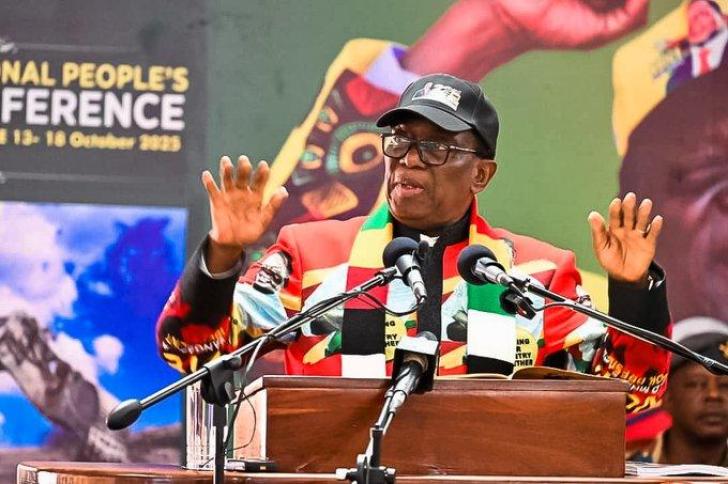
The recent gazetting of Constitutional Amendment Bill No. 3 has reignited debate over President Emmerson Mnangagwa's commitment to constitutionalism and his repeated pledges to serve only two terms.
In a 2018 interview with CNN journalist Christiane Amanpour, Mnangagwa stated that he would serve only two five-year terms. Around the same time last year, while addressing editors at State House, the 83-year-old reinforced that position, declaring he would "persuade the persuaders not to persuade him" to extend his tenure.
Last week, a bill motivated by a Zanu-PF 2025 resolution to extend Mnangagwa's tenure was gazetted. The proposed amendment seeks to substitute the current five-year presidential term with a seven-year term by amending sections 95, 143, and 158 of the Constitution. The bill also proposes that the president be elected by Members of Parliament sitting jointly as the Senate and National Assembly, effectively removing the electorate's direct vote.
Zanu-PF has defended the changes as necessary to "eliminate election mode toxicity and allow sufficient time for project implementation while promoting stability." Clause 12 of the bill proposes transferring the delimitation of electoral boundaries from the Zimbabwe Electoral Commission to the Zimbabwe Electoral Delimitation Commission.
Critics argue that these changes concentrate power in the executive and undermine Mnangagwa's earlier pledge to safeguard constitutional limits, which he emphasized in his inaugural address following the 2017 coup that ousted the late Robert Mugabe. At the time, Mnangagwa vowed to break with Zimbabwe's violent political past, declaring:
"Violence should be alien and vile to our nature, culture and traditions as the Zimbabwean people. All citizens must feel secure."
Recent developments have heightened concerns about shrinking civic space. A planned public discussion on the constitutional amendments featuring lawyers and politicians, including Fadzayi Mahere, Douglas Mwonzora, and Lovemore Madhuku, was cancelled at the last minute despite prior clearance from the Zimbabwe Republic Police (ZRP).
Former legislator Temba Mliswa criticized the move on X, stating that the cancellation "creates the perception that the government is apprehensive about allowing discourse on this pressing issue." A youth meeting organized by Jameson Timba's Defend the Constitution Platform was also barred in Bulawayo under Section 7(b) of the Maintenance of Peace and Order Act (MOPA).
Opposition parties have also expressed concern over a lack of a level playing field. The recognition by Parliament and courts of Sengezo Tshabangu as leader of the main opposition party undermined the Citizens Coalition for Change's parliamentary representation, according to critics.
Meanwhile, Transparency International Zimbabwe's 2025 Corruption Perceptions Index highlights persistent corruption in the country. TIZ warned that political interference, opaque financing, and conflicts of interest must be addressed to restore confidence in governance.
Civil society groups have voiced similar concerns over the PVO Amendment Act, which they argue gives authorities powers to deregister organisations, interfere in governance, and monitor funding, creating an intimidating environment for human rights advocacy.
Mnangagwa also pledged to resolve long-standing grievances related to the Gukurahundi massacres of the early 1980s. Critics argue progress has been slow, with outreach programmes conducted with limited transparency and restricted media access, weakening public confidence.
Constitutionalism, according to Timba, "does not depend on belief in personalities. It depends on adherence to rules. The real test is not what leaders say, but what the State ultimately does. If the constitution is bypassed, the question becomes one of constitutional legitimacy."
Political analyst Rejoice Ngwenya questioned the rationale for extending both presidential and parliamentary terms, noting that infrastructure, public services, and economic challenges remain largely unresolved.
"Why does Zanu-PF want to extend President Mnangagwa's and the parliamentary term to seven years?" Ngwenya asked.
"We do not even have a credible currency of our own. Besides, on several occasions, President Mnangagwa himself said he would not go beyond 2028."
The gazetting of Bill No. 3 has thus intensified debate over whether Zimbabwe's constitutional framework and democratic principles will be upheld, or if the country is witnessing an incremental concentration of power at the executive level.
In a 2018 interview with CNN journalist Christiane Amanpour, Mnangagwa stated that he would serve only two five-year terms. Around the same time last year, while addressing editors at State House, the 83-year-old reinforced that position, declaring he would "persuade the persuaders not to persuade him" to extend his tenure.
Last week, a bill motivated by a Zanu-PF 2025 resolution to extend Mnangagwa's tenure was gazetted. The proposed amendment seeks to substitute the current five-year presidential term with a seven-year term by amending sections 95, 143, and 158 of the Constitution. The bill also proposes that the president be elected by Members of Parliament sitting jointly as the Senate and National Assembly, effectively removing the electorate's direct vote.
Zanu-PF has defended the changes as necessary to "eliminate election mode toxicity and allow sufficient time for project implementation while promoting stability." Clause 12 of the bill proposes transferring the delimitation of electoral boundaries from the Zimbabwe Electoral Commission to the Zimbabwe Electoral Delimitation Commission.
Critics argue that these changes concentrate power in the executive and undermine Mnangagwa's earlier pledge to safeguard constitutional limits, which he emphasized in his inaugural address following the 2017 coup that ousted the late Robert Mugabe. At the time, Mnangagwa vowed to break with Zimbabwe's violent political past, declaring:
"Violence should be alien and vile to our nature, culture and traditions as the Zimbabwean people. All citizens must feel secure."
Recent developments have heightened concerns about shrinking civic space. A planned public discussion on the constitutional amendments featuring lawyers and politicians, including Fadzayi Mahere, Douglas Mwonzora, and Lovemore Madhuku, was cancelled at the last minute despite prior clearance from the Zimbabwe Republic Police (ZRP).
Former legislator Temba Mliswa criticized the move on X, stating that the cancellation "creates the perception that the government is apprehensive about allowing discourse on this pressing issue." A youth meeting organized by Jameson Timba's Defend the Constitution Platform was also barred in Bulawayo under Section 7(b) of the Maintenance of Peace and Order Act (MOPA).
Meanwhile, Transparency International Zimbabwe's 2025 Corruption Perceptions Index highlights persistent corruption in the country. TIZ warned that political interference, opaque financing, and conflicts of interest must be addressed to restore confidence in governance.
Civil society groups have voiced similar concerns over the PVO Amendment Act, which they argue gives authorities powers to deregister organisations, interfere in governance, and monitor funding, creating an intimidating environment for human rights advocacy.
Mnangagwa also pledged to resolve long-standing grievances related to the Gukurahundi massacres of the early 1980s. Critics argue progress has been slow, with outreach programmes conducted with limited transparency and restricted media access, weakening public confidence.
Constitutionalism, according to Timba, "does not depend on belief in personalities. It depends on adherence to rules. The real test is not what leaders say, but what the State ultimately does. If the constitution is bypassed, the question becomes one of constitutional legitimacy."
Political analyst Rejoice Ngwenya questioned the rationale for extending both presidential and parliamentary terms, noting that infrastructure, public services, and economic challenges remain largely unresolved.
"Why does Zanu-PF want to extend President Mnangagwa's and the parliamentary term to seven years?" Ngwenya asked.
"We do not even have a credible currency of our own. Besides, on several occasions, President Mnangagwa himself said he would not go beyond 2028."
The gazetting of Bill No. 3 has thus intensified debate over whether Zimbabwe's constitutional framework and democratic principles will be upheld, or if the country is witnessing an incremental concentration of power at the executive level.
Source - The Standard
Join the discussion
Loading comments…


