News / National
Zesa spends US$881m on electricity imports
04 May 2026 at 21:18hrs |
0 Views
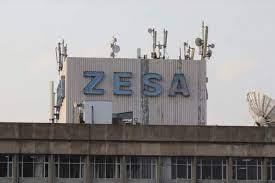
Zimbabwe has spent approximately US$881.7 million importing electricity between January 2021 and March 2026, highlighting the country's persistent reliance on regional power supplies to cover domestic generation shortfalls.
Data derived from Zimbabwe National Statistics Agency external trade statistics shows that over the 63-month period, imports averaged about US$13.4 million per month as the Zimbabwe Electricity Supply Authority and its successor entities struggled to meet national demand.
Electricity imports were mainly sourced from Hidroeléctrica de Cahora Bassa (HCB) in Mozambique, Eskom, and ZESCO.
Annual figures reflect a consistent structural deficit in domestic power generation. Zimbabwe spent US$152.1 million on electricity imports in 2021, rising to US$207.8 million in 2022, before easing to US$162.1 million in 2023. Import costs climbed again to US$207.7 million in 2024, before dropping to US$117 million in 2025. In the first quarter of 2026, imports stood at US$35.1 million, pointing to a projected annual figure of around US$140 million if trends persist.
The highest monthly import bill was recorded in October 2022 at US$37.4 million, driven largely by reduced output at Kariba Dam, where critically low water levels forced a sharp cut in generation at Kariba South Power Station.
The episode exposed Zimbabwe's heavy reliance on hydropower, with over half of domestic capacity tied to a single source vulnerable to rainfall variability across the Zambezi basin.
Although 2025 recorded the lowest import bill in five years, analysts say this does not necessarily reflect improved generation capacity. Instead, it may point to constrained foreign currency availability limiting the country's ability to import electricity.
Financial pressures within the power sector have also been evident. Reports indicate that the Zimbabwe Electricity Transmission and Distribution Company (ZETDC) has faced cash flow challenges, affecting its ability to meet obligations and sustain import levels.
Reduced imports often translate into increased load-shedding, with businesses and households forced to rely on costly alternatives such as diesel generators, raising production costs and affecting economic activity.
Zimbabwe continues to import roughly a fifth of its electricity requirements, underlining a long-standing structural gap in generation that has persisted across multiple years.
Efforts to address the deficit are now gaining traction. The Mutapa Investment Fund has announced a US$500 million energy investment pipeline aimed at boosting domestic generation capacity.
Energy experts say investments in solar and thermal power could significantly reduce reliance on imports. A 300-megawatt solar plant, for example, could generate about 600 million kilowatt-hours annually—equivalent to roughly US$60 million in import substitution at current prices.
With abundant solar resources and declining technology costs, Zimbabwe's long-term solution lies in mobilising capital to expand generation capacity, reduce dependency on imports and stabilise the national grid.
Data derived from Zimbabwe National Statistics Agency external trade statistics shows that over the 63-month period, imports averaged about US$13.4 million per month as the Zimbabwe Electricity Supply Authority and its successor entities struggled to meet national demand.
Electricity imports were mainly sourced from Hidroeléctrica de Cahora Bassa (HCB) in Mozambique, Eskom, and ZESCO.
Annual figures reflect a consistent structural deficit in domestic power generation. Zimbabwe spent US$152.1 million on electricity imports in 2021, rising to US$207.8 million in 2022, before easing to US$162.1 million in 2023. Import costs climbed again to US$207.7 million in 2024, before dropping to US$117 million in 2025. In the first quarter of 2026, imports stood at US$35.1 million, pointing to a projected annual figure of around US$140 million if trends persist.
The highest monthly import bill was recorded in October 2022 at US$37.4 million, driven largely by reduced output at Kariba Dam, where critically low water levels forced a sharp cut in generation at Kariba South Power Station.
The episode exposed Zimbabwe's heavy reliance on hydropower, with over half of domestic capacity tied to a single source vulnerable to rainfall variability across the Zambezi basin.
Financial pressures within the power sector have also been evident. Reports indicate that the Zimbabwe Electricity Transmission and Distribution Company (ZETDC) has faced cash flow challenges, affecting its ability to meet obligations and sustain import levels.
Reduced imports often translate into increased load-shedding, with businesses and households forced to rely on costly alternatives such as diesel generators, raising production costs and affecting economic activity.
Zimbabwe continues to import roughly a fifth of its electricity requirements, underlining a long-standing structural gap in generation that has persisted across multiple years.
Efforts to address the deficit are now gaining traction. The Mutapa Investment Fund has announced a US$500 million energy investment pipeline aimed at boosting domestic generation capacity.
Energy experts say investments in solar and thermal power could significantly reduce reliance on imports. A 300-megawatt solar plant, for example, could generate about 600 million kilowatt-hours annually—equivalent to roughly US$60 million in import substitution at current prices.
With abundant solar resources and declining technology costs, Zimbabwe's long-term solution lies in mobilising capital to expand generation capacity, reduce dependency on imports and stabilise the national grid.
Source - online
Join the discussion
Loading comments…





