News / Regional
Chiwenga coup hopes dampened by Ramaphosa visit
03 May 2026 at 18:39hrs |
3747 Views
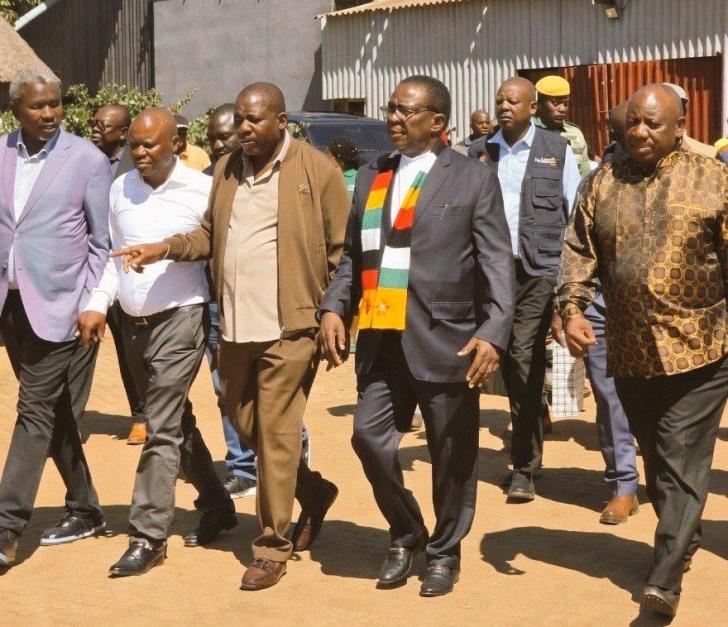
Hopes of a military coup against President Emmerson Mnangagwa have reportedly been dampened following assurances from South African leader Cyril Ramaphosa that Pretoria would not support any unconstitutional change of government in Zimbabwe.
The development follows a discreet visit by Ramaphosa to Zimbabwe, where he was hosted by Mnangagwa in Harare before the two leaders travelled together to the Zimbabwean leader's farm, Precabe, in Kwekwe.
The South African president was received alongside businessmen Wicknell Chivayo and Kudakwashe Tagwirei, who later joined the delegation on a helicopter trip to the farm.
During the visit, the leaders toured agricultural projects, including cattle and fish breeding operations. At one point, Ramaphosa is said to have made remarks interpreted as a strong endorsement of Mnangagwa's continued leadership, stressing that any removal from office must follow constitutional processes.
Sources said the comments were made in the presence of members of the delegation and were viewed as a clear signal of South Africa's position against any military intervention.
The visit culminated in a closed-door meeting lasting several hours, attended by Mnangagwa, Ramaphosa, Tagwirei and Chivayo. The engagement was described as highly private, with even key officials reportedly excluded.
According to sources familiar with the discussions, Ramaphosa emphasised that South Africa would neither support nor recognise any coup attempt against Mnangagwa, reinforcing regional norms against unconstitutional changes of government.
The reported assurances have been welcomed by those within Mnangagwa's circle, who see the stance as strengthening Zimbabwe's position within the Southern African region.
Observers note that South Africa's position aligns with broader regional sentiment among Southern African Development Community (SADC) countries, which have consistently opposed military takeovers and emphasised constitutional governance.
The visit itself has drawn attention due to its informal nature. Unlike a formal state visit, the trip was conducted privately, with limited official communication from both governments.
Ramaphosa has since returned to South Africa following the brief engagement, leaving behind heightened political interest over the implications of the meeting and the dynamics within Zimbabwe's leadership.
The development follows a discreet visit by Ramaphosa to Zimbabwe, where he was hosted by Mnangagwa in Harare before the two leaders travelled together to the Zimbabwean leader's farm, Precabe, in Kwekwe.
The South African president was received alongside businessmen Wicknell Chivayo and Kudakwashe Tagwirei, who later joined the delegation on a helicopter trip to the farm.
During the visit, the leaders toured agricultural projects, including cattle and fish breeding operations. At one point, Ramaphosa is said to have made remarks interpreted as a strong endorsement of Mnangagwa's continued leadership, stressing that any removal from office must follow constitutional processes.
Sources said the comments were made in the presence of members of the delegation and were viewed as a clear signal of South Africa's position against any military intervention.
The visit culminated in a closed-door meeting lasting several hours, attended by Mnangagwa, Ramaphosa, Tagwirei and Chivayo. The engagement was described as highly private, with even key officials reportedly excluded.
According to sources familiar with the discussions, Ramaphosa emphasised that South Africa would neither support nor recognise any coup attempt against Mnangagwa, reinforcing regional norms against unconstitutional changes of government.
The reported assurances have been welcomed by those within Mnangagwa's circle, who see the stance as strengthening Zimbabwe's position within the Southern African region.
Observers note that South Africa's position aligns with broader regional sentiment among Southern African Development Community (SADC) countries, which have consistently opposed military takeovers and emphasised constitutional governance.
The visit itself has drawn attention due to its informal nature. Unlike a formal state visit, the trip was conducted privately, with limited official communication from both governments.
Ramaphosa has since returned to South Africa following the brief engagement, leaving behind heightened political interest over the implications of the meeting and the dynamics within Zimbabwe's leadership.
Source - online
Join the discussion
Loading comments…




