Opinion / Columnist
The 2030 Rubicon: When power forgets how Zanu-PF really works
04 May 2026 at 08:53hrs |
0 Views
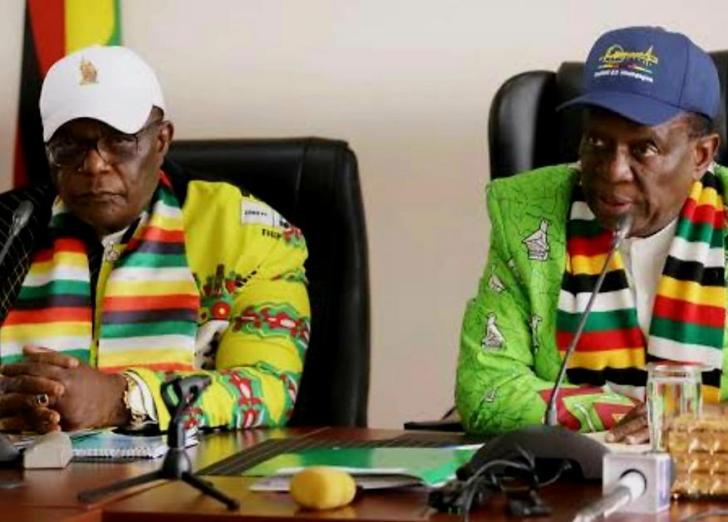
The biggest mistake in Zimbabwean politics is to think Zanu-PF is governed by structures. It is not. It is governed by power - and power in Zanu-PF does not sit still. It shifts. It recalibrates. It abandons yesterday’s certainties and manufactures tomorrow’s loyalties without apology.
That is the mistake now being made by the architects of the 2030 project. They think they have Parliament. They think they have party structures. They think they have coercive instruments.
What they do not have anymore - is momentum. And in Zanu-PF, once momentum moves, everything else follows – opposition included.
FROM LONELY VOICE TO NATIONAL MOMENT:
For a long time, Vice President Constantino Chiwenga appeared to be fighting a lonely battle. His resistance to the 2030 agenda and CAB3 was known - but contained. Managed. Surrounded by noise. Neutralised by patronage. Drowned by slogans, cars, and choreographed endorsements.
The system moved against him. Parliament was captured. Public hearings were manipulated. Opponents were beaten, arrested, jailed. Civic voices were shut down.
The message was clear: CAB3 would pass - not because it made sense, but because power had decided.
Then came the Catholic Church sermon – the Hezekiah earthquake.
What appeared to be a theological reflection was, in reality, a political signal of the highest order. It was not loud. It was not confrontational. But it was unmistakable.
And suddenly, something changed. What had been a solitary line of resistance became a national point of convergence.
OMOV VS THE 2030 BRIGADE:
The battlefield is now clear. On one side stands the 2030 Brigade - a coalition of survivalists, beneficiaries of patronage, political loyalists, and a rising class of monied elites whose interests are tied to the continuation of the current order.
On the other side is something less organised - but far more powerful: OMOV - One Man One Vote.
Not a formal faction. Not a structured movement. But a convergence of conscience.
A rallying point for:
- war veterans
- retired generals
- civic actors
- disillusioned insiders
- ordinary Zimbabweans
It is no longer abstract. It now has a face. And that face - whether officially declared or not - is Chiwenga.
THE PANIC YOU ARE SEEING:
The reaction from the Presidential camp has been swift - and revealing. Calls for Chiwenga to be fired. Coordinated attacks from affiliates. Media offensives. Character assaults. This is not strength. It is panic.
Because those who understand Zanu-PF know one thing: You do not call for the firing of a man you can easily remove. You call for it when you cannot.
WHY MNANGAGWA CANNOT FIRE CHIWENGA:
Emmerson Mnangagwa understands this better than anyone. He knows who Chiwenga is. Not just Vice President.
But:
- The central military figure behind 2017
- The man who neutralised G40
- The bridge between political authority and military legitimacy
- A figure with deep roots among war veterans and retired commanders
Chiwenga is not an appointee in the conventional sense. He is a co-owner of the post-2017 political order.
To remove him is not a reshuffle. It is a rupture. And at a moment when momentum is shifting - it would be suicidal.
THE MEN WHO MATTER NOW:
To understand what is unfolding, you must understand the positioning of key actors.
George Charamba is not just a spokesperson. He is a long-standing ideological architect of the State narrative, deeply embedded since the Mugabe era. In 2017, he was instrumental in shaping the communication framework that legitimised the transition. His current positioning - quietly aligned away from the 2030 enthusiasm - is not accidental. It reflects awareness of where power is tilting.
Chris Mutsvangwa is not merely a commentator. He was the political face of Operation Restore Legacy. He gave voice and legitimacy to the military intervention that brought Mnangagwa to power. Today, he opposes 2030 - but not out of loyalty to Chiwenga. He has his own ambitions, and sees a post-CAB3 political landscape in which he can contest power, particularly at the 2027 Congress.
His silence is not neutrality. It is preparation. We are aware of the issue Tagwirei, and the efforts to financially induce Mutsvangwa loyalty. That could be money gone down the drain.
Obert Mpofu is one of the most underestimated figures in this equation. A long-time Mnangagwa ally, central to the dismantling of G40, he expected consolidation after 2017. Instead, he found himself marginalised.
His current opposition to the 2030 project is not ideological purity. It is political recalibration. An ally of convenience to Chiwenga - not out of affection, but out of shared interest.
These are the movers and shakers whose convergence result in momentum, and Mnangagwa knows that.
Patrick Chinamasa remains the most conflicted figure. Central to legalising the 2017 transition. Publicly opposed to term extension in 2024.
Removed from key legal roles for being unreliable on CAB3. Now forced into the role of defender of a project he reportedly does not believe in.
The Musara incident exposed him.
The Maputo conversations confirmed him. Recently he was at a convention in Maputo where he did not shy from telling whoever cared to listen that CAB 3 was "legal nonsense."
He is not the architect of CAB3. He is its reluctant spokesperson.
THE MUSARA LETTER: POWER IN TWO DIRECTIONS:
Jones Musara - leader of Varakashi for ED - was fired by Chinamasa for operating outside party structures.
His crime? Pushing the 2030 narrative too independently.
His punishment? Removal. Loss of privileges. Loss of official vehicle.
But then - Musara walked into a pub. Placed the letter before Mnangagwa, who was clutching to a Whiskey glass.
And the President wrote one word: "Nullified." Signed.
Raucous Laughter followed. From cheerleaders like Scott Sakupwanya, who was sitting next to the President.
Applause followed. A toast followed.
Musara later posted both letters online. That moment was not theatre. It was a signal.
Power was no longer flowing in one direction.
THE TAGWIREI STRATEGY - AND ITS LIMITS:
The President has attempted a familiar strategy: Create alternative centres of power. Elevate Kudakwashe Tagwirei as a potential successor. Balance him against internal rivals. Fragment the system. Remain indispensable.
It is a Mugabe playbook. Classic. But it depends on one condition: That momentum remains controllable.
It no longer is.
THE REGIONAL AND EASTERN DIMENSION:
What is unfolding is no longer a purely domestic issue. The shift has been noticed beyond Zimbabwe’s borders.
Regionally, there is growing discomfort with constitutional manipulation for term extension. The optics matter. The precedent matters.
More significantly, there are indications that an Eastern power - long invested in Zimbabwe’s stability and strategic direction - is recalibrating its position.
Not out of sentiment. But out of interest. Great powers do not attach themselves to uncertainty. They align with future stability.
And right now - the question being asked quietly in diplomatic circles is simple: Where is Zimbabwe going after CAB3?
THE SHIFT FOR SURVIVAL:
Inside Zanu-PF, this is now about survival. Not ideology. Not loyalty. Survival. Structures are shifting. Not because they believe. But because they anticipate.
No one wants to be on the wrong side of the next transition. And history has taught them one thing: Transitions in Zimbabwe are sudden.
OPPOSITION FACTOR:
The question some may ask is, what about the opposition. And that question should actually read, what about Chamisa – whether one likes it or not. Chamisa has stayed away from CAB 3 except for isolated ambiguous random comments. That places him in the wait and see position – ready to leverage on the outcome either way.
One thing for sure is whatever faction triumphs – it cannot wish away the Chamisa presence. That brings the idea of a Zanu-PF led transition that will be forced into some kind of transitional inclusivity – one way or the other.
FINAL WORD:
Zanu-PF does not stand still. It never has.
The same system that builds you - can remove you. The same structures that praise you - can abandon you. The structures that fired Emmerson Mnangagwa and endorsed Mugabe as life President, sacked Mugabe from the party and installed Mnangagwa as party leader two weeks later.
Trying to use party structures to expel Chiwenga from Zanu-PF might be just what it takes to dethrone Mnangagwa and replace him with his deputy. It is not every trigger that fires at the intended target in Zanu-PF.
CAB3 was built on the assumption of control. But Zimbabwe has entered a different phase. A phase of movement. A phase of recalibration. A phase where momentum is no longer where it was.
And in Zimbabwean politics, when momentum moves - everything else follows.
That is the mistake now being made by the architects of the 2030 project. They think they have Parliament. They think they have party structures. They think they have coercive instruments.
What they do not have anymore - is momentum. And in Zanu-PF, once momentum moves, everything else follows – opposition included.
FROM LONELY VOICE TO NATIONAL MOMENT:
For a long time, Vice President Constantino Chiwenga appeared to be fighting a lonely battle. His resistance to the 2030 agenda and CAB3 was known - but contained. Managed. Surrounded by noise. Neutralised by patronage. Drowned by slogans, cars, and choreographed endorsements.
The system moved against him. Parliament was captured. Public hearings were manipulated. Opponents were beaten, arrested, jailed. Civic voices were shut down.
The message was clear: CAB3 would pass - not because it made sense, but because power had decided.
Then came the Catholic Church sermon – the Hezekiah earthquake.
What appeared to be a theological reflection was, in reality, a political signal of the highest order. It was not loud. It was not confrontational. But it was unmistakable.
And suddenly, something changed. What had been a solitary line of resistance became a national point of convergence.
OMOV VS THE 2030 BRIGADE:
The battlefield is now clear. On one side stands the 2030 Brigade - a coalition of survivalists, beneficiaries of patronage, political loyalists, and a rising class of monied elites whose interests are tied to the continuation of the current order.
On the other side is something less organised - but far more powerful: OMOV - One Man One Vote.
Not a formal faction. Not a structured movement. But a convergence of conscience.
A rallying point for:
- war veterans
- retired generals
- civic actors
- disillusioned insiders
- ordinary Zimbabweans
It is no longer abstract. It now has a face. And that face - whether officially declared or not - is Chiwenga.
THE PANIC YOU ARE SEEING:
The reaction from the Presidential camp has been swift - and revealing. Calls for Chiwenga to be fired. Coordinated attacks from affiliates. Media offensives. Character assaults. This is not strength. It is panic.
Because those who understand Zanu-PF know one thing: You do not call for the firing of a man you can easily remove. You call for it when you cannot.
WHY MNANGAGWA CANNOT FIRE CHIWENGA:
Emmerson Mnangagwa understands this better than anyone. He knows who Chiwenga is. Not just Vice President.
But:
- The central military figure behind 2017
- The man who neutralised G40
- The bridge between political authority and military legitimacy
- A figure with deep roots among war veterans and retired commanders
Chiwenga is not an appointee in the conventional sense. He is a co-owner of the post-2017 political order.
To remove him is not a reshuffle. It is a rupture. And at a moment when momentum is shifting - it would be suicidal.
THE MEN WHO MATTER NOW:
To understand what is unfolding, you must understand the positioning of key actors.
George Charamba is not just a spokesperson. He is a long-standing ideological architect of the State narrative, deeply embedded since the Mugabe era. In 2017, he was instrumental in shaping the communication framework that legitimised the transition. His current positioning - quietly aligned away from the 2030 enthusiasm - is not accidental. It reflects awareness of where power is tilting.
Chris Mutsvangwa is not merely a commentator. He was the political face of Operation Restore Legacy. He gave voice and legitimacy to the military intervention that brought Mnangagwa to power. Today, he opposes 2030 - but not out of loyalty to Chiwenga. He has his own ambitions, and sees a post-CAB3 political landscape in which he can contest power, particularly at the 2027 Congress.
His silence is not neutrality. It is preparation. We are aware of the issue Tagwirei, and the efforts to financially induce Mutsvangwa loyalty. That could be money gone down the drain.
Obert Mpofu is one of the most underestimated figures in this equation. A long-time Mnangagwa ally, central to the dismantling of G40, he expected consolidation after 2017. Instead, he found himself marginalised.
His current opposition to the 2030 project is not ideological purity. It is political recalibration. An ally of convenience to Chiwenga - not out of affection, but out of shared interest.
These are the movers and shakers whose convergence result in momentum, and Mnangagwa knows that.
Patrick Chinamasa remains the most conflicted figure. Central to legalising the 2017 transition. Publicly opposed to term extension in 2024.
Removed from key legal roles for being unreliable on CAB3. Now forced into the role of defender of a project he reportedly does not believe in.
The Maputo conversations confirmed him. Recently he was at a convention in Maputo where he did not shy from telling whoever cared to listen that CAB 3 was "legal nonsense."
He is not the architect of CAB3. He is its reluctant spokesperson.
THE MUSARA LETTER: POWER IN TWO DIRECTIONS:
Jones Musara - leader of Varakashi for ED - was fired by Chinamasa for operating outside party structures.
His crime? Pushing the 2030 narrative too independently.
His punishment? Removal. Loss of privileges. Loss of official vehicle.
But then - Musara walked into a pub. Placed the letter before Mnangagwa, who was clutching to a Whiskey glass.
And the President wrote one word: "Nullified." Signed.
Raucous Laughter followed. From cheerleaders like Scott Sakupwanya, who was sitting next to the President.
Applause followed. A toast followed.
Musara later posted both letters online. That moment was not theatre. It was a signal.
Power was no longer flowing in one direction.
THE TAGWIREI STRATEGY - AND ITS LIMITS:
The President has attempted a familiar strategy: Create alternative centres of power. Elevate Kudakwashe Tagwirei as a potential successor. Balance him against internal rivals. Fragment the system. Remain indispensable.
It is a Mugabe playbook. Classic. But it depends on one condition: That momentum remains controllable.
It no longer is.
THE REGIONAL AND EASTERN DIMENSION:
What is unfolding is no longer a purely domestic issue. The shift has been noticed beyond Zimbabwe’s borders.
Regionally, there is growing discomfort with constitutional manipulation for term extension. The optics matter. The precedent matters.
More significantly, there are indications that an Eastern power - long invested in Zimbabwe’s stability and strategic direction - is recalibrating its position.
Not out of sentiment. But out of interest. Great powers do not attach themselves to uncertainty. They align with future stability.
And right now - the question being asked quietly in diplomatic circles is simple: Where is Zimbabwe going after CAB3?
THE SHIFT FOR SURVIVAL:
Inside Zanu-PF, this is now about survival. Not ideology. Not loyalty. Survival. Structures are shifting. Not because they believe. But because they anticipate.
No one wants to be on the wrong side of the next transition. And history has taught them one thing: Transitions in Zimbabwe are sudden.
OPPOSITION FACTOR:
The question some may ask is, what about the opposition. And that question should actually read, what about Chamisa – whether one likes it or not. Chamisa has stayed away from CAB 3 except for isolated ambiguous random comments. That places him in the wait and see position – ready to leverage on the outcome either way.
One thing for sure is whatever faction triumphs – it cannot wish away the Chamisa presence. That brings the idea of a Zanu-PF led transition that will be forced into some kind of transitional inclusivity – one way or the other.
FINAL WORD:
Zanu-PF does not stand still. It never has.
The same system that builds you - can remove you. The same structures that praise you - can abandon you. The structures that fired Emmerson Mnangagwa and endorsed Mugabe as life President, sacked Mugabe from the party and installed Mnangagwa as party leader two weeks later.
Trying to use party structures to expel Chiwenga from Zanu-PF might be just what it takes to dethrone Mnangagwa and replace him with his deputy. It is not every trigger that fires at the intended target in Zanu-PF.
CAB3 was built on the assumption of control. But Zimbabwe has entered a different phase. A phase of movement. A phase of recalibration. A phase where momentum is no longer where it was.
And in Zimbabwean politics, when momentum moves - everything else follows.
Source - Reason Wafawarova
All articles and letters published on Bulawayo24 have been independently written by members of Bulawayo24's community. The views of users published on Bulawayo24 are therefore their own and do not necessarily represent the views of Bulawayo24. Bulawayo24 editors also reserve the right to edit or delete any and all comments received.
Join the discussion
Loading comments…


