News / National
Binga villagers demand clarity over Gwayi-Shangani relocation
12 Jul 2026 at 15:16hrs |
671 Views
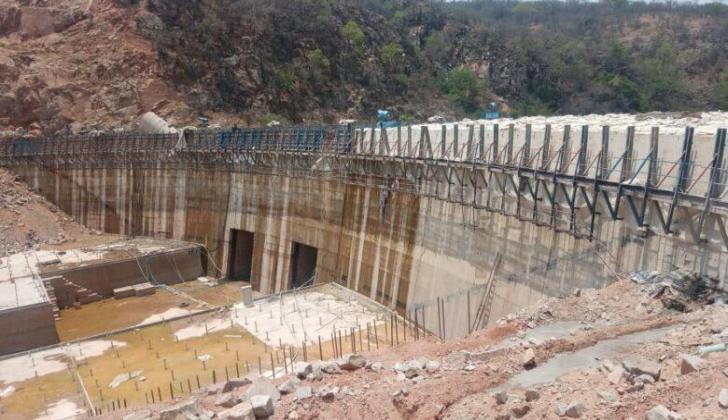
Villagers in Binga's Lubimbi area say they are living in uncertainty as they await relocation to make way for the Gwayi-Shangani Dam project, accusing the government of failing to provide a clear resettlement plan despite the dam nearing completion.
More than 500 families earmarked for relocation say they still do not know where they will be resettled, what compensation they will receive or when the relocation will take place.
The Gwayi-Shangani Dam forms part of the long-planned Matabeleland Zambezi Water Project, conceived more than a century ago to address chronic water shortages in Bulawayo, Matabeleland North and Matabeleland South provinces.
Construction of the dam began in September 2004 but has experienced repeated delays due to funding constraints and missed completion deadlines.
Government figures show that as of April 2025 the dam wall was just over 70 percent complete, with 39 metres of the planned 72-metre structure finished. The project is now expected to be completed in 2027 after President Emmerson Mnangagwa directed that US$5 million be released monthly to accelerate construction.
Upon completion, Lake Gwayi-Shangani is expected to become Zimbabwe's third-largest inland water body and will supply water to Bulawayo through a planned 245-kilometre pipeline.
The project will also require the relocation of hundreds of families living within the dam catchment area and along the pipeline route.
For many Lubimbi residents, this will not be the first displacement.
Community members say their families were first moved from the Madilo area between the Shangani and Kana rivers in 1945 to pave the way for a Cold Storage Commission project. Some families had also previously been displaced during the construction of the Kariba Dam in the 1950s.
Approximately 502 families are now expected to relocate once again, with government indicating they will be resettled in the Kanondo area of Lupane under Chief Mabhikwa, where many trace their ancestral origins before colonial-era removals.
Residents say the prolonged uncertainty has become increasingly distressing.
Ward 20 councillor Jealous Mumpande said villagers have repeatedly requested a master plan outlining the relocation programme but have yet to receive it.
"I recently travelled for a meeting with the hope that I was going to get the master plan after the meeting at the town council, but to no avail," Mumpande said.
"Residents have been requesting this for clarification purposes as they are now losing hope since the dam is nearing completion."
He said deteriorating public infrastructure has compounded residents' frustrations.
"We have a local clinic called Lubimbi Clinic, but it's now dilapidated. Its walls are cracking, and the nurses are crying foul over the fact that they have no accommodation," he said.
According to Mumpande, uncertainty over relocation has also led some residents to construct temporary homes in unsuitable areas.
"People have started building houses in water, and honestly speaking, it's just a sad situation here," he said.
"We are confused and hopeless as to what we can do because nothing shows that we are going to be relocated anytime soon."
Matabeleland North Minister of State for Provincial Affairs and Devolution Richard Moyo disputed claims that no relocation plan exists, saying the master plan had already been completed.
"The master plan was released three months back; it's there at the Physical Planning Department," Moyo said.
He acknowledged, however, that authorities had not yet held a meeting with the affected communities to discuss its implementation.
"I am not really sure when we will go there, but soon enough. And like I said, we are still yet to meet up with the Ministry of Lands, Agriculture, Fisheries, Water and Rural Development," he said.
Government has previously estimated that more than US$2 million will be required to relocate and compensate the affected households.
In 2022, authorities announced that each family would receive a modern four-roomed house under what was described as a "build back better" resettlement model.
However, progress has been slowed by funding constraints. In early 2024, government said proposals covering housing, schools, boreholes and other infrastructure had been submitted to Treasury for funding.
Beyond housing and compensation, villagers say one of their greatest concerns remains the fate of ancestral graves.
During earlier consultations, community leaders urged government to address cultural and spiritual issues surrounding the relocation of graves, noting that many families still carry painful memories of previous displacements associated with the Kariba Dam.
As the Gwayi-Shangani project moves closer to completion, affected residents say they are not opposed to development but want greater transparency, certainty and meaningful consultation to ensure that another generation is not left displaced without adequate support.
More than 500 families earmarked for relocation say they still do not know where they will be resettled, what compensation they will receive or when the relocation will take place.
The Gwayi-Shangani Dam forms part of the long-planned Matabeleland Zambezi Water Project, conceived more than a century ago to address chronic water shortages in Bulawayo, Matabeleland North and Matabeleland South provinces.
Construction of the dam began in September 2004 but has experienced repeated delays due to funding constraints and missed completion deadlines.
Government figures show that as of April 2025 the dam wall was just over 70 percent complete, with 39 metres of the planned 72-metre structure finished. The project is now expected to be completed in 2027 after President Emmerson Mnangagwa directed that US$5 million be released monthly to accelerate construction.
Upon completion, Lake Gwayi-Shangani is expected to become Zimbabwe's third-largest inland water body and will supply water to Bulawayo through a planned 245-kilometre pipeline.
The project will also require the relocation of hundreds of families living within the dam catchment area and along the pipeline route.
For many Lubimbi residents, this will not be the first displacement.
Community members say their families were first moved from the Madilo area between the Shangani and Kana rivers in 1945 to pave the way for a Cold Storage Commission project. Some families had also previously been displaced during the construction of the Kariba Dam in the 1950s.
Approximately 502 families are now expected to relocate once again, with government indicating they will be resettled in the Kanondo area of Lupane under Chief Mabhikwa, where many trace their ancestral origins before colonial-era removals.
Residents say the prolonged uncertainty has become increasingly distressing.
Ward 20 councillor Jealous Mumpande said villagers have repeatedly requested a master plan outlining the relocation programme but have yet to receive it.
"I recently travelled for a meeting with the hope that I was going to get the master plan after the meeting at the town council, but to no avail," Mumpande said.
"Residents have been requesting this for clarification purposes as they are now losing hope since the dam is nearing completion."
He said deteriorating public infrastructure has compounded residents' frustrations.
"We have a local clinic called Lubimbi Clinic, but it's now dilapidated. Its walls are cracking, and the nurses are crying foul over the fact that they have no accommodation," he said.
According to Mumpande, uncertainty over relocation has also led some residents to construct temporary homes in unsuitable areas.
"People have started building houses in water, and honestly speaking, it's just a sad situation here," he said.
"We are confused and hopeless as to what we can do because nothing shows that we are going to be relocated anytime soon."
Matabeleland North Minister of State for Provincial Affairs and Devolution Richard Moyo disputed claims that no relocation plan exists, saying the master plan had already been completed.
"The master plan was released three months back; it's there at the Physical Planning Department," Moyo said.
He acknowledged, however, that authorities had not yet held a meeting with the affected communities to discuss its implementation.
"I am not really sure when we will go there, but soon enough. And like I said, we are still yet to meet up with the Ministry of Lands, Agriculture, Fisheries, Water and Rural Development," he said.
Government has previously estimated that more than US$2 million will be required to relocate and compensate the affected households.
In 2022, authorities announced that each family would receive a modern four-roomed house under what was described as a "build back better" resettlement model.
However, progress has been slowed by funding constraints. In early 2024, government said proposals covering housing, schools, boreholes and other infrastructure had been submitted to Treasury for funding.
Beyond housing and compensation, villagers say one of their greatest concerns remains the fate of ancestral graves.
During earlier consultations, community leaders urged government to address cultural and spiritual issues surrounding the relocation of graves, noting that many families still carry painful memories of previous displacements associated with the Kariba Dam.
As the Gwayi-Shangani project moves closer to completion, affected residents say they are not opposed to development but want greater transparency, certainty and meaningful consultation to ensure that another generation is not left displaced without adequate support.
Source - Southern Eye
Join the discussion
Loading comments…





