News / National
390 000 illegal properties choke Harare
14 Jul 2026 at 08:42hrs |
0 Views
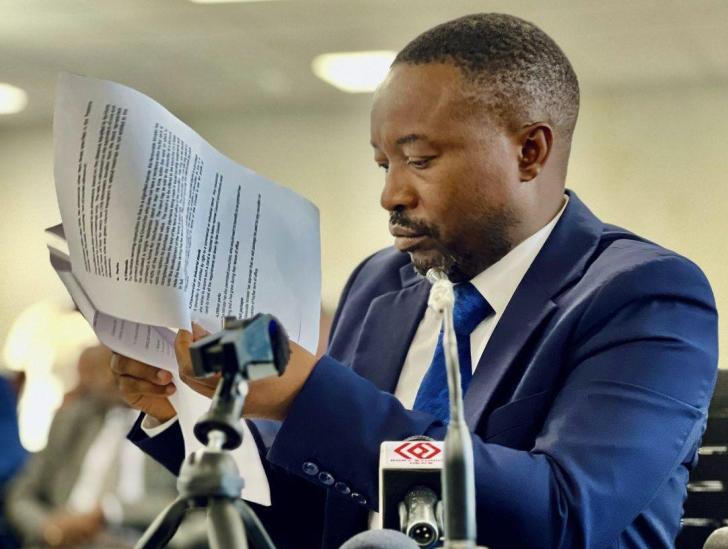
More than 390,000 unregistered properties are placing enormous pressure on Harare's infrastructure and threatening the city's long-term sustainability, Mayor Jacob Mafume has said, blaming illegal land allocations for the rapid growth of settlements that consume municipal services without contributing to council revenue.
Mafume made the remarks as the Parliamentary Portfolio Committee on Local Government, Public Works and National Housing toured informal and peri-urban settlements around Harare to assess the scale of illegal developments and their impact on service delivery.
The visit comes as the City of Harare implements its first masterplan in nearly three decades, a long-term blueprint intended to restore orderly urban development and guide the capital's growth through to 2045.
Addressing the committee, Mafume said illegal land allocations had resulted in unregistered developments now outnumbering properties on the city's valuation roll.
According to the mayor, Harare has approximately 322,000 registered properties contributing rates and other municipal charges, compared with more than 390,000 unregistered properties created through illegal settlements.
"Residents from these unplanned settlements still enjoy services they are not paying for. They still access medical services, schools and other services offered by the city," Mafume said.
He cited Hopley and Eastview as examples of settlements placing increasing pressure on public facilities.
"For example, 22 babies are born every day at Tariro Clinic in Hopley. Those in Eastview who settled in Goromonzi access services at Mabvuku Polyclinic," he said.
Mafume described conditions in many of the settlements as resembling "camps rather than settlements," citing the absence of roads, sewer systems, water reticulation, refuse collection, schools and other essential infrastructure.
He also raised concerns over the lack of clearly defined municipal boundaries, saying Harare's expansion into neighbouring districts had complicated urban planning and service delivery.
"We have effectively become the remainder of the surrounding province. Clearly demarcated boundaries are essential for proper planning, revenue collection and the provision of municipal services," he said.
Warning of the long-term consequences, Mafume said the city's financial sustainability was under threat.
"If those who pay nothing come to outnumber those who pay, decisions will be made by the non-paying majority and the chaos will be self-fulfilling," he said.
Harare's previous masterplan was adopted in 1996, leaving the city without an updated spatial development framework for almost 30 years. Urban planning experts have long argued that such plans should be reviewed every decade to keep pace with population growth and changing development patterns.
The new masterplan, reportedly developed at a cost of US$3 million, is expected to guide Harare's development until 2045 through improved land-use planning, integrated transport systems, infrastructure investment and environmental sustainability.
The Parliamentary Portfolio Committee is inspecting several rapidly expanding settlements where thousands of residents live without approved layouts or adequate water, sanitation and road infrastructure. Its findings are expected to inform recommendations aimed at curbing illegal land allocations, strengthening urban land management and improving service delivery.
Mafume welcomed the committee's visit, saying that while the masterplan provides a long-term vision for the city, immediate interventions are needed to ease pressure on overstretched health, education and other public services.
He also urged Government to accelerate the regularisation of suitable settlements while warning that unchecked and haphazard urban development could no longer be allowed to continue.
Mafume made the remarks as the Parliamentary Portfolio Committee on Local Government, Public Works and National Housing toured informal and peri-urban settlements around Harare to assess the scale of illegal developments and their impact on service delivery.
The visit comes as the City of Harare implements its first masterplan in nearly three decades, a long-term blueprint intended to restore orderly urban development and guide the capital's growth through to 2045.
Addressing the committee, Mafume said illegal land allocations had resulted in unregistered developments now outnumbering properties on the city's valuation roll.
According to the mayor, Harare has approximately 322,000 registered properties contributing rates and other municipal charges, compared with more than 390,000 unregistered properties created through illegal settlements.
"Residents from these unplanned settlements still enjoy services they are not paying for. They still access medical services, schools and other services offered by the city," Mafume said.
He cited Hopley and Eastview as examples of settlements placing increasing pressure on public facilities.
"For example, 22 babies are born every day at Tariro Clinic in Hopley. Those in Eastview who settled in Goromonzi access services at Mabvuku Polyclinic," he said.
Mafume described conditions in many of the settlements as resembling "camps rather than settlements," citing the absence of roads, sewer systems, water reticulation, refuse collection, schools and other essential infrastructure.
He also raised concerns over the lack of clearly defined municipal boundaries, saying Harare's expansion into neighbouring districts had complicated urban planning and service delivery.
"We have effectively become the remainder of the surrounding province. Clearly demarcated boundaries are essential for proper planning, revenue collection and the provision of municipal services," he said.
Warning of the long-term consequences, Mafume said the city's financial sustainability was under threat.
"If those who pay nothing come to outnumber those who pay, decisions will be made by the non-paying majority and the chaos will be self-fulfilling," he said.
Harare's previous masterplan was adopted in 1996, leaving the city without an updated spatial development framework for almost 30 years. Urban planning experts have long argued that such plans should be reviewed every decade to keep pace with population growth and changing development patterns.
The new masterplan, reportedly developed at a cost of US$3 million, is expected to guide Harare's development until 2045 through improved land-use planning, integrated transport systems, infrastructure investment and environmental sustainability.
The Parliamentary Portfolio Committee is inspecting several rapidly expanding settlements where thousands of residents live without approved layouts or adequate water, sanitation and road infrastructure. Its findings are expected to inform recommendations aimed at curbing illegal land allocations, strengthening urban land management and improving service delivery.
Mafume welcomed the committee's visit, saying that while the masterplan provides a long-term vision for the city, immediate interventions are needed to ease pressure on overstretched health, education and other public services.
He also urged Government to accelerate the regularisation of suitable settlements while warning that unchecked and haphazard urban development could no longer be allowed to continue.
Source - newsday
Join the discussion
Loading comments…



