News / National
Zimbabwe maize prices rise 5% to US$348
14 Aug 2026 at 17:45hrs |
0 Views
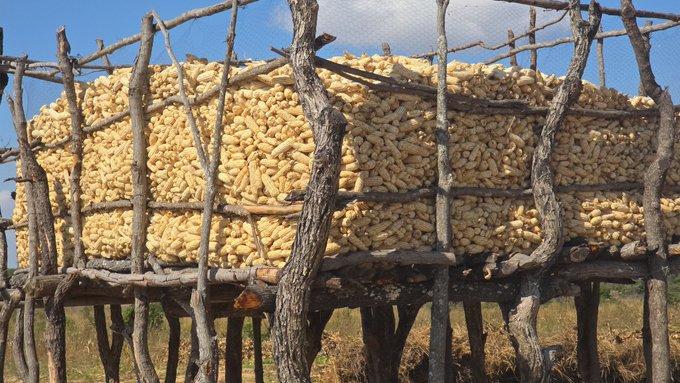
Zimbabwe's white maize price rose by 5 percent to an average of US$348 per tonne on the Zimbabwe Mercantile Exchange (ZMX), despite subdued demand and ample supplies.
The increase came after buyers and sellers narrowed their price expectations during the August 5 auction held at the Mashonaland West Provincial Agricultural Show in Chinhoyi.
White maize had previously traded at an average US$332 per tonne on the July 29 auction, following a price deadlock a week earlier when buyers were offering US$330 per tonne against farmers' asking price of US$350.
ZMX has since postponed this week's grain and oilseed auction to Wednesday, August 19, citing public holidays that left insufficient time to complete preparations for the trading session.
According to the exchange, market activity remained subdued during the latest auction, with buyers seeking only 500 tonnes against more than 2 000 tonnes offered.
"The price gap in the maize market persisted, with buyers and sellers continuing to trade at different price expectations, limiting transaction volumes," ZMX said.
The exchange said white maize and wheat remained adequately supplied, with available volumes of about 2 000 tonnes and 5 000 tonnes respectively, exceeding current demand.
"This imbalance has created downward pressure on prices, although relatively narrow bid-ask spreads suggest that transactions remain possible through price negotiations," ZMX said.
However, the market for soya beans and sugar beans is showing the opposite trend, with strong demand against limited or no available supply.
ZMX said the premium being offered by buyers for sugar beans indicated a willingness to pay more to secure scarce stocks.
"Overall, market activity remains selective, with demand concentrated in a few strategic commodities while trading in most other crops is constrained by the absence of either buyers or sellers, as well as significant differences in price expectations," the exchange said.
The market conditions point to reduced liquidity outside the major grain and oilseed markets, which is delaying price discovery and limiting trade execution.
ZMX expects commodities facing supply shortages to maintain upward price momentum, while markets with excess stocks are likely to remain under pressure until demand strengthens enough to absorb available supplies.
Despite the recent increase, Zimbabwe's maize market continues to carry a substantial premium over regional benchmarks.
The ZMX white maize price of US$348 per tonne compares with about US$224,96 on the Johannesburg Stock Exchange (JSE), US$225 on the Agricultural Commodity Exchange for Africa (ACE) and US$225,70 on the Nigeria Commodity Exchange (NCX).
ZMX said the significant price differential reflected Zimbabwe's relatively high production costs rather than the supply situation alone.
"Rising expenditure on seed, fertiliser, crop chemicals, fuel, electricity, labour, transport, storage and financing continues to elevate producers' breakeven prices, limiting the competitiveness of locally produced grain," the exchange said.
The exchange noted that Zimbabwe had recorded an improved maize harvest during the current season, but structural production costs continued to keep domestic prices above regional levels.
"Despite an improved maize harvest this season, these structural cost pressures have kept domestic prices well above regional levels," ZMX said.
The premium creates an opportunity for buyers to source cheaper maize from neighbouring surplus-producing countries, provided trade regulations and logistics allow.
Meanwhile, the exchange said the latest price movements highlighted the contrasting conditions across Zimbabwe's agricultural commodities market, with well-supplied crops facing downward pressure while commodities in short supply continue to command stronger prices.
The increase came after buyers and sellers narrowed their price expectations during the August 5 auction held at the Mashonaland West Provincial Agricultural Show in Chinhoyi.
White maize had previously traded at an average US$332 per tonne on the July 29 auction, following a price deadlock a week earlier when buyers were offering US$330 per tonne against farmers' asking price of US$350.
ZMX has since postponed this week's grain and oilseed auction to Wednesday, August 19, citing public holidays that left insufficient time to complete preparations for the trading session.
According to the exchange, market activity remained subdued during the latest auction, with buyers seeking only 500 tonnes against more than 2 000 tonnes offered.
"The price gap in the maize market persisted, with buyers and sellers continuing to trade at different price expectations, limiting transaction volumes," ZMX said.
The exchange said white maize and wheat remained adequately supplied, with available volumes of about 2 000 tonnes and 5 000 tonnes respectively, exceeding current demand.
"This imbalance has created downward pressure on prices, although relatively narrow bid-ask spreads suggest that transactions remain possible through price negotiations," ZMX said.
However, the market for soya beans and sugar beans is showing the opposite trend, with strong demand against limited or no available supply.
ZMX said the premium being offered by buyers for sugar beans indicated a willingness to pay more to secure scarce stocks.
The market conditions point to reduced liquidity outside the major grain and oilseed markets, which is delaying price discovery and limiting trade execution.
ZMX expects commodities facing supply shortages to maintain upward price momentum, while markets with excess stocks are likely to remain under pressure until demand strengthens enough to absorb available supplies.
Despite the recent increase, Zimbabwe's maize market continues to carry a substantial premium over regional benchmarks.
The ZMX white maize price of US$348 per tonne compares with about US$224,96 on the Johannesburg Stock Exchange (JSE), US$225 on the Agricultural Commodity Exchange for Africa (ACE) and US$225,70 on the Nigeria Commodity Exchange (NCX).
ZMX said the significant price differential reflected Zimbabwe's relatively high production costs rather than the supply situation alone.
"Rising expenditure on seed, fertiliser, crop chemicals, fuel, electricity, labour, transport, storage and financing continues to elevate producers' breakeven prices, limiting the competitiveness of locally produced grain," the exchange said.
The exchange noted that Zimbabwe had recorded an improved maize harvest during the current season, but structural production costs continued to keep domestic prices above regional levels.
"Despite an improved maize harvest this season, these structural cost pressures have kept domestic prices well above regional levels," ZMX said.
The premium creates an opportunity for buyers to source cheaper maize from neighbouring surplus-producing countries, provided trade regulations and logistics allow.
Meanwhile, the exchange said the latest price movements highlighted the contrasting conditions across Zimbabwe's agricultural commodities market, with well-supplied crops facing downward pressure while commodities in short supply continue to command stronger prices.
Source - The Herald
Join the discussion
Loading comments…


