News / National
Zimbabwe's equity rally exposes the market's unfinished business
15 Sep 2026 at 18:48hrs |
0 Views
ZIMBABWE'S stock market has delivered spectacular returns this year, but the rally has also exposed a structural weakness that is becoming increasingly difficult to ignore — the country's capital markets are growing, but remain relatively shallow and highly concentrated.
The Zimbabwe Stock Exchange (ZSE) All Share Index had risen 71.8% by the end of August 2026, with some counters recording substantially larger gains. However, according to the Reserve Bank of Zimbabwe's 2025 Financial Stability Report, five of the 39 companies listed on the ZSE accounted for about 70% of total market capitalisation in 2025.
Trading activity tells a similar story.
ZSE turnover surged 433.6% in August to ZiG2.83 billion, but CBZ alone accounted for ZiG2.67 billion of that amount. Delta contributed ZiG98.74 million, while Tigere REIT recorded ZiG77.80 million.
Fincent Securities calculated that the three counters accounted for 98% of total ZSE turnover during the month.
The figures suggest that although more money is flowing through the exchange, trading activity remains concentrated in a very small number of counters rather than being distributed broadly across the market.
For investors, liquidity refers to how easily an asset can be bought or sold without significantly affecting its price. When trading is concentrated in a handful of counters, other shares can remain difficult to buy or sell in meaningful volumes.
This creates a central tension in Zimbabwe's capital-market development: the market is becoming larger, but not necessarily deeper.
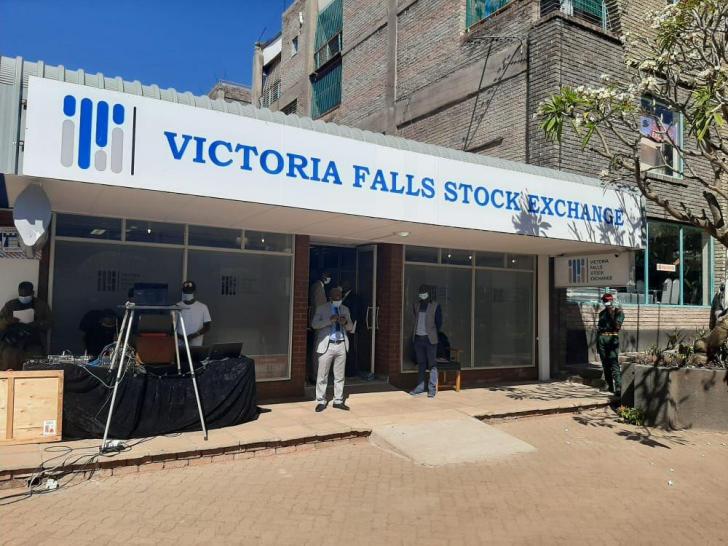
A similar pattern is visible on the Victoria Falls Stock Exchange (VFEX), although its development could point towards a more diversified future.
Shares worth US$13.74 million changed hands on VFEX in August, with more than half of the turnover concentrated in Padenga, Caledonia and newly listed Old Mutual.
At the same time, VFEX market capitalisation almost doubled during the month to US$8.07 billion. Cumulative turnover for the year reached US$190.37 million, while the VFEX All Share Index remained 46.2% higher year-to-date despite falling 1.7% in August.
The listing of Old Mutual on August 12 was particularly significant. The counter generated about US$1.66 million in turnover during the month, making it the third most actively traded VFEX stock.
Its importance, however, extends beyond the trading figures.
Every quality listing expands the range of assets available to investors, while VFEX provides an avenue for exposure to companies with US dollar earnings or hard-currency-linked revenues. That is increasingly important in Zimbabwe, where currency movements have historically complicated asset valuations.
However, more listings alone will not create a deep capital market.
Market depth requires a broad pool of quality companies, sufficient trading activity and, crucially, businesses that can repeatedly use capital markets to raise funding for expansion.
Zimbabwe's challenge may therefore be less about finding investors and more about creating enough investment opportunities for them, FBC Securities noted in its latest report.
The Zimbabwe Emerging Enterprise Exchange (ZEEX) could play an important role in addressing that gap.
ZSE Holdings group board chairman Caroline Sandura said the exchange's main focus for the second half of 2026 was building a strong ZEEX issue pipeline. Work is also under way to strengthen the adviser and sponsor ecosystem, prepare prospective issuers and engage institutional and development finance investors for anchor participation.
For years, Zimbabwe's equity market has revolved around a relatively small pool of listed companies. A successful ZEEX could widen that pool by providing smaller and emerging businesses with a route to raise capital and, over time, develop into larger listed entities.
It could therefore help address one of the market's most persistent weaknesses — a shortage of investable assets.
VFEX, meanwhile, is broadening the market from another direction.
Sandura said five new listings had already improved activity and liquidity, with at least three more expected before the end of the year. She also pointed to growing foreign-investor interest and the operationalisation of the Victoria Falls International Financial Services Centre as potential catalysts for investment and cross-border financial activity.
Taken together, the ZSE, VFEX and ZEEX are beginning to give Zimbabwe's capital markets a more differentiated structure, with different platforms able to serve different companies and investor needs.
But the bigger question for investors is whether the gains recorded this year are supported by underlying company performance.
Fincent Securities puts the aggregate price-to-earnings ratio — a measure of how much investors are paying relative to company profits — at 9.4 times on the ZSE and 13.7 times on VFEX. The brokerage cautions that the two markets are not directly comparable because of differences in currency and methodology.
The figures nevertheless point to an important shift. Investors can no longer assume that a rising market means every share remains attractively valued.
Some companies may justify higher valuations through stronger earnings and cash generation, while others may find that investors have already priced in much of their anticipated growth.
Fincent Securities senior financial analyst Kudakwashe Taimo said this distinction would become increasingly important during the second half of the year.
"The second half of 2026 will therefore require a different mindset from the first. Broad market momentum has already delivered substantial returns. From here, fundamentals should increasingly do the heavy lifting," Taimo said.
"For investors, that means following the earnings. And in a market transitioning from inflation-driven to earnings-driven returns, companies offering strong fundamentals, liquidity, US dollar exposure and defensible valuations should increasingly command the premium."
That could mark an important transition for Zimbabwe's market. The first phase of the rally was largely about repricing as investors reassessed assets and pushed valuations higher. The next phase will require companies to demonstrate that their earnings can support those valuations.
The questions are therefore becoming more fundamental: Can companies grow earnings quickly enough to justify their new valuations? Can the exchanges attract enough new listings to reduce concentration? And can investors trade a wider range of shares without struggling to find buyers or sellers?
Regulators also face the challenge of modernising the market while maintaining investor confidence and protecting the integrity of the financial system.
The Securities and Exchange Commission of Zimbabwe believes technology will form part of the answer.
Non-executive chairperson Dakshesh Patel said Zimbabwe had an opportunity to "harness technology, expand access to investment opportunities and position its capital markets as a catalyst for economic growth, competitiveness and national development".
The regulator is working towards a framework for digital assets and virtual asset service providers while exploring blockchain and tokenisation as ways of broadening participation, improving financial inclusion, facilitating cross-border transactions and creating new investment opportunities.
The opportunities, however, come with risks.
The Reserve Bank has warned that growing links between capital markets and other parts of the financial system could amplify contagion when shocks occur. Cybersecurity threats are also becoming more significant as financial services become increasingly digital, while climate-related risks could affect asset values and investor confidence over time.
For Zimbabwe, capital-market development therefore cannot be measured simply by the number of points gained on an index or the amount traded in a single month.
A genuinely deeper market would give companies more reliable access to capital, provide investors with greater choice and give the economy a broader mechanism for mobilising savings into productive investment.
Zimbabwe has made progress on those fronts. VFEX is expanding, ZEEX is being developed, new listings are widening the investment universe and regulators are preparing for a more digital market.
Yet the numbers continue to expose the gaps. When five companies account for about 70% of market capitalisation and three counters generate 98% of ZSE turnover, concentration remains a significant structural weakness.
The rally has demonstrated that investors are willing to put money into Zimbabwean equities. The next test is whether the market can provide enough depth, choice and quality to turn that appetite into sustained investment.
That is the unfinished business of Zimbabwe's capital markets: moving beyond a strong rally to build a deeper market capable of mobilising capital more broadly, attracting more investors and giving businesses better access to long-term funding.
The Zimbabwe Stock Exchange (ZSE) All Share Index had risen 71.8% by the end of August 2026, with some counters recording substantially larger gains. However, according to the Reserve Bank of Zimbabwe's 2025 Financial Stability Report, five of the 39 companies listed on the ZSE accounted for about 70% of total market capitalisation in 2025.
Trading activity tells a similar story.
ZSE turnover surged 433.6% in August to ZiG2.83 billion, but CBZ alone accounted for ZiG2.67 billion of that amount. Delta contributed ZiG98.74 million, while Tigere REIT recorded ZiG77.80 million.
Fincent Securities calculated that the three counters accounted for 98% of total ZSE turnover during the month.
The figures suggest that although more money is flowing through the exchange, trading activity remains concentrated in a very small number of counters rather than being distributed broadly across the market.
For investors, liquidity refers to how easily an asset can be bought or sold without significantly affecting its price. When trading is concentrated in a handful of counters, other shares can remain difficult to buy or sell in meaningful volumes.
This creates a central tension in Zimbabwe's capital-market development: the market is becoming larger, but not necessarily deeper.
A similar pattern is visible on the Victoria Falls Stock Exchange (VFEX), although its development could point towards a more diversified future.
Shares worth US$13.74 million changed hands on VFEX in August, with more than half of the turnover concentrated in Padenga, Caledonia and newly listed Old Mutual.
At the same time, VFEX market capitalisation almost doubled during the month to US$8.07 billion. Cumulative turnover for the year reached US$190.37 million, while the VFEX All Share Index remained 46.2% higher year-to-date despite falling 1.7% in August.
The listing of Old Mutual on August 12 was particularly significant. The counter generated about US$1.66 million in turnover during the month, making it the third most actively traded VFEX stock.
Its importance, however, extends beyond the trading figures.
Every quality listing expands the range of assets available to investors, while VFEX provides an avenue for exposure to companies with US dollar earnings or hard-currency-linked revenues. That is increasingly important in Zimbabwe, where currency movements have historically complicated asset valuations.
However, more listings alone will not create a deep capital market.
Market depth requires a broad pool of quality companies, sufficient trading activity and, crucially, businesses that can repeatedly use capital markets to raise funding for expansion.
Zimbabwe's challenge may therefore be less about finding investors and more about creating enough investment opportunities for them, FBC Securities noted in its latest report.
The Zimbabwe Emerging Enterprise Exchange (ZEEX) could play an important role in addressing that gap.
ZSE Holdings group board chairman Caroline Sandura said the exchange's main focus for the second half of 2026 was building a strong ZEEX issue pipeline. Work is also under way to strengthen the adviser and sponsor ecosystem, prepare prospective issuers and engage institutional and development finance investors for anchor participation.
For years, Zimbabwe's equity market has revolved around a relatively small pool of listed companies. A successful ZEEX could widen that pool by providing smaller and emerging businesses with a route to raise capital and, over time, develop into larger listed entities.
It could therefore help address one of the market's most persistent weaknesses — a shortage of investable assets.
VFEX, meanwhile, is broadening the market from another direction.
Sandura said five new listings had already improved activity and liquidity, with at least three more expected before the end of the year. She also pointed to growing foreign-investor interest and the operationalisation of the Victoria Falls International Financial Services Centre as potential catalysts for investment and cross-border financial activity.
Taken together, the ZSE, VFEX and ZEEX are beginning to give Zimbabwe's capital markets a more differentiated structure, with different platforms able to serve different companies and investor needs.
But the bigger question for investors is whether the gains recorded this year are supported by underlying company performance.
Fincent Securities puts the aggregate price-to-earnings ratio — a measure of how much investors are paying relative to company profits — at 9.4 times on the ZSE and 13.7 times on VFEX. The brokerage cautions that the two markets are not directly comparable because of differences in currency and methodology.
The figures nevertheless point to an important shift. Investors can no longer assume that a rising market means every share remains attractively valued.
Some companies may justify higher valuations through stronger earnings and cash generation, while others may find that investors have already priced in much of their anticipated growth.
Fincent Securities senior financial analyst Kudakwashe Taimo said this distinction would become increasingly important during the second half of the year.
"The second half of 2026 will therefore require a different mindset from the first. Broad market momentum has already delivered substantial returns. From here, fundamentals should increasingly do the heavy lifting," Taimo said.
"For investors, that means following the earnings. And in a market transitioning from inflation-driven to earnings-driven returns, companies offering strong fundamentals, liquidity, US dollar exposure and defensible valuations should increasingly command the premium."
That could mark an important transition for Zimbabwe's market. The first phase of the rally was largely about repricing as investors reassessed assets and pushed valuations higher. The next phase will require companies to demonstrate that their earnings can support those valuations.
The questions are therefore becoming more fundamental: Can companies grow earnings quickly enough to justify their new valuations? Can the exchanges attract enough new listings to reduce concentration? And can investors trade a wider range of shares without struggling to find buyers or sellers?
Regulators also face the challenge of modernising the market while maintaining investor confidence and protecting the integrity of the financial system.
The Securities and Exchange Commission of Zimbabwe believes technology will form part of the answer.
Non-executive chairperson Dakshesh Patel said Zimbabwe had an opportunity to "harness technology, expand access to investment opportunities and position its capital markets as a catalyst for economic growth, competitiveness and national development".
The regulator is working towards a framework for digital assets and virtual asset service providers while exploring blockchain and tokenisation as ways of broadening participation, improving financial inclusion, facilitating cross-border transactions and creating new investment opportunities.
The opportunities, however, come with risks.
The Reserve Bank has warned that growing links between capital markets and other parts of the financial system could amplify contagion when shocks occur. Cybersecurity threats are also becoming more significant as financial services become increasingly digital, while climate-related risks could affect asset values and investor confidence over time.
For Zimbabwe, capital-market development therefore cannot be measured simply by the number of points gained on an index or the amount traded in a single month.
A genuinely deeper market would give companies more reliable access to capital, provide investors with greater choice and give the economy a broader mechanism for mobilising savings into productive investment.
Zimbabwe has made progress on those fronts. VFEX is expanding, ZEEX is being developed, new listings are widening the investment universe and regulators are preparing for a more digital market.
Yet the numbers continue to expose the gaps. When five companies account for about 70% of market capitalisation and three counters generate 98% of ZSE turnover, concentration remains a significant structural weakness.
The rally has demonstrated that investors are willing to put money into Zimbabwean equities. The next test is whether the market can provide enough depth, choice and quality to turn that appetite into sustained investment.
That is the unfinished business of Zimbabwe's capital markets: moving beyond a strong rally to build a deeper market capable of mobilising capital more broadly, attracting more investors and giving businesses better access to long-term funding.
Source - The Independent
Join the discussion
Loading comments…





