Opinion / Columnist
There is no humanity in stealing from the vulnerable - my tragic story
17 Dec 2025 at 09:34hrs |
0 Views
It never rains but pours, it is said.
Just a few days ago, I became a victim of a carefully calculated and deeply cruel scheme of theft-one that goes beyond the mere loss of property and strikes at the very core of human decency.
To directly receive articles from Tendai Ruben Mbofana, please join his WhatsApp Channel on: https://whatsapp.com/channel/0029VaqprWCIyPtRnKpkHe08
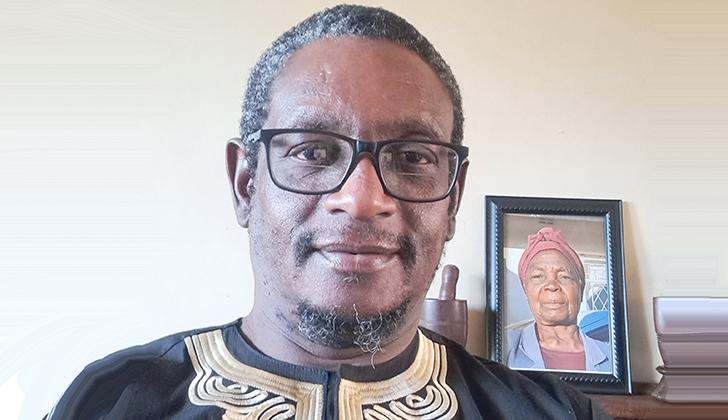
Two months ago, I buried my dearest mother.
Anyone who has gone through such a loss knows that grief does not come alone; it arrives with emotional, physical, and financial burdens.
Funeral expenses, family obligations, and unresolved responsibilities quickly pile up.
As someone of very limited means, I did what many ordinary Zimbabweans do in times of distress: I stretched the little I had, hoping it would be enough.
It wasn't.
Left with no other viable option, I made the painful decision to sell my laptop-an HP Probook 11 G6 x360 touchscreen.
It is not an expensive gadget by any stretch of the imagination, but it was mine.
It was what I could afford.
More importantly, it was what I was prepared to sacrifice in order to meet pressing needs.
I advertised it on WhatsApp groups and Facebook Marketplace, like countless others trying to survive in a collapsing economy.
Several people showed interest, but nothing materialised.
Then, last Saturday morning, a man called me.
He sounded eager, decisive, and ready to buy immediately at the asking price of US$250.
He said he was in Chegutu.
To someone in my situation, this felt like a prayer answered.
We agreed to meet at a fast-food outlet in Chegutu at noon.
Fuel is not cheap.
Still, believing I would recover the money later that same day, I used part of my last remaining cash and drove from Kwekwe to Chegutu-over 100 kilometres.
I arrived on time and called him.
He said he was tied up with some "customers" but would be there in five minutes.
Those five minutes stretched into thirty.
When I called again, the story changed.
He had been called away for work outside Chegutu, but not to worry-he would send a friend who was "good with laptops" to check the device.
If the friend approved, the money would be sent to me immediately.
In hindsight, this should have been the moment I walked away.
But desperation has a way of dulling instinct.
After travelling that far, emotionally invested and hopeful, I waited.
The "friend" then called and said he was actually in Kadoma, involved in artisanal gold mining.
Since Kadoma lay on my route back to Kwekwe, he suggested we meet there instead.
Exhausted, hungry, and still clinging to hope, I agreed.
We met in Kadoma.
He examined the laptop.
I called the buyer, who had been calling me frequently, asking whether I had met his friend and requesting my personal details to prepare the transfer.
The friend confirmed the laptop was in good condition.
Then came another strange moment: the buyer asked how much extra he should add to cover my travelling expenses.
Buyers usually negotiate prices down, not up.
Yet again, the warning signs were there.
What disarmed me completely was this: when I gave him my name, he said he recognised it.
He claimed to be a follower of my work and a fan of my articles.
A sense of familiarity-of shared space-was deliberately manufactured.
I did not realise I was dealing with professionals.
We agreed on US$280.
He said he could not send the money via EcoCash due to lack of funds in the wallet, but would use a money transfer agent called Access Forex.
I had never heard of it before.
Still, within a minute, I received an SMS confirming the transfer.
Relief washed over me.
The nightmare day finally seemed to be ending.
He told me he had already informed Access Forex that I would cash out in Kwekwe.
That detail should have raised the loudest alarm of all.
Most money transfer services do not care where you cash out.
But by then I was exhausted, reassured by having met the "friend" in person, and emotionally manipulated by the supposed connection we shared.
I rushed back to Kwekwe to beat closing time.
N. Richards was closed.
Gains Wholesalers, where he said Access Forex could be found, had no such outlet.
I was redirected to Pro Feeds, which was also closed.
Later, I checked the Access Forex website and saw outlets listed at Spar and Edgars.
I resolved to return the next day.
Sunday came with more frustration.
Access Forex outlets do not hold float; they rely on cash-ins from other customers.
From morning until early afternoon, not a single transaction came through.
I returned again on Monday.
At around 1 p.m., the lady at Spar finally told me there was enough money for a cash-out.
What followed was devastating.
After giving the lady at the Spar outlet the money transfer details, she entered them into the system.
Moments later, she looked up and told me that there was no such transaction recorded.
At the same time, another young man who was also attempting to make an Access Forex cash-out encountered exactly the same problem.
His transaction, too, could not be found in the system.
At first, we assumed it was a system or network issue and decided to wait and try again later.
The young man even left to check at the Edgars Access Forex outlet.
I remained behind.
When the attendant tried once more using my details, the result was the same-no transaction.
Moments later, the young man returned.
He asked if I had been successful.
Then he said words that sent a chill through me: "I think we have been scammed."
He asked to see my confirmation SMS.
He opened his own.
What we saw left us both stunned.
The messages were identical-every single detail was the same, including the sender's name, Emmanuel Chikoto, as well as the transaction and PIN numbers, which should, under normal circumstances, be unique to each transaction.
He had also sold a laptop to the same crooks and had gone through almost the exact same ordeal, having been told the very same story at every stage, from the initial contact to the fake money transfer confirmation.
The thieves had cloned the confirmation messages.
The phone numbers were now unreachable.
The SIM cards, likely illegally registered, showed no real names.
The laptop was gone.
The money never existed.
I was left with nothing but fuel costs, emotional exhaustion, and the crushing realisation that I had been deliberately targeted at one of the most vulnerable moments of my life.
This was not just theft.
It was cruelty.
It takes a particular kind of heartlessness to prey on people selling modest possessions-people who are clearly not wealthy, clearly under pressure, clearly desperate.
These criminals are not stealing from corporations or faceless systems.
They are stealing from human beings, from grieving sons, from struggling families, from people already on the edge.
They do so without hesitation and without remorse.
What haunts me most is not only the loss of the laptop, but what could have happened.
What if, when I met the "friend" in Kadoma, he had produced a gun?
What if I had lost not only my laptop, but my car-or my life?
I drove home in silence.
I stopped by my mother's grave and wept.
This experience shattered any illusion I still held about the moral limits of desperation in our society.
There are people out there who feel nothing when they ruin others.
No guilt.
No empathy.
No restraint.
And to think that after telling me he was a follower of my work, I confided in him that I had recently lost my mother and desperately needed the money to cover expenses.
He still did not care and went ahead to steal from me anyway.
Let this serve as a warning.
If you must sell something online, exercise extreme caution.
Avoid strangers.
Deal, if at all possible, only with people you know or who come with verified trust.
Do not allow desperation to override instinct, as I did.
And to those who live by such schemes: understand this-what you take is not just property.
You take peace.
You take dignity.
You take hope.
That is not survival.
That is cruelty.
© Tendai Ruben Mbofana is a social justice advocate and writer. Please feel free to WhatsApp or Call: +263715667700 | +263782283975, or email: mbofana.tendairuben73@gmail.com, or visit website: https://mbofanatendairuben.news.blog/
Just a few days ago, I became a victim of a carefully calculated and deeply cruel scheme of theft-one that goes beyond the mere loss of property and strikes at the very core of human decency.
To directly receive articles from Tendai Ruben Mbofana, please join his WhatsApp Channel on: https://whatsapp.com/channel/0029VaqprWCIyPtRnKpkHe08
Two months ago, I buried my dearest mother.
Anyone who has gone through such a loss knows that grief does not come alone; it arrives with emotional, physical, and financial burdens.
Funeral expenses, family obligations, and unresolved responsibilities quickly pile up.
As someone of very limited means, I did what many ordinary Zimbabweans do in times of distress: I stretched the little I had, hoping it would be enough.
It wasn't.
Left with no other viable option, I made the painful decision to sell my laptop-an HP Probook 11 G6 x360 touchscreen.
It is not an expensive gadget by any stretch of the imagination, but it was mine.
It was what I could afford.
More importantly, it was what I was prepared to sacrifice in order to meet pressing needs.
I advertised it on WhatsApp groups and Facebook Marketplace, like countless others trying to survive in a collapsing economy.
Several people showed interest, but nothing materialised.
Then, last Saturday morning, a man called me.
He sounded eager, decisive, and ready to buy immediately at the asking price of US$250.
He said he was in Chegutu.
To someone in my situation, this felt like a prayer answered.
We agreed to meet at a fast-food outlet in Chegutu at noon.
Fuel is not cheap.
Still, believing I would recover the money later that same day, I used part of my last remaining cash and drove from Kwekwe to Chegutu-over 100 kilometres.
I arrived on time and called him.
He said he was tied up with some "customers" but would be there in five minutes.
Those five minutes stretched into thirty.
When I called again, the story changed.
He had been called away for work outside Chegutu, but not to worry-he would send a friend who was "good with laptops" to check the device.
If the friend approved, the money would be sent to me immediately.
In hindsight, this should have been the moment I walked away.
But desperation has a way of dulling instinct.
After travelling that far, emotionally invested and hopeful, I waited.
The "friend" then called and said he was actually in Kadoma, involved in artisanal gold mining.
Since Kadoma lay on my route back to Kwekwe, he suggested we meet there instead.
Exhausted, hungry, and still clinging to hope, I agreed.
We met in Kadoma.
He examined the laptop.
I called the buyer, who had been calling me frequently, asking whether I had met his friend and requesting my personal details to prepare the transfer.
The friend confirmed the laptop was in good condition.
Then came another strange moment: the buyer asked how much extra he should add to cover my travelling expenses.
Buyers usually negotiate prices down, not up.
Yet again, the warning signs were there.
What disarmed me completely was this: when I gave him my name, he said he recognised it.
He claimed to be a follower of my work and a fan of my articles.
A sense of familiarity-of shared space-was deliberately manufactured.
I did not realise I was dealing with professionals.
We agreed on US$280.
He said he could not send the money via EcoCash due to lack of funds in the wallet, but would use a money transfer agent called Access Forex.
I had never heard of it before.
Still, within a minute, I received an SMS confirming the transfer.
Relief washed over me.
The nightmare day finally seemed to be ending.
He told me he had already informed Access Forex that I would cash out in Kwekwe.
That detail should have raised the loudest alarm of all.
Most money transfer services do not care where you cash out.
But by then I was exhausted, reassured by having met the "friend" in person, and emotionally manipulated by the supposed connection we shared.
I rushed back to Kwekwe to beat closing time.
N. Richards was closed.
Gains Wholesalers, where he said Access Forex could be found, had no such outlet.
I was redirected to Pro Feeds, which was also closed.
Later, I checked the Access Forex website and saw outlets listed at Spar and Edgars.
I resolved to return the next day.
Sunday came with more frustration.
Access Forex outlets do not hold float; they rely on cash-ins from other customers.
From morning until early afternoon, not a single transaction came through.
I returned again on Monday.
At around 1 p.m., the lady at Spar finally told me there was enough money for a cash-out.
What followed was devastating.
After giving the lady at the Spar outlet the money transfer details, she entered them into the system.
Moments later, she looked up and told me that there was no such transaction recorded.
At the same time, another young man who was also attempting to make an Access Forex cash-out encountered exactly the same problem.
His transaction, too, could not be found in the system.
At first, we assumed it was a system or network issue and decided to wait and try again later.
The young man even left to check at the Edgars Access Forex outlet.
I remained behind.
When the attendant tried once more using my details, the result was the same-no transaction.
Moments later, the young man returned.
He asked if I had been successful.
Then he said words that sent a chill through me: "I think we have been scammed."
He asked to see my confirmation SMS.
He opened his own.
What we saw left us both stunned.
The messages were identical-every single detail was the same, including the sender's name, Emmanuel Chikoto, as well as the transaction and PIN numbers, which should, under normal circumstances, be unique to each transaction.
He had also sold a laptop to the same crooks and had gone through almost the exact same ordeal, having been told the very same story at every stage, from the initial contact to the fake money transfer confirmation.
The thieves had cloned the confirmation messages.
The phone numbers were now unreachable.
The SIM cards, likely illegally registered, showed no real names.
The laptop was gone.
The money never existed.
I was left with nothing but fuel costs, emotional exhaustion, and the crushing realisation that I had been deliberately targeted at one of the most vulnerable moments of my life.
This was not just theft.
It was cruelty.
It takes a particular kind of heartlessness to prey on people selling modest possessions-people who are clearly not wealthy, clearly under pressure, clearly desperate.
These criminals are not stealing from corporations or faceless systems.
They are stealing from human beings, from grieving sons, from struggling families, from people already on the edge.
They do so without hesitation and without remorse.
What haunts me most is not only the loss of the laptop, but what could have happened.
What if, when I met the "friend" in Kadoma, he had produced a gun?
What if I had lost not only my laptop, but my car-or my life?
I drove home in silence.
I stopped by my mother's grave and wept.
This experience shattered any illusion I still held about the moral limits of desperation in our society.
There are people out there who feel nothing when they ruin others.
No guilt.
No empathy.
No restraint.
And to think that after telling me he was a follower of my work, I confided in him that I had recently lost my mother and desperately needed the money to cover expenses.
He still did not care and went ahead to steal from me anyway.
Let this serve as a warning.
If you must sell something online, exercise extreme caution.
Avoid strangers.
Deal, if at all possible, only with people you know or who come with verified trust.
Do not allow desperation to override instinct, as I did.
And to those who live by such schemes: understand this-what you take is not just property.
You take peace.
You take dignity.
You take hope.
That is not survival.
That is cruelty.
© Tendai Ruben Mbofana is a social justice advocate and writer. Please feel free to WhatsApp or Call: +263715667700 | +263782283975, or email: mbofana.tendairuben73@gmail.com, or visit website: https://mbofanatendairuben.news.blog/
Source - Tendai Ruben Mbofana
All articles and letters published on Bulawayo24 have been independently written by members of Bulawayo24's community. The views of users published on Bulawayo24 are therefore their own and do not necessarily represent the views of Bulawayo24. Bulawayo24 editors also reserve the right to edit or delete any and all comments received.
Join the discussion
Loading comments…





