Opinion / Columnist
Rhodes' grave must be left alone in Matobo
19 Dec 2025 at 17:37hrs |
0 Views
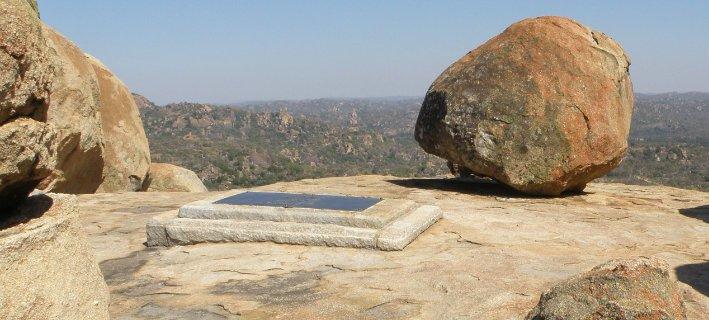
Reading Jacob Mutisi's article, I found it well written and factual. I could not agree more. It is very human that when local circumstances cannot be changed, some turn to emotive provocations such as "Rhodes must fall" to gain relevance. Yet Matabeleland remains underdeveloped. That must be our bone of contention - not historical artefacts. No one can erase Southern African history by removing graves of prominent figures. Suggesting it may give shock value, but beyond that, it adds nothing.
For argument's sake, if Cecil John Rhodes's grave were removed, would Matobo suddenly develop? Would the region be uplifted? Is his grave hindering progress? Whoever suggests removing Rhodes's grave confirms their politics is defeated on the ground. Politics must dwell on bread-and-butter issues - channeling resources to transform communities, including Matobo. Ndebele people are tired of politicians who fail to deliver. Much could have been achieved without waiting for regime change in Harare. I have often challenged Mthwakazi parties to return to rural regions and assist farmers to improve food production, instead of threatening to eliminate Nomazulu Thata by Winnie Mandela necklace.
Matabeleland suffers from food insecurity. It is a dry region needing expert effort from younger generations. Rhodes, within 15 years, made groundbreaking transformations in southern Africa. His infrastructure projects - the Cape-to-Ndola railway, the Victoria Falls Bridge, the Kariba Dam - remain tangible. Yet they have never been upgraded to meet growing demographics demanding stronger economies powered by reliable energy and transport. This is what Mthwakazi should be debating: how to outstage Rhodes's development in 2025.
Before his death, Rhodes envisioned a water pipeline from the Zambezi to Bulawayo - a city known for manufacturing industries. Over a century later, the project remains unfinished, politicized left, right, and center. Rhodes also dreamed of a Cape-to-Cairo railway. Sixty years on, no independent African country has pursued it. If realized, it could have transformed continental economies. Critics call Rhodes's projects "extractive infrastructures," but their value chains were multiple. Today, there is no railway linking Lusaka and Francistown. Even Bulawayo-to-Harare rail travel is impossible. Infrastructure left behind is rundown, know-how is lacking, and corruption consumes resources.
At independence in 1980, President Nyerere visited Zimbabwe and was impressed. He warned Mugabe to keep the "jewel of Africa" intact. Zimbabwe/Rhodesia was far ahead of Tanganyika then. President Zuma once mocked Malawian roads, forgetting South Africa's roads are remnants of apartheid. The infrastructure blacks pride themselves on is not theirs directly.
Rhodes thought far ahead of today's politicians - if coloniality is removed from the matrix. Yet philosophically, death is an equalizer. In Shona: kufa mayenzanise. A dead Rhodes and a dead Mzilikazi lie on the same floor in Matobo. Their graves invite reflection on what each achieved. Amplifying Rhodes's tomb and politicizing its removal signifies nothing. If it mattered so much, why did Britain leave his remains in Matobo instead of repatriating them? Rhodes was a prominent arm of the British establishment. His Rhodes Scholarship continues to benefit global scholars, including Africans.
Politically, repatriating Rhodes's remains adds no value. Economically, his grave attracts tourists to Matobo. Revenues remain in Zimbabwe, not the UK. So what are Mthwakazi people saying? Empty politics without value.
I am deeply worried about politics without substance. We dwell on mindless critiques and forget issues that transform millions of lives. Mthwakazi parties must focus on removing poverty in Ndebele communities. Targeting food sovereignty could reduce poverty by half. Threatening people with death is not politics - it is criminality. Who wants to join a murderous organization? There is much Mthwakazi can do without indulging in useless vocalizations of "Rhodes must go." Repatriating Rhodes's remains puts no bread and butter on the table. How many African graves lie in the UK? Millions.
For argument's sake, if Cecil John Rhodes's grave were removed, would Matobo suddenly develop? Would the region be uplifted? Is his grave hindering progress? Whoever suggests removing Rhodes's grave confirms their politics is defeated on the ground. Politics must dwell on bread-and-butter issues - channeling resources to transform communities, including Matobo. Ndebele people are tired of politicians who fail to deliver. Much could have been achieved without waiting for regime change in Harare. I have often challenged Mthwakazi parties to return to rural regions and assist farmers to improve food production, instead of threatening to eliminate Nomazulu Thata by Winnie Mandela necklace.
Matabeleland suffers from food insecurity. It is a dry region needing expert effort from younger generations. Rhodes, within 15 years, made groundbreaking transformations in southern Africa. His infrastructure projects - the Cape-to-Ndola railway, the Victoria Falls Bridge, the Kariba Dam - remain tangible. Yet they have never been upgraded to meet growing demographics demanding stronger economies powered by reliable energy and transport. This is what Mthwakazi should be debating: how to outstage Rhodes's development in 2025.
Before his death, Rhodes envisioned a water pipeline from the Zambezi to Bulawayo - a city known for manufacturing industries. Over a century later, the project remains unfinished, politicized left, right, and center. Rhodes also dreamed of a Cape-to-Cairo railway. Sixty years on, no independent African country has pursued it. If realized, it could have transformed continental economies. Critics call Rhodes's projects "extractive infrastructures," but their value chains were multiple. Today, there is no railway linking Lusaka and Francistown. Even Bulawayo-to-Harare rail travel is impossible. Infrastructure left behind is rundown, know-how is lacking, and corruption consumes resources.
At independence in 1980, President Nyerere visited Zimbabwe and was impressed. He warned Mugabe to keep the "jewel of Africa" intact. Zimbabwe/Rhodesia was far ahead of Tanganyika then. President Zuma once mocked Malawian roads, forgetting South Africa's roads are remnants of apartheid. The infrastructure blacks pride themselves on is not theirs directly.
Rhodes thought far ahead of today's politicians - if coloniality is removed from the matrix. Yet philosophically, death is an equalizer. In Shona: kufa mayenzanise. A dead Rhodes and a dead Mzilikazi lie on the same floor in Matobo. Their graves invite reflection on what each achieved. Amplifying Rhodes's tomb and politicizing its removal signifies nothing. If it mattered so much, why did Britain leave his remains in Matobo instead of repatriating them? Rhodes was a prominent arm of the British establishment. His Rhodes Scholarship continues to benefit global scholars, including Africans.
Politically, repatriating Rhodes's remains adds no value. Economically, his grave attracts tourists to Matobo. Revenues remain in Zimbabwe, not the UK. So what are Mthwakazi people saying? Empty politics without value.
I am deeply worried about politics without substance. We dwell on mindless critiques and forget issues that transform millions of lives. Mthwakazi parties must focus on removing poverty in Ndebele communities. Targeting food sovereignty could reduce poverty by half. Threatening people with death is not politics - it is criminality. Who wants to join a murderous organization? There is much Mthwakazi can do without indulging in useless vocalizations of "Rhodes must go." Repatriating Rhodes's remains puts no bread and butter on the table. How many African graves lie in the UK? Millions.
Source - Nomazulu Thata
All articles and letters published on Bulawayo24 have been independently written by members of Bulawayo24's community. The views of users published on Bulawayo24 are therefore their own and do not necessarily represent the views of Bulawayo24. Bulawayo24 editors also reserve the right to edit or delete any and all comments received.
Join the discussion
Loading comments…





