Opinion / Columnist
The hypocrisy in Charamba's attack on John Masuku
18 Feb 2026 at 18:04hrs |
0 Views
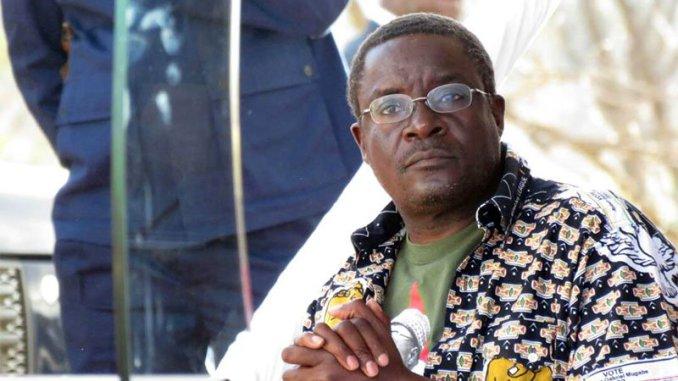
The recent post by George Charamba attacking the late journalist John Masuku exposes a troubling mixture of historical misunderstanding, hypocrisy, and political posturing. While Zimbabweans from across the political, media, and religious spectrum rightly celebrated Masuku's distinguished career, Charamba chose to distort his legacy, painting him as an agent of colonial propaganda and Western interference because he once worked at the Rhodesian Broadcasting Corporation (RBC).
Charamba claimed that Masuku's early career at RBC - a forerunner of the Zimbabwe Broadcasting Corporation (ZBC) - was tantamount to collaborating with settler colonial interests, and even suggested his later work with the Voice of the People (VOP) opposed the Zanu PF-led land reform. This narrative is not only misleading but also ignores critical historical and professional context.
To set the record straight: SW Radio Africa, which Charamba falsely claims was a UK government project aimed at undermining land reform, was in fact founded in London in 2001 by Zimbabwean broadcaster Gerry Jackson, following the closure of her independent station, Capital FM, by the Zimbabwean government. It was an independent, non-profit initiative to provide Zimbabweans with uncensored news. Similarly, Masuku joined VOP in 2000 at the invitation of Zimbabwean media veteran Sarah Chiumbu. VOP's mission was to provide alternative news voices and empower marginalized communities - not to oppose land reform or serve Western interests.
Masuku's formative years in Highfield, one of Zimbabwe's hotbeds of political activism, shaped his journalistic passion. His memoir, Memoirs of a Cross Generational Zimbabwean Broadcaster (2025), chronicles his life in a turbulent era, navigating the rigid structures of RBC while admiring guerrilla radio stations supporting liberation movements. He joined RBC in 1974, becoming one of the first black broadcasters in Rhodesia. Working under colonial censorship was not an endorsement of the regime but a means of survival, professional growth, and a step toward creating a platform for African voices.
After independence, Masuku continued at ZBC for two decades, contributing to the transition to majority rule. To condemn him for his early RBC tenure while glorifying his ZBC work is pure hypocrisy. Both institutions, despite the political shift, functioned as government mouthpieces - RBC under colonial rule and ZBC under Zanu PF. To attack Masuku for one and not the other is to ignore structural realities while engaging in political revisionism.
Charamba's post reflects more about his own authoritarian posture than Masuku's career. As presidential spokesperson, Charamba oversees a media landscape where ZBC disseminates party propaganda, censors dissent, and suppresses alternative viewpoints. By vilifying Masuku for his work at a colonial broadcaster while tolerating similar practices at ZBC, Charamba demonstrates selective outrage and a lack of historical nuance.
The legacy of John Masuku should not be reduced to the political climate of his early employment. His lifelong commitment to journalism, media training, press freedom, and giving a voice to Zimbabweans across political divides stands as testament to his professionalism, courage, and dedication. Black journalists at RBC, like Masuku, faced a difficult balancing act under colonial censorship; their choices were dictated by survival, opportunity, and a desire to amplify African perspectives within constrained spaces.
Charamba's attempt to rewrite history is not only unfair - it is an insult to Masuku's contributions and to Zimbabwe's journalistic heritage. Criticism must be rooted in fact and context, not political expedience or opportunistic attacks. Vilifying Masuku for navigating the complexities of a colonial-era media institution is a convenient deflection from the continued manipulation of ZBC under the current government.
Ultimately, John Masuku's life and career reflect the nuanced realities of Zimbabwean journalism: courage in adversity, commitment to truth, and dedication to the public good. It is Masuku's legacy - not Charamba's revisionist narrative - that should define the memory of one of Zimbabwe's finest media professionals.
Masuku's story reminds us that history, especially media history, is rarely black and white. To understand it requires nuance, honesty, and respect for those who navigated its gray areas with integrity - qualities that Charamba's post regrettably lacks.
Charamba claimed that Masuku's early career at RBC - a forerunner of the Zimbabwe Broadcasting Corporation (ZBC) - was tantamount to collaborating with settler colonial interests, and even suggested his later work with the Voice of the People (VOP) opposed the Zanu PF-led land reform. This narrative is not only misleading but also ignores critical historical and professional context.
To set the record straight: SW Radio Africa, which Charamba falsely claims was a UK government project aimed at undermining land reform, was in fact founded in London in 2001 by Zimbabwean broadcaster Gerry Jackson, following the closure of her independent station, Capital FM, by the Zimbabwean government. It was an independent, non-profit initiative to provide Zimbabweans with uncensored news. Similarly, Masuku joined VOP in 2000 at the invitation of Zimbabwean media veteran Sarah Chiumbu. VOP's mission was to provide alternative news voices and empower marginalized communities - not to oppose land reform or serve Western interests.
Masuku's formative years in Highfield, one of Zimbabwe's hotbeds of political activism, shaped his journalistic passion. His memoir, Memoirs of a Cross Generational Zimbabwean Broadcaster (2025), chronicles his life in a turbulent era, navigating the rigid structures of RBC while admiring guerrilla radio stations supporting liberation movements. He joined RBC in 1974, becoming one of the first black broadcasters in Rhodesia. Working under colonial censorship was not an endorsement of the regime but a means of survival, professional growth, and a step toward creating a platform for African voices.
After independence, Masuku continued at ZBC for two decades, contributing to the transition to majority rule. To condemn him for his early RBC tenure while glorifying his ZBC work is pure hypocrisy. Both institutions, despite the political shift, functioned as government mouthpieces - RBC under colonial rule and ZBC under Zanu PF. To attack Masuku for one and not the other is to ignore structural realities while engaging in political revisionism.
The legacy of John Masuku should not be reduced to the political climate of his early employment. His lifelong commitment to journalism, media training, press freedom, and giving a voice to Zimbabweans across political divides stands as testament to his professionalism, courage, and dedication. Black journalists at RBC, like Masuku, faced a difficult balancing act under colonial censorship; their choices were dictated by survival, opportunity, and a desire to amplify African perspectives within constrained spaces.
Charamba's attempt to rewrite history is not only unfair - it is an insult to Masuku's contributions and to Zimbabwe's journalistic heritage. Criticism must be rooted in fact and context, not political expedience or opportunistic attacks. Vilifying Masuku for navigating the complexities of a colonial-era media institution is a convenient deflection from the continued manipulation of ZBC under the current government.
Ultimately, John Masuku's life and career reflect the nuanced realities of Zimbabwean journalism: courage in adversity, commitment to truth, and dedication to the public good. It is Masuku's legacy - not Charamba's revisionist narrative - that should define the memory of one of Zimbabwe's finest media professionals.
Masuku's story reminds us that history, especially media history, is rarely black and white. To understand it requires nuance, honesty, and respect for those who navigated its gray areas with integrity - qualities that Charamba's post regrettably lacks.
Source - online
All articles and letters published on Bulawayo24 have been independently written by members of Bulawayo24's community. The views of users published on Bulawayo24 are therefore their own and do not necessarily represent the views of Bulawayo24. Bulawayo24 editors also reserve the right to edit or delete any and all comments received.
Join the discussion
Loading comments…





