Opinion / Columnist
Zimbabwe's constitutional evolution
18 Feb 2026 at 18:06hrs |
0 Views
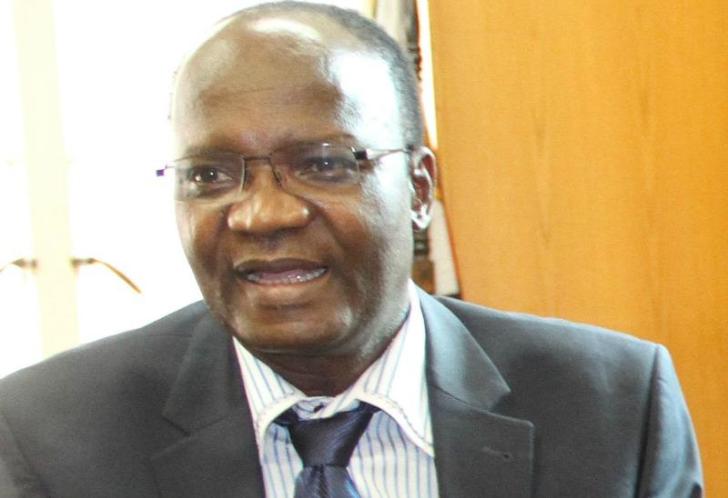
EVOLUTION OF SECTION 95(2)(b) SINCE 1980: Claims that sections 95(2)(b) and 143(1) are term limit provisions created or introduced by or under the 2013 Constitution are patently false.
Such claims not only distort the historical record but they also undermine the integrity of Zimbabwe's constitutional evolution.
In truth, while the 2013 Constitution did indeed pioneer explicit term limits for the presidency in 2013, it faithfully preserved the essence and intent of term length or term of office provisions from the Lancaster House Constitution of 1979 - as promulgated in 1980, and amended in 1987 and 2007 - without imposing any numerical cap or "term limit" on the duration (period) of office outlined in sections 95(2)(b) and 143(1).
These sections, though rephrased over time, have consistently maintained their form and substance, defining term lengths of office of the President and Parliament without limiting the number of permissible terms.
Furthermore, it is imperative to note that term limits by definition and their nature are only on designated individual officeholders as public officials, and never on public offices or institutions they serve. Section 143(1) is manifestly not on or about parliamentarians, but on Parliament itself, as a public office or institution.
The 2013 Constitution refrained from establishing term limits for Members of Parliament - whose tenure is provided under sections 121, 125 and 129 without any term limits whatsoever besides applicable qualifications and disqualifications - thus introducing for the first time the term limit provision only for the President under section 91(2), which stipulates:
91 Qualifications for election as President and Vice-President
(1) ……
(2) A person is disqualified for election as President or appointment as Vice-President if he or she has already held office as President under this Constitution for two terms, whether continuous or not, and for the purpose of this subsection three or more years' service is deemed to be a full term. [Subsection substituted by section 3(b) of Act 2 of 2021]
This provision stands as the singular and definitive presidential term-limit provision within the Constitution, aligning seamlessly with the overarching framework outlined in section 328(1), which states:
328 Amendment of Constitution
(1) In this section - "Constitutional Bill" means a Bill that seeks to amend this Constitution; "term-limit provision" means a provision of this Constitution which limits the length of time that a person may hold or occupy a public office.
By adhering to this precise formulation, the Constitution safeguards democratic principles through targeted term limitations, compelling fidelity to its historical continuity regarding the constitutional import of term length provisions on the Presidency and Parliament, thereby rejecting misguided claims by conflict mongers whose preoccupation is to breed divisions and polarise society at every turn.
Below is a self-explanatory history of sections 95(2)(b) and 143(1), which shows beyond any doubt that the two sections are not term limit provisions, but term lengths or periods (as per the Mupungu precedent) or institutional durations of the Presidency and Parliament, which are essentially election cycles:
1980 Version Similar to Section 95(2)(b) of the 2013 Constitution (Term of Office of President):
Section 29 Tenure of office of President
(1) The term of office of the President shall be a period of six years:
Provided that the office of the President shall become vacant -
(a) on the expiration of the period for which the President was elected;
(b) if the President resigns his office by instrument in writing addressed to the Speaker;
(c) if the President dies;
(d) if a resolution for the removal of the President from office is passed by not less than two-thirds of the total membership of the Senate and the House of Assembly sitting together.
1980 Version Similar to Section 143(1) of the 2013 Constitution (Term of Office of Parliament):
Section 63 (Prorogation or dissolution of Parliament)
(1) Parliament shall continue for five years from the date of its first sitting following a general election, unless sooner dissolved.
(2) ……
(3) ……
(4) Parliament, unless sooner dissolved, shall last for five years, which period shall be deemed to commence on the day the person elected as President enters office in terms of section 28(5) after an election referred to in subsection (3)(b) or on the day following the day of such dissolution, as the case may be, and shall then stand dissolved:
Provided that, where the period referred to in this subsection is extended under subsection (5) or (6), Parliament shall stand dissolved on the expiration of that extended period.
(5) ……
(6) ……
1987 Version Similar to Section 95(2)(b) of the 2013 Constitution (Term of Office of President):
Section 29 Tenure of office of President
(1) The term of office of the President shall be a period of six years:
Provided that -
(i) the President shall continue in office until the person elected as President at the next election of President assumes office;
(ii) [Paragraph repealed by section 9 of Act 15 of 1990]
(2) The President may resign his office by lodging his resignation in writing with the Speaker.
(3) The President shall cease to hold office if a report prepared by a committee of Parliament, appointed by the Speaker upon the request of not fewer than one-third of the members of Parliament, has recommended the removal of the President on the ground -
(a) that he has acted in wilful violation of this Constitution; or
(b) that he is incapable of performing the functions of his office by reason of physical or mental incapacity; or
(c) of gross misconduct;
and the members of Parliament have resolved by the affirmative votes of not less than two-thirds of their total number that the President should be removed from office.
1987 Version Similar to Section 143(1) of the 2013 Constitution (Term of Office of Parliament):
Section 63 (Prorogation or dissolution of Parliament)
(1) ……
(2) ……
(3) ……
(4) Parliament, unless sooner dissolved, shall continue for five years beginning on the date when Parliament first meets after any general election and shall then stand dissolved: Provided that, where the period referred to in this subsection is extended under subsection (5) or (6), Parliament, unless sooner dissolved, shall stand dissolved on the expiration of that extended period.
(5) ……
(6) ……
(7) …..
2007 Version Similar to Section 95(2)(b) of the 2013 Constitution (Term of Office of President):
Section 29 Term of office of President
(1) The term of office of the President shall be a period of five years concurrent with the life of Parliament referred to in section 63(4), or -
(a) a lesser period where the President earlier dissolves Parliament in terms of section 63(2), or the President is elected pursuant to section 28(3)(b); or
(b) a longer period where the life of Parliament referred to in section 63(4) is extended under section 63(5) or (6); in which event term of office of the President shall terminate on the expiration of such lesser or longer period, as the case may be:
Provided that the President shall continue in office until the person elected as President at the next election of President enters office.
(2) The President may resign his office by lodging his resignation in writing with the Speaker.
(3) The President shall cease to hold office if a report prepared by a joint committee of the Senate and the House of Assembly, appointed by the Speaker in consultation with the President of the Senate upon the request of not fewer than one-third of the members of the House of Assembly, has recommended the removal of the President on the ground -
(a) that he has acted in wilful violation of this Constitution; or
(b) that he is incapable of performing the functions of his office by reason of physical or mental incapacity; or
(c) of gross misconduct;
and the Senators and members of the House of Assembly sitting together have resolved by the affirmative votes of not less than two-thirds of their total number that the President should be removed from office.
2007 Version Similar to Section 143(1) of the 2013 Constitution (Term of Office of Parliament):
63 Prorogation or dissolution of Parliament
(1) ……
(2) ……
(3) ……
(4) Parliament, unless sooner dissolved, shall last for five years, which period shall be deemed to commence on the day the person elected as President enters office in terms of section 28(5) after an election referred to in section 28(3)(a), and shall then stand dissolved:
Provided that, where the period referred to in this subsection is extended under subsection
(5) ……
(6) ……
Current Section 95(2)(b) on the Term of Office of President Similar to Versions of Section 29 promulgated in 1980 and amended in 1987 and 2007:
95 Term of office of President and Vice-Presidents
(1) ……
(2) The term of office of the President extends until -
(a) he or she resigns or is removed from office; or
(b) following an election, he or she is declared to be re-elected or a new President is declared to be elected; and, except as otherwise provided in this Constitution, his or her term of office is five years and coterminous with the life of Parliament.
Current Section 143(1) on the Term or Life of Parliament Similar to Versions of Section 63(4) promulgated in 1980 and amended in 1987 and 2007:
143 Duration and dissolution of Parliament
(1) Parliament is elected for a five-year term which runs from the date on which the President-elect is sworn in and assumes office in terms of section 94(1)(a), and Parliament stands dissolved at midnight on the day before the first polling day in the next general election called in terms of section 144.
Let's cut to the chase: sections 95(2)(b) and 143(1) are emphatically not term limit provisions under section 328(1). Their core form and substance stand rock-solid, mirroring equivalents from 1980 and powering through every amendment in 1987, 2007, and 2013 - proving their enduring, unyielding nature!
Such claims not only distort the historical record but they also undermine the integrity of Zimbabwe's constitutional evolution.
In truth, while the 2013 Constitution did indeed pioneer explicit term limits for the presidency in 2013, it faithfully preserved the essence and intent of term length or term of office provisions from the Lancaster House Constitution of 1979 - as promulgated in 1980, and amended in 1987 and 2007 - without imposing any numerical cap or "term limit" on the duration (period) of office outlined in sections 95(2)(b) and 143(1).
These sections, though rephrased over time, have consistently maintained their form and substance, defining term lengths of office of the President and Parliament without limiting the number of permissible terms.
Furthermore, it is imperative to note that term limits by definition and their nature are only on designated individual officeholders as public officials, and never on public offices or institutions they serve. Section 143(1) is manifestly not on or about parliamentarians, but on Parliament itself, as a public office or institution.
The 2013 Constitution refrained from establishing term limits for Members of Parliament - whose tenure is provided under sections 121, 125 and 129 without any term limits whatsoever besides applicable qualifications and disqualifications - thus introducing for the first time the term limit provision only for the President under section 91(2), which stipulates:
91 Qualifications for election as President and Vice-President
(1) ……
(2) A person is disqualified for election as President or appointment as Vice-President if he or she has already held office as President under this Constitution for two terms, whether continuous or not, and for the purpose of this subsection three or more years' service is deemed to be a full term. [Subsection substituted by section 3(b) of Act 2 of 2021]
This provision stands as the singular and definitive presidential term-limit provision within the Constitution, aligning seamlessly with the overarching framework outlined in section 328(1), which states:
328 Amendment of Constitution
(1) In this section - "Constitutional Bill" means a Bill that seeks to amend this Constitution; "term-limit provision" means a provision of this Constitution which limits the length of time that a person may hold or occupy a public office.
By adhering to this precise formulation, the Constitution safeguards democratic principles through targeted term limitations, compelling fidelity to its historical continuity regarding the constitutional import of term length provisions on the Presidency and Parliament, thereby rejecting misguided claims by conflict mongers whose preoccupation is to breed divisions and polarise society at every turn.
Below is a self-explanatory history of sections 95(2)(b) and 143(1), which shows beyond any doubt that the two sections are not term limit provisions, but term lengths or periods (as per the Mupungu precedent) or institutional durations of the Presidency and Parliament, which are essentially election cycles:
1980 Version Similar to Section 95(2)(b) of the 2013 Constitution (Term of Office of President):
Section 29 Tenure of office of President
(1) The term of office of the President shall be a period of six years:
Provided that the office of the President shall become vacant -
(a) on the expiration of the period for which the President was elected;
(b) if the President resigns his office by instrument in writing addressed to the Speaker;
(c) if the President dies;
(d) if a resolution for the removal of the President from office is passed by not less than two-thirds of the total membership of the Senate and the House of Assembly sitting together.
Section 63 (Prorogation or dissolution of Parliament)
(1) Parliament shall continue for five years from the date of its first sitting following a general election, unless sooner dissolved.
(2) ……
(3) ……
(4) Parliament, unless sooner dissolved, shall last for five years, which period shall be deemed to commence on the day the person elected as President enters office in terms of section 28(5) after an election referred to in subsection (3)(b) or on the day following the day of such dissolution, as the case may be, and shall then stand dissolved:
Provided that, where the period referred to in this subsection is extended under subsection (5) or (6), Parliament shall stand dissolved on the expiration of that extended period.
(5) ……
(6) ……
1987 Version Similar to Section 95(2)(b) of the 2013 Constitution (Term of Office of President):
Section 29 Tenure of office of President
(1) The term of office of the President shall be a period of six years:
Provided that -
(i) the President shall continue in office until the person elected as President at the next election of President assumes office;
(ii) [Paragraph repealed by section 9 of Act 15 of 1990]
(2) The President may resign his office by lodging his resignation in writing with the Speaker.
(3) The President shall cease to hold office if a report prepared by a committee of Parliament, appointed by the Speaker upon the request of not fewer than one-third of the members of Parliament, has recommended the removal of the President on the ground -
(a) that he has acted in wilful violation of this Constitution; or
(b) that he is incapable of performing the functions of his office by reason of physical or mental incapacity; or
(c) of gross misconduct;
and the members of Parliament have resolved by the affirmative votes of not less than two-thirds of their total number that the President should be removed from office.
1987 Version Similar to Section 143(1) of the 2013 Constitution (Term of Office of Parliament):
Section 63 (Prorogation or dissolution of Parliament)
(1) ……
(2) ……
(3) ……
(4) Parliament, unless sooner dissolved, shall continue for five years beginning on the date when Parliament first meets after any general election and shall then stand dissolved: Provided that, where the period referred to in this subsection is extended under subsection (5) or (6), Parliament, unless sooner dissolved, shall stand dissolved on the expiration of that extended period.
(5) ……
(6) ……
(7) …..
2007 Version Similar to Section 95(2)(b) of the 2013 Constitution (Term of Office of President):
Section 29 Term of office of President
(1) The term of office of the President shall be a period of five years concurrent with the life of Parliament referred to in section 63(4), or -
(a) a lesser period where the President earlier dissolves Parliament in terms of section 63(2), or the President is elected pursuant to section 28(3)(b); or
(b) a longer period where the life of Parliament referred to in section 63(4) is extended under section 63(5) or (6); in which event term of office of the President shall terminate on the expiration of such lesser or longer period, as the case may be:
Provided that the President shall continue in office until the person elected as President at the next election of President enters office.
(2) The President may resign his office by lodging his resignation in writing with the Speaker.
(3) The President shall cease to hold office if a report prepared by a joint committee of the Senate and the House of Assembly, appointed by the Speaker in consultation with the President of the Senate upon the request of not fewer than one-third of the members of the House of Assembly, has recommended the removal of the President on the ground -
(a) that he has acted in wilful violation of this Constitution; or
(b) that he is incapable of performing the functions of his office by reason of physical or mental incapacity; or
(c) of gross misconduct;
and the Senators and members of the House of Assembly sitting together have resolved by the affirmative votes of not less than two-thirds of their total number that the President should be removed from office.
2007 Version Similar to Section 143(1) of the 2013 Constitution (Term of Office of Parliament):
63 Prorogation or dissolution of Parliament
(1) ……
(2) ……
(3) ……
(4) Parliament, unless sooner dissolved, shall last for five years, which period shall be deemed to commence on the day the person elected as President enters office in terms of section 28(5) after an election referred to in section 28(3)(a), and shall then stand dissolved:
Provided that, where the period referred to in this subsection is extended under subsection
(5) ……
(6) ……
Current Section 95(2)(b) on the Term of Office of President Similar to Versions of Section 29 promulgated in 1980 and amended in 1987 and 2007:
95 Term of office of President and Vice-Presidents
(1) ……
(2) The term of office of the President extends until -
(a) he or she resigns or is removed from office; or
(b) following an election, he or she is declared to be re-elected or a new President is declared to be elected; and, except as otherwise provided in this Constitution, his or her term of office is five years and coterminous with the life of Parliament.
Current Section 143(1) on the Term or Life of Parliament Similar to Versions of Section 63(4) promulgated in 1980 and amended in 1987 and 2007:
143 Duration and dissolution of Parliament
(1) Parliament is elected for a five-year term which runs from the date on which the President-elect is sworn in and assumes office in terms of section 94(1)(a), and Parliament stands dissolved at midnight on the day before the first polling day in the next general election called in terms of section 144.
Let's cut to the chase: sections 95(2)(b) and 143(1) are emphatically not term limit provisions under section 328(1). Their core form and substance stand rock-solid, mirroring equivalents from 1980 and powering through every amendment in 1987, 2007, and 2013 - proving their enduring, unyielding nature!
Source - x
All articles and letters published on Bulawayo24 have been independently written by members of Bulawayo24's community. The views of users published on Bulawayo24 are therefore their own and do not necessarily represent the views of Bulawayo24. Bulawayo24 editors also reserve the right to edit or delete any and all comments received.
Join the discussion
Loading comments…


