Opinion / Columnist
Ziyambi Ziyambi and the great constitutional election cycle deception
20 Feb 2026 at 14:23hrs |
0 Views
The law has a stubborn way of shaming those who attempt to subvert it.
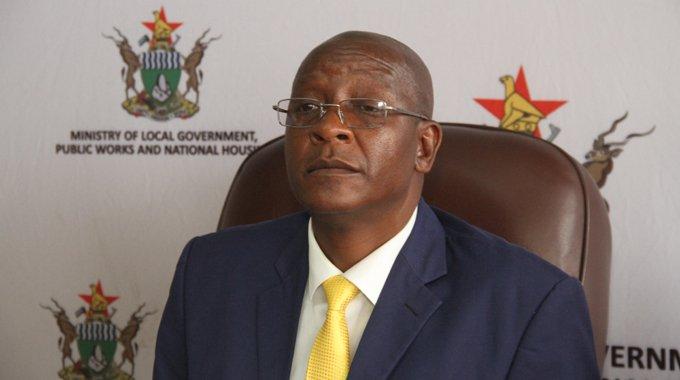
In the murky corridors of Zimbabwean politics, where semantics often substitute for substance, the latest pronouncements from Justice, Legal and Parliamentary Affairs Minister Ziyambi Ziyambi are a chilling reminder of the lengths to which a regime will go to rearrange the constitutional furniture while the house is on fire.
If you value my social justice advocacy and writing, please consider a financial contribution to keep it going. Contact me on WhatsApp: +263 715 667 700 or Email: mbofana.tendairuben73@gmail.com
With a straight face and the practiced cadence of a seasoned legal gymnast, the Minister is attempting to sell the nation a "Constitutional Amendment Bill (Number 3)" that is as logically bankrupt as it is legally offensive.
To hear him tell it, stretching the time a leader sits in the cockpit from five to seven years is not an extension of a "term limit," but merely an "elongation of the electoral cycle."
This is not just a difference in terminology; it is a calculated assault on the very foundations of our 2013 Constitution, a document born of the sweat and blood of millions of Zimbabweans who said "never again" to a life presidency.
To suggest that changing the length of an office-holder's stay from 5 years to 7 years does not constitute an amendment to a term-limit provision is to treat the English language, and the intelligence of the Zimbabwean people, with utter contempt.
Minister Ziyambi's core argument rests on a distinction that he claims is "not merely academic" but the "bedrock of constitutional integrity."
In reality, it is a house of cards built on a foundation of sand.
Section 95(2) of our Constitution is clear that the President's term is for five years, and any attempt to rebrand this as a mere "cycle" is a direct attack on the law.
Furthermore, this tenure is strictly coterminous with the life of parliament which is limited to a five year period under section 143 of the supreme law.
If you change this duration from five years to seven years, you have, by every definition of the word, extended the term of that office.
Under the current law, the two-term limit established in Section 91 results in a maximum of ten years in office, as each term is strictly capped at five years.
Under the Minister's proposed "cycle," two terms would equal fourteen years.
To claim that this four-year windfall is not an extension of a term limit is a breathtaking feat of linguistic acrobatics that would make George Orwell blush.
If it looks like a term extension, walks like a term extension, and quacks like a term extension, it is a term extension, regardless of what fancy legal label the Ministry of Justice tries to slap on the bottle.
The Minister is also conveniently ignoring the "Impenetrable Firewall" specifically built into our supreme law to stop exactly this kind of power-grab: Section 328.
This section was not an accident; it was a deliberate, collective effort to ensure that no leader could ever again use a parliamentary majority to extend their own tenure.
Section 328(1) defines a "term-limit provision" as any part of the Constitution that limits the length of time a person may hold a public office.
Stretching five years into seven years undeniably "extends the length of time."
No legal gymnastics over semantics—whether framed as a "term" or the "length of a term"—can disguise this simple truth: if the time one spends in office is altered, then it squarely falls within the scope of a term-limit provision.
Therefore, any such amendment falls squarely under the jurisdiction of Section 328(7), which provides that an amendment to a term-limit provision cannot benefit anyone who held that office at any time before the amendment.
This is the "Incumbency Shield," and it is absolute.
Even if the Minister's Bill passes with a hundred-percent majority in Parliament, it cannot legally apply to President Emmerson Mnangagwa.
To make it apply to him, the government would have to amend Section 328 itself—and Section 328(9) is the ultimate gatekeeper, stating that any change to this section requires a national referendum.
There are no shortcuts, no back doors, and no "interactive meetings with journalists" that can wish away the sovereignty of the people.
The Minister's attempt to use the 2007 constitutional amendment as a precedent is a classic red herring.
In 2007, Zimbabwe was operating under the Lancaster House Constitution, a colonial-era patchwork that had been mangled by 19 amendments and lacked the sophisticated entrenchment clauses of our current charter.
To compare the 2007 era to the 2013 dispensation is to compare a Cessna to a Boeing 787.
The 2013 Constitution was a hard-won victory for direct democracy, and its protections were specifically designed to prevent the very "rebalancing" that Ziyambi is now proposing.
Using a 19-year-old precedent from a defunct legal framework to justify a 2026 power grab is not "judicial wisdom"; it is an admission of legal desperation.
It is a sign that the government is looking backward because it cannot find a single forward-looking legal principle to justify its actions.
Perhaps most insulting of all is the justification that this "elongation" is necessary to achieve Vision 2030 because of a two-year "stagnation" caused by COVID-19.
This is an extraordinary admission of failure cloaked in the guise of administrative necessity.
Sovereignty is not a business contract with a "force majeure" clause that allows a CEO to stay in power because of a global pandemic.
Every nation on earth faced COVID-19, and nearly all of them held their elections and maintained their constitutional timelines.
To suggest that Zimbabwe's progress toward "Vision 2030" is so fragile that it requires the suspension of the democratic clock is to admit that the vision itself is a mirage.
If a government cannot achieve its goals in the ten years it was constitutionally allotted, what makes us think another four years will make a difference?
This is not about Vision 2030; it is about Power 2030.
It is about an elite that has grown comfortable in its seats and is now trying to weld those seats to the floor.
The Minister also let the cat out of the bag when he spoke about electing the President through Parliament to "insulate the office from divisive rancour."
This is code for stripping the Zimbabwean citizen of their most fundamental right—the right to directly choose their leader.
By moving toward a system where Parliament elects the President, the regime is attempting to create a "buffered" presidency, one that is accountable to party whips and political deals in Harare rather than the grandmother in Redcliff or the youth in Bulawayo.
It is an attempt to turn our republic into a closed-shop oligarchy.
They call it "national cohesion"; we call it disenfranchisement.
The "rancour" they speak of is the sound of a vibrant, albeit struggling, democracy.
If they find the voice of the people too loud or too "divisive," the solution is better governance, not silencing the voters by taking the ballot box away from them.
We must see this Bill for what it is: a "Constitutional Coup" in slow motion.
It is an attempt to achieve through legalistic trickery what the regime knows it cannot achieve through a fair and transparent referendum.
Minister Ziyambi's claim that this is all for the sake of "constitutional integrity" is a dark irony.
Integrity is about honesty, consistency, and respect for the spirit of the law, not just the letter.
The spirit of the 2013 Constitution is one of term limits, direct accountability, and citizen participation.
This Amendment Bill (Number 3) is a betrayal of all three.
It is an attempt to take Zimbabwe back to an era of "The Big Man" politics, where the law is a tool of the ruler rather than a shield for the ruled.
As Zimbabweans, we must not be lulled into silence by the Minister's "lucidly prescribed" legal jargon.
We must stand on the firm ground of our supreme law and demand that the sanctity of the 2013 Constitution be upheld.
We have spent decades fighting for the right to choose our leaders at regular, predictable intervals.
We have fought for the right to have our voices heard directly at the ballot box.
We will not allow that legacy to be "elongated" out of existence.
The Minister may have his "interactive meetings" and his parliamentary majorities, but he does not have the law on his side, and he certainly does not have the people.
The Constitution is the soul of our nation, and it is not for sale to the highest bidder or the most creative linguist.
We must resist this amendment with every legal and civic tool at our disposal.
Our democracy depends on it, and our children will judge us by whether we defended their inheritance or allowed it to be stolen by a stroke of a Minister's pen.
© Tendai Ruben Mbofana is a social justice advocate and writer. To directly receive his articles please join his WhatsApp Channel on: https://whatsapp.com/channel/0029VaqprWCIyPtRnKpkHe08
In the murky corridors of Zimbabwean politics, where semantics often substitute for substance, the latest pronouncements from Justice, Legal and Parliamentary Affairs Minister Ziyambi Ziyambi are a chilling reminder of the lengths to which a regime will go to rearrange the constitutional furniture while the house is on fire.
If you value my social justice advocacy and writing, please consider a financial contribution to keep it going. Contact me on WhatsApp: +263 715 667 700 or Email: mbofana.tendairuben73@gmail.com
With a straight face and the practiced cadence of a seasoned legal gymnast, the Minister is attempting to sell the nation a "Constitutional Amendment Bill (Number 3)" that is as logically bankrupt as it is legally offensive.
To hear him tell it, stretching the time a leader sits in the cockpit from five to seven years is not an extension of a "term limit," but merely an "elongation of the electoral cycle."
This is not just a difference in terminology; it is a calculated assault on the very foundations of our 2013 Constitution, a document born of the sweat and blood of millions of Zimbabweans who said "never again" to a life presidency.
To suggest that changing the length of an office-holder's stay from 5 years to 7 years does not constitute an amendment to a term-limit provision is to treat the English language, and the intelligence of the Zimbabwean people, with utter contempt.
Minister Ziyambi's core argument rests on a distinction that he claims is "not merely academic" but the "bedrock of constitutional integrity."
In reality, it is a house of cards built on a foundation of sand.
Section 95(2) of our Constitution is clear that the President's term is for five years, and any attempt to rebrand this as a mere "cycle" is a direct attack on the law.
Furthermore, this tenure is strictly coterminous with the life of parliament which is limited to a five year period under section 143 of the supreme law.
If you change this duration from five years to seven years, you have, by every definition of the word, extended the term of that office.
Under the current law, the two-term limit established in Section 91 results in a maximum of ten years in office, as each term is strictly capped at five years.
Under the Minister's proposed "cycle," two terms would equal fourteen years.
To claim that this four-year windfall is not an extension of a term limit is a breathtaking feat of linguistic acrobatics that would make George Orwell blush.
If it looks like a term extension, walks like a term extension, and quacks like a term extension, it is a term extension, regardless of what fancy legal label the Ministry of Justice tries to slap on the bottle.
The Minister is also conveniently ignoring the "Impenetrable Firewall" specifically built into our supreme law to stop exactly this kind of power-grab: Section 328.
This section was not an accident; it was a deliberate, collective effort to ensure that no leader could ever again use a parliamentary majority to extend their own tenure.
Section 328(1) defines a "term-limit provision" as any part of the Constitution that limits the length of time a person may hold a public office.
Stretching five years into seven years undeniably "extends the length of time."
No legal gymnastics over semantics—whether framed as a "term" or the "length of a term"—can disguise this simple truth: if the time one spends in office is altered, then it squarely falls within the scope of a term-limit provision.
Therefore, any such amendment falls squarely under the jurisdiction of Section 328(7), which provides that an amendment to a term-limit provision cannot benefit anyone who held that office at any time before the amendment.
This is the "Incumbency Shield," and it is absolute.
Even if the Minister's Bill passes with a hundred-percent majority in Parliament, it cannot legally apply to President Emmerson Mnangagwa.
To make it apply to him, the government would have to amend Section 328 itself—and Section 328(9) is the ultimate gatekeeper, stating that any change to this section requires a national referendum.
There are no shortcuts, no back doors, and no "interactive meetings with journalists" that can wish away the sovereignty of the people.
The Minister's attempt to use the 2007 constitutional amendment as a precedent is a classic red herring.
In 2007, Zimbabwe was operating under the Lancaster House Constitution, a colonial-era patchwork that had been mangled by 19 amendments and lacked the sophisticated entrenchment clauses of our current charter.
To compare the 2007 era to the 2013 dispensation is to compare a Cessna to a Boeing 787.
The 2013 Constitution was a hard-won victory for direct democracy, and its protections were specifically designed to prevent the very "rebalancing" that Ziyambi is now proposing.
Using a 19-year-old precedent from a defunct legal framework to justify a 2026 power grab is not "judicial wisdom"; it is an admission of legal desperation.
It is a sign that the government is looking backward because it cannot find a single forward-looking legal principle to justify its actions.
Perhaps most insulting of all is the justification that this "elongation" is necessary to achieve Vision 2030 because of a two-year "stagnation" caused by COVID-19.
This is an extraordinary admission of failure cloaked in the guise of administrative necessity.
Sovereignty is not a business contract with a "force majeure" clause that allows a CEO to stay in power because of a global pandemic.
Every nation on earth faced COVID-19, and nearly all of them held their elections and maintained their constitutional timelines.
To suggest that Zimbabwe's progress toward "Vision 2030" is so fragile that it requires the suspension of the democratic clock is to admit that the vision itself is a mirage.
If a government cannot achieve its goals in the ten years it was constitutionally allotted, what makes us think another four years will make a difference?
This is not about Vision 2030; it is about Power 2030.
It is about an elite that has grown comfortable in its seats and is now trying to weld those seats to the floor.
The Minister also let the cat out of the bag when he spoke about electing the President through Parliament to "insulate the office from divisive rancour."
This is code for stripping the Zimbabwean citizen of their most fundamental right—the right to directly choose their leader.
By moving toward a system where Parliament elects the President, the regime is attempting to create a "buffered" presidency, one that is accountable to party whips and political deals in Harare rather than the grandmother in Redcliff or the youth in Bulawayo.
It is an attempt to turn our republic into a closed-shop oligarchy.
They call it "national cohesion"; we call it disenfranchisement.
The "rancour" they speak of is the sound of a vibrant, albeit struggling, democracy.
If they find the voice of the people too loud or too "divisive," the solution is better governance, not silencing the voters by taking the ballot box away from them.
We must see this Bill for what it is: a "Constitutional Coup" in slow motion.
It is an attempt to achieve through legalistic trickery what the regime knows it cannot achieve through a fair and transparent referendum.
Minister Ziyambi's claim that this is all for the sake of "constitutional integrity" is a dark irony.
Integrity is about honesty, consistency, and respect for the spirit of the law, not just the letter.
The spirit of the 2013 Constitution is one of term limits, direct accountability, and citizen participation.
This Amendment Bill (Number 3) is a betrayal of all three.
It is an attempt to take Zimbabwe back to an era of "The Big Man" politics, where the law is a tool of the ruler rather than a shield for the ruled.
As Zimbabweans, we must not be lulled into silence by the Minister's "lucidly prescribed" legal jargon.
We must stand on the firm ground of our supreme law and demand that the sanctity of the 2013 Constitution be upheld.
We have spent decades fighting for the right to choose our leaders at regular, predictable intervals.
We have fought for the right to have our voices heard directly at the ballot box.
We will not allow that legacy to be "elongated" out of existence.
The Minister may have his "interactive meetings" and his parliamentary majorities, but he does not have the law on his side, and he certainly does not have the people.
The Constitution is the soul of our nation, and it is not for sale to the highest bidder or the most creative linguist.
We must resist this amendment with every legal and civic tool at our disposal.
Our democracy depends on it, and our children will judge us by whether we defended their inheritance or allowed it to be stolen by a stroke of a Minister's pen.
© Tendai Ruben Mbofana is a social justice advocate and writer. To directly receive his articles please join his WhatsApp Channel on: https://whatsapp.com/channel/0029VaqprWCIyPtRnKpkHe08
Source - Tendai Ruben Mbofana
All articles and letters published on Bulawayo24 have been independently written by members of Bulawayo24's community. The views of users published on Bulawayo24 are therefore their own and do not necessarily represent the views of Bulawayo24. Bulawayo24 editors also reserve the right to edit or delete any and all comments received.
Join the discussion
Loading comments…





