Opinion / Columnist
Why the Constitutional Court is likely to dismiss the CAB3 challenge
14 Apr 2026 at 22:26hrs |
1150 Views
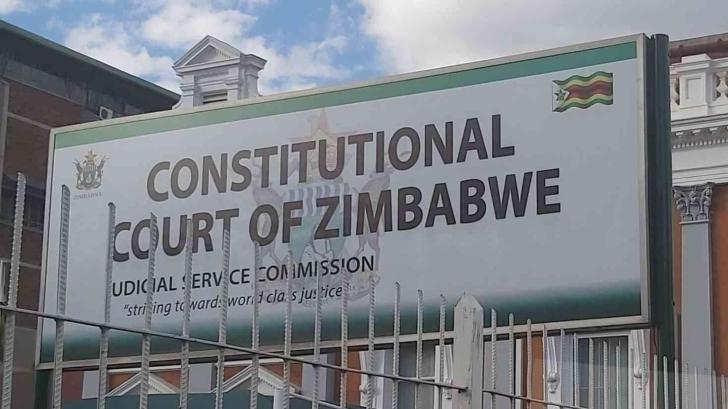
As the Constitutional Court of Zimbabwe prepares to hear the challenge against Constitution of Zimbabwe Amendment Bill No. 3 (CAB3) on 26 May 2026, a sober legal analysis suggests that the application faces significant, if not fatal, hurdles. From a practitioner's standpoint, the case appears premature, speculative, and doctrinally unsound.
Conjecture is not a cause of action
At the heart of the application lies an argument that President Emmerson Mnangagwa stands to benefit directly from the proposed amendments. This assertion, however, is rooted in conjecture rather than demonstrable fact.
The law is clear: courts do not adjudicate hypothetical scenarios. The question of "direct benefit" can only crystallise if and when a concrete set of facts arises—namely, if the President were to accept election under the amended framework. At present, that stage has not been reached. Indeed, it is not even certain who Parliament may elect under any future arrangement.
To invite the court to rule on speculative future benefits is to ask it to abandon its foundational principle of deciding real disputes grounded in established facts. The judiciary does not—and should not—operate in the realm of possibilities.
The doctrine of ripeness
Equally compelling is the issue of ripeness. The Bill has not yet exhausted the legislative process. Applicants have alternative avenues within Parliament itself, including public consultations and legislative debate.
The doctrine of ripeness dictates that a matter must be fully developed and that no adequate alternative remedies remain before judicial intervention is warranted. This case falls far short of that threshold.
For the court to intervene at this stage would set a dangerous precedent—one where the judiciary becomes an active participant in the legislative process, rather than its constitutional reviewer. Such overreach would blur the separation of powers and invite a flood of premature constitutional challenges.
Quite simply, the matter is not yet "ripe." As one might say, nyaya haisati yaibva kuti ihwikwe nedare.
Term duration vs Term limits
A further weakness in the application lies in its apparent conflation of term duration with term limits.
CAB3, as presently understood, seeks to alter the length of presidential terms rather than the number of terms a President may serve. This distinction is not merely semantic; it is constitutionally decisive.
Under the Constitution, amendments affecting entrenched provisions—such as term limits or specific chapters like Chapter 4 or Section 328—would indeed trigger the need for a referendum. However, adjustments to the electoral cycle or term duration do not necessarily fall within that category.
By failing to properly distinguish between these concepts, the applicants risk anchoring their argument on a misinterpretation of constitutional thresholds.
No legal basis for Presidential recusal
The argument that the President ought to have recused himself from Cabinet deliberations on CAB3 is equally tenuous.
The President, by constitutional design, chairs Cabinet. In doing so, he discharges a core executive function. There is no legal requirement—statutory or constitutional—that compels recusal based on a speculative or perceived conflict of interest in such circumstances.
The principles governing recusal were comprehensively addressed in Mupungu v Minister of Justice. That judgment made it clear that recusal must be grounded in a real likelihood of bias, not abstract or hypothetical concerns.
In the present case, no such threshold has been met. To suggest otherwise is to stretch the doctrine of recusal beyond its intended limits and into the realm of political argument.
Conclusion
Taken cumulatively, these deficiencies point to an application that is unlikely to survive judicial scrutiny. It is speculative where it must be concrete, premature where it must be ripe, and imprecise where it must be doctrinally exact.
The Constitutional Court is not a forum for abstract debates or anticipatory grievances. It is a court of law, bound by principles that demand clarity, immediacy, and justiciability.
On that basis, the challenge to CAB3 is not only weak—it is, in all likelihood, destined for dismissal.
Conjecture is not a cause of action
At the heart of the application lies an argument that President Emmerson Mnangagwa stands to benefit directly from the proposed amendments. This assertion, however, is rooted in conjecture rather than demonstrable fact.
The law is clear: courts do not adjudicate hypothetical scenarios. The question of "direct benefit" can only crystallise if and when a concrete set of facts arises—namely, if the President were to accept election under the amended framework. At present, that stage has not been reached. Indeed, it is not even certain who Parliament may elect under any future arrangement.
To invite the court to rule on speculative future benefits is to ask it to abandon its foundational principle of deciding real disputes grounded in established facts. The judiciary does not—and should not—operate in the realm of possibilities.
The doctrine of ripeness
Equally compelling is the issue of ripeness. The Bill has not yet exhausted the legislative process. Applicants have alternative avenues within Parliament itself, including public consultations and legislative debate.
The doctrine of ripeness dictates that a matter must be fully developed and that no adequate alternative remedies remain before judicial intervention is warranted. This case falls far short of that threshold.
For the court to intervene at this stage would set a dangerous precedent—one where the judiciary becomes an active participant in the legislative process, rather than its constitutional reviewer. Such overreach would blur the separation of powers and invite a flood of premature constitutional challenges.
Quite simply, the matter is not yet "ripe." As one might say, nyaya haisati yaibva kuti ihwikwe nedare.
Term duration vs Term limits
A further weakness in the application lies in its apparent conflation of term duration with term limits.
Under the Constitution, amendments affecting entrenched provisions—such as term limits or specific chapters like Chapter 4 or Section 328—would indeed trigger the need for a referendum. However, adjustments to the electoral cycle or term duration do not necessarily fall within that category.
By failing to properly distinguish between these concepts, the applicants risk anchoring their argument on a misinterpretation of constitutional thresholds.
No legal basis for Presidential recusal
The argument that the President ought to have recused himself from Cabinet deliberations on CAB3 is equally tenuous.
The President, by constitutional design, chairs Cabinet. In doing so, he discharges a core executive function. There is no legal requirement—statutory or constitutional—that compels recusal based on a speculative or perceived conflict of interest in such circumstances.
The principles governing recusal were comprehensively addressed in Mupungu v Minister of Justice. That judgment made it clear that recusal must be grounded in a real likelihood of bias, not abstract or hypothetical concerns.
In the present case, no such threshold has been met. To suggest otherwise is to stretch the doctrine of recusal beyond its intended limits and into the realm of political argument.
Conclusion
Taken cumulatively, these deficiencies point to an application that is unlikely to survive judicial scrutiny. It is speculative where it must be concrete, premature where it must be ripe, and imprecise where it must be doctrinally exact.
The Constitutional Court is not a forum for abstract debates or anticipatory grievances. It is a court of law, bound by principles that demand clarity, immediacy, and justiciability.
On that basis, the challenge to CAB3 is not only weak—it is, in all likelihood, destined for dismissal.
Source - x
All articles and letters published on Bulawayo24 have been independently written by members of Bulawayo24's community. The views of users published on Bulawayo24 are therefore their own and do not necessarily represent the views of Bulawayo24. Bulawayo24 editors also reserve the right to edit or delete any and all comments received.
Join the discussion
Loading comments…


