Opinion / Columnist
When Zimbabweans push back: What would SA do if Beitbridge shut them out?
17 Jul 2026 at 09:00hrs |
1482 Views
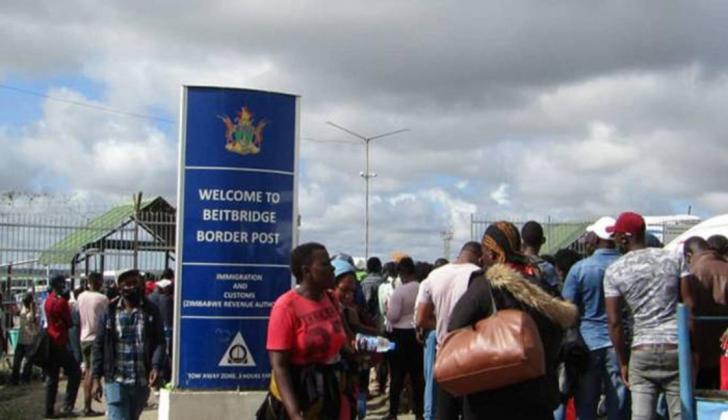
The current "Abahambe" climate in South Africa has forced thousands of Zimbabweans to return home, many of them abruptly and under hostile conditions. But imagine, for a moment, that these same Zimbabweans decided to march to Beitbridge Border Post and block all South African nationals from entering Zimbabwe. It is a hypothetical scenario, yet one that exposes the uncomfortable truth about how deeply South Africa's economy depends on Zimbabwean labour, Zimbabwean transit routes and Zimbabwean stability.
South Africa's political class often frames Zimbabweans as a burden. In reality, Zimbabweans have long been a backbone of South Africa's labour market. They are the nurses, teachers, engineers, truck drivers, builders, mechanics and hospitality workers who keep essential sectors functioning. Their sudden removal already strains South Africa's labour supply. But a border blockade would trigger consequences far beyond labour shortages. South Africa relies heavily on Zimbabwe as a transit corridor into the rest of Africa. Every day, thousands of trucks cross Beitbridge carrying fuel, food, machinery, mining equipment and consumer goods destined for Zambia, Malawi, the DRC and Tanzania. A blockade would choke this artery instantly, disrupting fuel supply chains, mining operations, retail distribution and regional tourism. South African trucking companies, which dominate regional logistics, would be paralysed.
The rand would likely feel the shock first. Markets react to instability faster than politicians do. A mass protest at Beitbridge targeting South African nationals would send immediate signals of regional political risk. The currency, already weakened by domestic instability, would come under pressure as investors reassess the safety of South Africa's regional trade environment. Capital flight, inflationary pressure and increased borrowing costs would follow.
South African businesses operating in Zimbabwe would also panic. Banks, retail chains, fuel suppliers, telecoms and mining firms rely on cross‑border movement of staff, goods and capital. A blockade would halt the movement of South African managers and technicians, delay shipments, raise insurance costs and force companies to negotiate with Zimbabwean authorities under pressure. Many South African firms would suddenly realise how much they depend on Zimbabwean stability - the same stability their politicians often dismiss.
Pretoria would be forced into diplomatic humility. A blockade by Zimbabweans would be unprecedented and deeply embarrassing. It would send a message that Zimbabweans are not passive victims of regional politics but actors capable of collective response. South Africa would face pressure to de‑escalate anti‑immigrant rhetoric, while SADC would demand urgent intervention. The political class, accustomed to treating Zimbabwe as a junior partner, would be reminded that regional power is negotiated, not assumed.
For Zimbabweans, such a protest would be an assertion of regional agency. The "Abahambe" movement frames Zimbabweans as powerless outsiders, yet a coordinated demonstration at Beitbridge would flip the narrative. It would show that regional economies depend on Zimbabweans, not the other way around. It would be a powerful statement of dignity and resistance - a reminder that xenophobia has consequences.
Of course, the humanitarian cost would be high. Any border blockade risks violence, arrests, military deployment and disruption to ordinary travellers. Zimbabweans would need to weigh the symbolic power of such a protest against the real‑world risks. But the hypothetical scenario reveals a truth South Africa prefers to ignore: Zimbabweans are not a burden. They are a pillar of South Africa's economy and its regional trade system. If Zimbabweans ever decided to flex that collective power, South Africa would feel the shock immediately.
The "Abahambe" movement may believe Zimbabweans can be pushed out without consequence. Regional economics tells a different story - one in which Zimbabweans hold far more leverage than South African politicians care to admit, a point widely discussed across platforms such as SADC regional economic analysis.
South Africa's political class often frames Zimbabweans as a burden. In reality, Zimbabweans have long been a backbone of South Africa's labour market. They are the nurses, teachers, engineers, truck drivers, builders, mechanics and hospitality workers who keep essential sectors functioning. Their sudden removal already strains South Africa's labour supply. But a border blockade would trigger consequences far beyond labour shortages. South Africa relies heavily on Zimbabwe as a transit corridor into the rest of Africa. Every day, thousands of trucks cross Beitbridge carrying fuel, food, machinery, mining equipment and consumer goods destined for Zambia, Malawi, the DRC and Tanzania. A blockade would choke this artery instantly, disrupting fuel supply chains, mining operations, retail distribution and regional tourism. South African trucking companies, which dominate regional logistics, would be paralysed.
The rand would likely feel the shock first. Markets react to instability faster than politicians do. A mass protest at Beitbridge targeting South African nationals would send immediate signals of regional political risk. The currency, already weakened by domestic instability, would come under pressure as investors reassess the safety of South Africa's regional trade environment. Capital flight, inflationary pressure and increased borrowing costs would follow.
South African businesses operating in Zimbabwe would also panic. Banks, retail chains, fuel suppliers, telecoms and mining firms rely on cross‑border movement of staff, goods and capital. A blockade would halt the movement of South African managers and technicians, delay shipments, raise insurance costs and force companies to negotiate with Zimbabwean authorities under pressure. Many South African firms would suddenly realise how much they depend on Zimbabwean stability - the same stability their politicians often dismiss.
Pretoria would be forced into diplomatic humility. A blockade by Zimbabweans would be unprecedented and deeply embarrassing. It would send a message that Zimbabweans are not passive victims of regional politics but actors capable of collective response. South Africa would face pressure to de‑escalate anti‑immigrant rhetoric, while SADC would demand urgent intervention. The political class, accustomed to treating Zimbabwe as a junior partner, would be reminded that regional power is negotiated, not assumed.
For Zimbabweans, such a protest would be an assertion of regional agency. The "Abahambe" movement frames Zimbabweans as powerless outsiders, yet a coordinated demonstration at Beitbridge would flip the narrative. It would show that regional economies depend on Zimbabweans, not the other way around. It would be a powerful statement of dignity and resistance - a reminder that xenophobia has consequences.
Of course, the humanitarian cost would be high. Any border blockade risks violence, arrests, military deployment and disruption to ordinary travellers. Zimbabweans would need to weigh the symbolic power of such a protest against the real‑world risks. But the hypothetical scenario reveals a truth South Africa prefers to ignore: Zimbabweans are not a burden. They are a pillar of South Africa's economy and its regional trade system. If Zimbabweans ever decided to flex that collective power, South Africa would feel the shock immediately.
The "Abahambe" movement may believe Zimbabweans can be pushed out without consequence. Regional economics tells a different story - one in which Zimbabweans hold far more leverage than South African politicians care to admit, a point widely discussed across platforms such as SADC regional economic analysis.
Source - Sukuzukuduma
All articles and letters published on Bulawayo24 have been independently written by members of Bulawayo24's community. The views of users published on Bulawayo24 are therefore their own and do not necessarily represent the views of Bulawayo24. Bulawayo24 editors also reserve the right to edit or delete any and all comments received.
Join the discussion
Loading comments…




