Opinion / Columnist
Chamisa's 'movement, not a party'
27 Aug 2026 at 13:51hrs |
0 Views
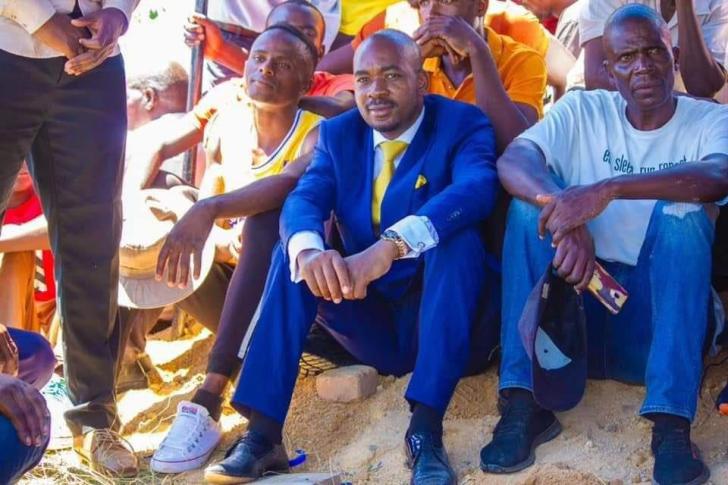
The recent argument between Nelson Chamisa and Hopewell Chin'ono on social media was ostensibly about the past, but it was really about the future of Zimbabwe's opposition.
Chin'ono challenged Chamisa to confront the organisational weaknesses that left the Citizens Coalition for Change vulnerable to infiltration and internal fracture.
Chamisa responded angrily, accusing the journalist of spreading misinformation. Chin'ono then raised the stakes by offering US$10 000 if Chamisa could produce the CCC's legitimate constitution and leadership organogram.
The quarrel was personal, but beneath it lay a serious question: was the CCC destroyed only because ZANU PF found ways to penetrate it, or did the organisation contain weaknesses that made such penetration devastating?
The answer matters because Chamisa now calls his new political project a “movement, not a party”. That may be an ingenious adaptation to Zimbabwe's political environment. It may also be the most revealing admission yet that the CCC model failed.
The evidence is sitting in the electoral record.
In August 2023, the CCC was not a fringe organisation. It won 73 of the 210 constituency seats in the National Assembly.
In Harare, it won 26 of 30 constituencies, taking 67.3 percent of the constituency vote. In Bulawayo it won all 12 constituencies with 73 percent of the vote. In Matabeleland North it narrowly outpolled ZANU PF in constituency votes, 46.6 percent to 44.8 percent.
Yet in Mashonaland Central, ZANU PF won 81.3 per cent of the constituency vote and 18 of the province's 18 seats. The CCC therefore had real electoral strength, but it was geographically uneven and institutionally vulnerable.
Then came 3 October.
Sengezo Tshabangu, claiming to be the CCC's interim secretary-general, wrote to Speaker Jacob Mudenda recalling MPs and councillors. Among those affected was Prince Dubeko Sibanda, who had just been re-elected in Binga North. Bright Vanya Moyo had been MP for Lupane East for barely a month, from 7 September to 3 October, when his seat was recalled.
The dispute quickly moved from politics into the courts.
In Prince Dubeko Sibanda and 15 Others v Sengezo Tshabangu, decided on 3 November 2023, the High Court dealt with the recalled legislators' challenge. The case became part of a larger legal battle over whether Tshabangu had authority to recall CCC representatives.
Justice Tawanda Chitapi subsequently issued an interim order restraining Tshabangu from making further recalls.
On 6 December, in Citizens for Coalition for Change v Tshabangu and Others, the High Court confirmed a provisional order declaring that Tshabangu had no authority to act on behalf of the CCC after the summons in the main matter had been issued.
But the institutional damage was already spreading.
On 9 December 2023, voters in constituencies including Binga North, Beitbridge West, Bulawayo South, Cowdray Park, Lobengula-Magwegwe, Lupane East and Mabvuku-Tafara returned to the polls because of recalls.
Prince Sibanda, Bright Moyo and other recalled CCC legislators attempted to contest again, only to be barred after a High Court ruling.
For Bright Moyo, the absurdity was especially stark. He had won Lupane East in August, served for weeks, lost his seat through a recall and was then prevented from standing again under the CCC banner. ZANU PF's Phathisiwe Machangu subsequently won the constituency.
The most extraordinary episode came in January and February 2024. On 19 January, the High Court barred recalled CCC candidates from contesting five council wards.
The affected wards were Harare Wards 5 and 18, Chiredzi Town Council Wards 6 and 7, and Manyame Rural District Council Ward 7. Because Tshabangu's faction did not field alternative candidates, ZANU PF candidates were declared elected without a contested ballot on 3 February.
That is not an abstract institutional failure. It is what it looks like when voters lose the ability to choose between competing candidates.
It also explains why the phrase “the joke was on the electorate” is too glib. The electorate is made up of people whose political choices have consequences.
A resident of Harare Ward 5 or Chiredzi Ward 6 did not vote in a constitutional theory. They expected the person they elected to serve them. Instead, a sequence of party disputes, court orders and nomination problems produced a political outcome without a contest.
This is the central problem with the CCC story. ZANU PF's institutional advantages are real, but the ruling party did not need to manufacture every weakness. It only needed to operate in an environment where those weaknesses could be exploited.
And that environment was already extraordinarily difficult for opposition organisers.
Zimbabwe's economic crisis made political organisation expensive and precarious. Inflation had reached extraordinary levels, with the old methodology recording annual inflation of 243.8 percent in December 2022, while the economy was increasingly dominated by US dollar transactions.
By April 2024, the government abandoned the collapsing Zimbabwe dollar and introduced the gold-backed ZiG, amid widespread public scepticism and a continuing reliance on foreign currency.
Under such conditions, even mundane party work becomes difficult. Hiring offices, paying organisers, transporting activists, vetting candidates, convening meetings and moving money are not theoretical exercises.
They require functioning institutions and resources in a country where the currency itself has repeatedly failed to provide stability.
Then there is the civic environment.
In June 2023, parliament passed the Criminal Law Codification and Reform Amendment Bill, widely known as the Patriotic Bill, before it was signed into law by President Emmerson Mnangagwa in July.
The law attracted intense criticism over its potential impact on freedom of expression, association and political dissent.
One year later, on 16 June 2024, Jameson Timba and dozens of CCC activists were arrested at Timba's Harare residence during a gathering to commemorate the Day of the African Child. Police said the meeting was unsanctioned and alleged that activists became violent.
Timba's lawyers and CCC supporters disputed that account, while reports documented injuries among those arrested. Timba's son, Shaun, was also caught up in the arrests before being released on US$100 bail after the magistrate found that he had not been part of the gathering.
That is the human reality beneath the argument over constitutions and organograms.
For opposition activists, politics was not merely an argument on X. It could mean riot police at a private residence, detention cells and court appearances. For voters, it could mean electing an MP in August and watching that mandate disappear weeks later.
The environment became no easier in 2025. On 11 April, Mnangagwa signed the Private Voluntary Organisations Amendment Act, giving authorities broad powers to deregister NGOs deemed politically partisan and seize their assets, according to Human Rights Watch.
Against this background, Chamisa's movement idea deserves neither automatic praise nor automatic ridicule.
There is a rational strategic case for it. A loose citizens' movement can be harder to infiltrate because it does not depend on one easily identifiable bureaucratic hierarchy. It can mobilise through communities and civic networks rather than waiting for formal party structures to function.
But there is a trap.
A movement can be flexible enough to survive repression and still be too loose to govern. The moment it begins selecting parliamentary candidates, controlling money, establishing disciplinary procedures and resolving disputes, it requires institutions.
The question is not whether those institutions exist under the word “party”. The question is whether they are strong enough to survive political attack.
That is where Chamisa must confront his own record.
He cannot explain the CCC's collapse entirely through ZANU PF infiltration. His political appeal was its greatest asset, but excessive dependence on one leader also became a weakness.
The history of Zimbabwe's opposition, from Morgan Tsvangirai and Welshman Ncube to Tendai Biti, Douglas Mwonzora and Thokozani Khupe, is littered with organisational fractures in which personality, legitimacy and institutional authority became inseparable.
Chamisa now has an opportunity to break that pattern.
But “movement, not a party” will mean little if it simply creates another organisation whose institutional arrangements depend on the authority of one man.
The real innovation would be to build something that combines the resilience of a movement with the discipline of a party. It would need transparent candidate selection, clear authority, financial accountability, internal dispute resolution and safeguards against both infiltration and personal domination.
That sounds less exciting than a political rally.
It is also much more important.
The CCC proved that winning votes and possessing political power are not the same thing. In 2023, Zimbabweans gave the opposition a substantial electoral mandate. Within months, that mandate was being fought over in courtrooms, parliament and council chambers.
Agenda 2026 therefore faces a test more demanding than attracting crowds or winning an election. It must demonstrate that an opposition organisation can survive the morning after victory.
Otherwise, “movement, not a party” will not represent a new model of Zimbabwean politics. It will simply be a new name for the old problem.
Chin'ono challenged Chamisa to confront the organisational weaknesses that left the Citizens Coalition for Change vulnerable to infiltration and internal fracture.
Chamisa responded angrily, accusing the journalist of spreading misinformation. Chin'ono then raised the stakes by offering US$10 000 if Chamisa could produce the CCC's legitimate constitution and leadership organogram.
The quarrel was personal, but beneath it lay a serious question: was the CCC destroyed only because ZANU PF found ways to penetrate it, or did the organisation contain weaknesses that made such penetration devastating?
The answer matters because Chamisa now calls his new political project a “movement, not a party”. That may be an ingenious adaptation to Zimbabwe's political environment. It may also be the most revealing admission yet that the CCC model failed.
The evidence is sitting in the electoral record.
In August 2023, the CCC was not a fringe organisation. It won 73 of the 210 constituency seats in the National Assembly.
In Harare, it won 26 of 30 constituencies, taking 67.3 percent of the constituency vote. In Bulawayo it won all 12 constituencies with 73 percent of the vote. In Matabeleland North it narrowly outpolled ZANU PF in constituency votes, 46.6 percent to 44.8 percent.
Yet in Mashonaland Central, ZANU PF won 81.3 per cent of the constituency vote and 18 of the province's 18 seats. The CCC therefore had real electoral strength, but it was geographically uneven and institutionally vulnerable.
Then came 3 October.
Sengezo Tshabangu, claiming to be the CCC's interim secretary-general, wrote to Speaker Jacob Mudenda recalling MPs and councillors. Among those affected was Prince Dubeko Sibanda, who had just been re-elected in Binga North. Bright Vanya Moyo had been MP for Lupane East for barely a month, from 7 September to 3 October, when his seat was recalled.
The dispute quickly moved from politics into the courts.
In Prince Dubeko Sibanda and 15 Others v Sengezo Tshabangu, decided on 3 November 2023, the High Court dealt with the recalled legislators' challenge. The case became part of a larger legal battle over whether Tshabangu had authority to recall CCC representatives.
Justice Tawanda Chitapi subsequently issued an interim order restraining Tshabangu from making further recalls.
On 6 December, in Citizens for Coalition for Change v Tshabangu and Others, the High Court confirmed a provisional order declaring that Tshabangu had no authority to act on behalf of the CCC after the summons in the main matter had been issued.
But the institutional damage was already spreading.
On 9 December 2023, voters in constituencies including Binga North, Beitbridge West, Bulawayo South, Cowdray Park, Lobengula-Magwegwe, Lupane East and Mabvuku-Tafara returned to the polls because of recalls.
Prince Sibanda, Bright Moyo and other recalled CCC legislators attempted to contest again, only to be barred after a High Court ruling.
For Bright Moyo, the absurdity was especially stark. He had won Lupane East in August, served for weeks, lost his seat through a recall and was then prevented from standing again under the CCC banner. ZANU PF's Phathisiwe Machangu subsequently won the constituency.
The most extraordinary episode came in January and February 2024. On 19 January, the High Court barred recalled CCC candidates from contesting five council wards.
The affected wards were Harare Wards 5 and 18, Chiredzi Town Council Wards 6 and 7, and Manyame Rural District Council Ward 7. Because Tshabangu's faction did not field alternative candidates, ZANU PF candidates were declared elected without a contested ballot on 3 February.
That is not an abstract institutional failure. It is what it looks like when voters lose the ability to choose between competing candidates.
It also explains why the phrase “the joke was on the electorate” is too glib. The electorate is made up of people whose political choices have consequences.
A resident of Harare Ward 5 or Chiredzi Ward 6 did not vote in a constitutional theory. They expected the person they elected to serve them. Instead, a sequence of party disputes, court orders and nomination problems produced a political outcome without a contest.
This is the central problem with the CCC story. ZANU PF's institutional advantages are real, but the ruling party did not need to manufacture every weakness. It only needed to operate in an environment where those weaknesses could be exploited.
And that environment was already extraordinarily difficult for opposition organisers.
Zimbabwe's economic crisis made political organisation expensive and precarious. Inflation had reached extraordinary levels, with the old methodology recording annual inflation of 243.8 percent in December 2022, while the economy was increasingly dominated by US dollar transactions.
Under such conditions, even mundane party work becomes difficult. Hiring offices, paying organisers, transporting activists, vetting candidates, convening meetings and moving money are not theoretical exercises.
They require functioning institutions and resources in a country where the currency itself has repeatedly failed to provide stability.
Then there is the civic environment.
In June 2023, parliament passed the Criminal Law Codification and Reform Amendment Bill, widely known as the Patriotic Bill, before it was signed into law by President Emmerson Mnangagwa in July.
The law attracted intense criticism over its potential impact on freedom of expression, association and political dissent.
One year later, on 16 June 2024, Jameson Timba and dozens of CCC activists were arrested at Timba's Harare residence during a gathering to commemorate the Day of the African Child. Police said the meeting was unsanctioned and alleged that activists became violent.
Timba's lawyers and CCC supporters disputed that account, while reports documented injuries among those arrested. Timba's son, Shaun, was also caught up in the arrests before being released on US$100 bail after the magistrate found that he had not been part of the gathering.
That is the human reality beneath the argument over constitutions and organograms.
For opposition activists, politics was not merely an argument on X. It could mean riot police at a private residence, detention cells and court appearances. For voters, it could mean electing an MP in August and watching that mandate disappear weeks later.
The environment became no easier in 2025. On 11 April, Mnangagwa signed the Private Voluntary Organisations Amendment Act, giving authorities broad powers to deregister NGOs deemed politically partisan and seize their assets, according to Human Rights Watch.
Against this background, Chamisa's movement idea deserves neither automatic praise nor automatic ridicule.
There is a rational strategic case for it. A loose citizens' movement can be harder to infiltrate because it does not depend on one easily identifiable bureaucratic hierarchy. It can mobilise through communities and civic networks rather than waiting for formal party structures to function.
But there is a trap.
A movement can be flexible enough to survive repression and still be too loose to govern. The moment it begins selecting parliamentary candidates, controlling money, establishing disciplinary procedures and resolving disputes, it requires institutions.
The question is not whether those institutions exist under the word “party”. The question is whether they are strong enough to survive political attack.
That is where Chamisa must confront his own record.
He cannot explain the CCC's collapse entirely through ZANU PF infiltration. His political appeal was its greatest asset, but excessive dependence on one leader also became a weakness.
The history of Zimbabwe's opposition, from Morgan Tsvangirai and Welshman Ncube to Tendai Biti, Douglas Mwonzora and Thokozani Khupe, is littered with organisational fractures in which personality, legitimacy and institutional authority became inseparable.
Chamisa now has an opportunity to break that pattern.
But “movement, not a party” will mean little if it simply creates another organisation whose institutional arrangements depend on the authority of one man.
The real innovation would be to build something that combines the resilience of a movement with the discipline of a party. It would need transparent candidate selection, clear authority, financial accountability, internal dispute resolution and safeguards against both infiltration and personal domination.
That sounds less exciting than a political rally.
It is also much more important.
The CCC proved that winning votes and possessing political power are not the same thing. In 2023, Zimbabweans gave the opposition a substantial electoral mandate. Within months, that mandate was being fought over in courtrooms, parliament and council chambers.
Agenda 2026 therefore faces a test more demanding than attracting crowds or winning an election. It must demonstrate that an opposition organisation can survive the morning after victory.
Otherwise, “movement, not a party” will not represent a new model of Zimbabwean politics. It will simply be a new name for the old problem.
Source - Gabriel Manyati
All articles and letters published on Bulawayo24 have been independently written by members of Bulawayo24's community. The views of users published on Bulawayo24 are therefore their own and do not necessarily represent the views of Bulawayo24. Bulawayo24 editors also reserve the right to edit or delete any and all comments received.
Join the discussion
Loading comments…





