News / National
Madhuku slams Mnangagwa's 2030 extension bid
13 Feb 2026 at 08:24hrs |
0 Views
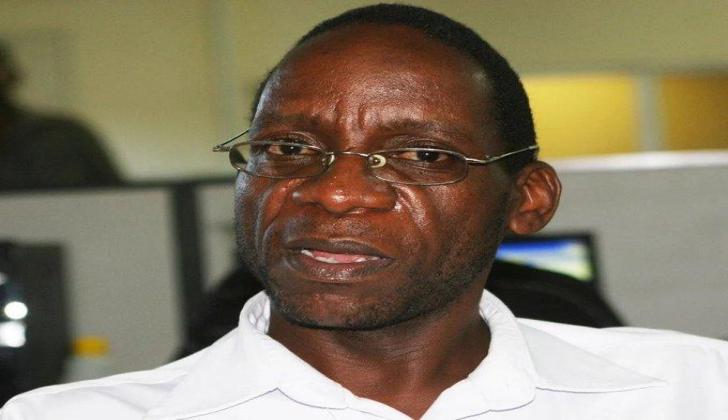
Constitutional lawyer and opposition figure Lovemore Madhuku has dismissed claims that Emmerson Mnangagwa needs extra time in office to complete national projects, describing the reasoning as constitutionally flawed and politically disingenuous.
Speaking to Citizens Voice Network, Madhuku criticised the Cabinet-approved Constitutional Amendment Bill, which seeks to extend the tenures of both the President and Parliament from five to seven years. The move comes despite Mnangagwa's repeated public assurances that he would step down at the end of his second term in 2028.
"It's complete nonsense to say that a President has anything called a project," Madhuku said. "Presidents come into office to govern for the period they are given. Whatever they want to do, they do it within that period. If something remains unfinished, it is not for them to say, ‘I want to finish.' There will be an election, and the next President decides whether to continue."
He added: "No one has shown that what is being done is so important that it must continue under the same person. These are projects for the country, not projects for the President."
Madhuku emphasised that term limits are essential for accountability and effective governance. "If you are in office and know your term, you must achieve your objectives within that period. If you cannot, it is a sign of incompetence," he said.
Using a striking analogy, Madhuku compared the proposal to a student asking for extra time in an exam after failing to complete it within the allotted hours: "It's like a student who is told the exam is three hours, and then says, ‘No, I want five hours because I haven't finished.' In an exam, they have failed."
Madhuku, who leads the National Constitutional Assembly, is no stranger to high-profile constitutional battles. He first rose to prominence in 2000 while campaigning against a proposed Zanu-PF constitution alongside the late Morgan Tsvangirai's Movement for Democratic Change. That draft constitution, critics argued, aimed to entrench executive power and one-party rule, and was ultimately rejected in a national referendum.
The current debate comes amid succession politics within Zanu-PF, with Vice President Constantino Chiwenga, widely viewed as Mnangagwa's likely successor, reportedly unsettled by the proposed constitutional changes.
Zimbabwe once again finds itself at the crossroads of executive authority and the rule of law as the nation debates the limits of presidential power.
Speaking to Citizens Voice Network, Madhuku criticised the Cabinet-approved Constitutional Amendment Bill, which seeks to extend the tenures of both the President and Parliament from five to seven years. The move comes despite Mnangagwa's repeated public assurances that he would step down at the end of his second term in 2028.
"It's complete nonsense to say that a President has anything called a project," Madhuku said. "Presidents come into office to govern for the period they are given. Whatever they want to do, they do it within that period. If something remains unfinished, it is not for them to say, ‘I want to finish.' There will be an election, and the next President decides whether to continue."
He added: "No one has shown that what is being done is so important that it must continue under the same person. These are projects for the country, not projects for the President."
Using a striking analogy, Madhuku compared the proposal to a student asking for extra time in an exam after failing to complete it within the allotted hours: "It's like a student who is told the exam is three hours, and then says, ‘No, I want five hours because I haven't finished.' In an exam, they have failed."
Madhuku, who leads the National Constitutional Assembly, is no stranger to high-profile constitutional battles. He first rose to prominence in 2000 while campaigning against a proposed Zanu-PF constitution alongside the late Morgan Tsvangirai's Movement for Democratic Change. That draft constitution, critics argued, aimed to entrench executive power and one-party rule, and was ultimately rejected in a national referendum.
The current debate comes amid succession politics within Zanu-PF, with Vice President Constantino Chiwenga, widely viewed as Mnangagwa's likely successor, reportedly unsettled by the proposed constitutional changes.
Zimbabwe once again finds itself at the crossroads of executive authority and the rule of law as the nation debates the limits of presidential power.
Source - newzimbabwe
Join the discussion
Loading comments…





