News / National
Flight to VFEX exposes cracks in Zimbabwe's capital markets
21 Mar 2026 at 09:12hrs |
0 Views
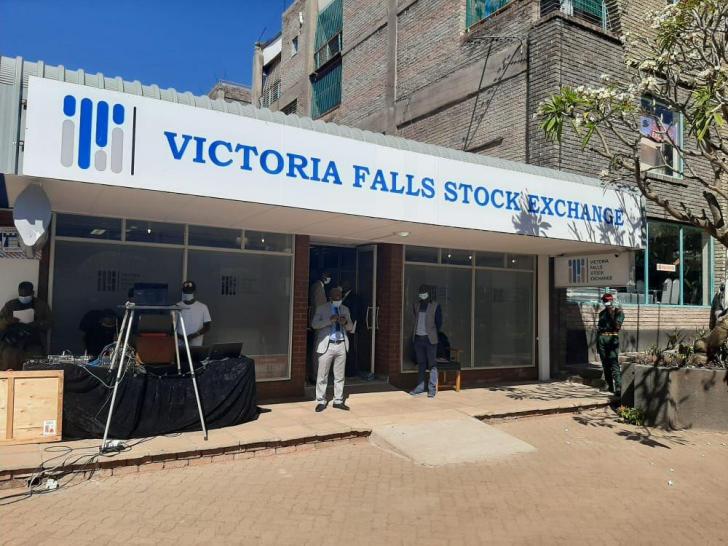
Zimbabwe's capital markets may be approaching a defining inflection point, as a growing migration of investors from the Zimbabwe Stock Exchange (ZSE) to the Victoria Falls Stock Exchange (VFEX) exposes deep-rooted structural weaknesses and raises fresh concerns over confidence in the Zimbabwe Gold (ZiG)-denominated market.
Market analysts say the shift is no longer a routine portfolio rebalancing exercise, but a reflection of persistent mistrust in local currency assets and mounting concerns over unresolved regulatory and liquidity constraints affecting the ZSE.
In a recent investor brief, Fincent Securities warned that the trend could undermine the competitiveness and long-term relevance of Zimbabwe's oldest bourse.
"The ZSE is facing a crisis of relevance as companies increasingly opt for the VFEX or go private," the brokerage said.
The firm cited the impending delisting of telecoms giant Econet Wireless Zimbabwe and the potential exit of First Mutual Properties as indicators that the ZiG-denominated exchange is struggling to retain major listings.
Zimbabwe's capital markets have undergone multiple structural adjustments in recent years, as authorities sought to restore stability following prolonged currency volatility and hyperinflation. The introduction of ZiG in 2024 was intended to anchor price stability and rebuild market confidence.
In its 2026 monetary policy statement, the Reserve Bank of Zimbabwe (RBZ) reported that inflation had eased to 4.1%, marking a return to single-digit levels. Authorities have also pointed to relative exchange rate stability as evidence of improving macroeconomic fundamentals.
However, analysts caution that these gains have yet to translate into renewed confidence in the local capital market.
"Despite the RBZ reporting a return to single-digit inflation and relative exchange rate stability, the ZSE continues to grapple with several unresolved challenges," Fincent noted.
One of the most persistent structural barriers is the lack of fungibility between the ZSE and VFEX — a constraint that prevents seamless transfer of securities across the two exchanges. Fincent argued that this could be resolved through stronger regulatory coordination rather than maintaining parallel foreign exchange platforms.
Liquidity constraints remain another major concern. While ZiG has introduced a measure of currency stability, trading activity on the ZSE remains subdued, with institutional investors wary of limited exit routes into hard currency.
Fincent described the trend as a gradual "hollowing out" of the local exchange.
"Institutional investors remain wary of the lack of an exit route into hard currency, leading to low trading volumes compared to the US dollar-denominated VFEX," the firm said.
Performance data further highlights the widening gap between the two exchanges.
The ZSE All Share Index rose a modest 0.86% month-on-month in February, supported largely by medium-cap stocks, which gained 7.59%. Market capitalisation increased 1.13%, while turnover surged 78.74% to ZiG2.42 billion.
By contrast, the VFEX delivered stronger gains, with its All-Share Index rising 6.01% and market capitalisation climbing 6.97% to US$2.66 billion. Turnover jumped 196.47% to US$30.52 million, reflecting stronger liquidity and increased investor participation.
Regionally, Zimbabwe's equities market is lagging behind peers. Nigeria's All Share Index rose 16.60% over the same period, while Kenya's NSE 20 gained 13.83%. South Africa's Johannesburg Stock Exchange All Share Index advanced 6.62%.
Beyond liquidity concerns, unresolved regulatory disputes are also weighing on investor sentiment. The prolonged suspension of dual-listed counters such as Old Mutual Limited and PPC Limited remains a significant deterrent for foreign investors.
Fincent warned that the impasse sends negative signals to international markets.
"The continued suspension of Old Mutual and PPC remains a red flag for foreign direct investment. It signals that historical grievances over currency benchmarking still outweigh the technical requirements of a modern, dual-listed exchange," the firm said.
Policy uncertainty could further complicate the outlook. Fincent Securities analyst Kudakwashe Taimo said meaningful structural reforms would be required before pursuing full dedollarisation.
"Currently, the Zimbabwe Stock Exchange has no dual listings, whereas the VFEX has successfully positioned itself as a platform for cross-border and multi-listed securities," Taimo said.
"Absent regulatory alignment between the ZSE and VFEX — particularly around currency fungibility and settlement frameworks — dedollarisation could introduce operational and liquidity challenges similar to those currently affecting the ZSE."
Tafara Mtutu, a senior analyst at Morgan & Co, added that policy uncertainty continues to influence investor behaviour.
Since its launch in 2020, the VFEX has steadily expanded, attracting around 10 companies migrating from the ZSE, while several others have delisted altogether. From a peak of more than 60 listed companies, the ZSE now has roughly 40 active counters.
For market watchers, the trajectory is increasingly clear: unless structural challenges around liquidity, currency convertibility, and regulatory alignment are addressed, Zimbabwe risks watching its flagship exchange steadily lose ground to the very platform designed to complement it.
Market analysts say the shift is no longer a routine portfolio rebalancing exercise, but a reflection of persistent mistrust in local currency assets and mounting concerns over unresolved regulatory and liquidity constraints affecting the ZSE.
In a recent investor brief, Fincent Securities warned that the trend could undermine the competitiveness and long-term relevance of Zimbabwe's oldest bourse.
"The ZSE is facing a crisis of relevance as companies increasingly opt for the VFEX or go private," the brokerage said.
The firm cited the impending delisting of telecoms giant Econet Wireless Zimbabwe and the potential exit of First Mutual Properties as indicators that the ZiG-denominated exchange is struggling to retain major listings.
Zimbabwe's capital markets have undergone multiple structural adjustments in recent years, as authorities sought to restore stability following prolonged currency volatility and hyperinflation. The introduction of ZiG in 2024 was intended to anchor price stability and rebuild market confidence.
In its 2026 monetary policy statement, the Reserve Bank of Zimbabwe (RBZ) reported that inflation had eased to 4.1%, marking a return to single-digit levels. Authorities have also pointed to relative exchange rate stability as evidence of improving macroeconomic fundamentals.
However, analysts caution that these gains have yet to translate into renewed confidence in the local capital market.
"Despite the RBZ reporting a return to single-digit inflation and relative exchange rate stability, the ZSE continues to grapple with several unresolved challenges," Fincent noted.
One of the most persistent structural barriers is the lack of fungibility between the ZSE and VFEX — a constraint that prevents seamless transfer of securities across the two exchanges. Fincent argued that this could be resolved through stronger regulatory coordination rather than maintaining parallel foreign exchange platforms.
Liquidity constraints remain another major concern. While ZiG has introduced a measure of currency stability, trading activity on the ZSE remains subdued, with institutional investors wary of limited exit routes into hard currency.
Fincent described the trend as a gradual "hollowing out" of the local exchange.
"Institutional investors remain wary of the lack of an exit route into hard currency, leading to low trading volumes compared to the US dollar-denominated VFEX," the firm said.
Performance data further highlights the widening gap between the two exchanges.
The ZSE All Share Index rose a modest 0.86% month-on-month in February, supported largely by medium-cap stocks, which gained 7.59%. Market capitalisation increased 1.13%, while turnover surged 78.74% to ZiG2.42 billion.
By contrast, the VFEX delivered stronger gains, with its All-Share Index rising 6.01% and market capitalisation climbing 6.97% to US$2.66 billion. Turnover jumped 196.47% to US$30.52 million, reflecting stronger liquidity and increased investor participation.
Regionally, Zimbabwe's equities market is lagging behind peers. Nigeria's All Share Index rose 16.60% over the same period, while Kenya's NSE 20 gained 13.83%. South Africa's Johannesburg Stock Exchange All Share Index advanced 6.62%.
Beyond liquidity concerns, unresolved regulatory disputes are also weighing on investor sentiment. The prolonged suspension of dual-listed counters such as Old Mutual Limited and PPC Limited remains a significant deterrent for foreign investors.
Fincent warned that the impasse sends negative signals to international markets.
"The continued suspension of Old Mutual and PPC remains a red flag for foreign direct investment. It signals that historical grievances over currency benchmarking still outweigh the technical requirements of a modern, dual-listed exchange," the firm said.
Policy uncertainty could further complicate the outlook. Fincent Securities analyst Kudakwashe Taimo said meaningful structural reforms would be required before pursuing full dedollarisation.
"Currently, the Zimbabwe Stock Exchange has no dual listings, whereas the VFEX has successfully positioned itself as a platform for cross-border and multi-listed securities," Taimo said.
"Absent regulatory alignment between the ZSE and VFEX — particularly around currency fungibility and settlement frameworks — dedollarisation could introduce operational and liquidity challenges similar to those currently affecting the ZSE."
Tafara Mtutu, a senior analyst at Morgan & Co, added that policy uncertainty continues to influence investor behaviour.
Since its launch in 2020, the VFEX has steadily expanded, attracting around 10 companies migrating from the ZSE, while several others have delisted altogether. From a peak of more than 60 listed companies, the ZSE now has roughly 40 active counters.
For market watchers, the trajectory is increasingly clear: unless structural challenges around liquidity, currency convertibility, and regulatory alignment are addressed, Zimbabwe risks watching its flagship exchange steadily lose ground to the very platform designed to complement it.
Source - The Independent
Join the discussion
Loading comments…





