News / National
How Tagwirei built an empire
23 Mar 2026 at 22:36hrs |
0 Views
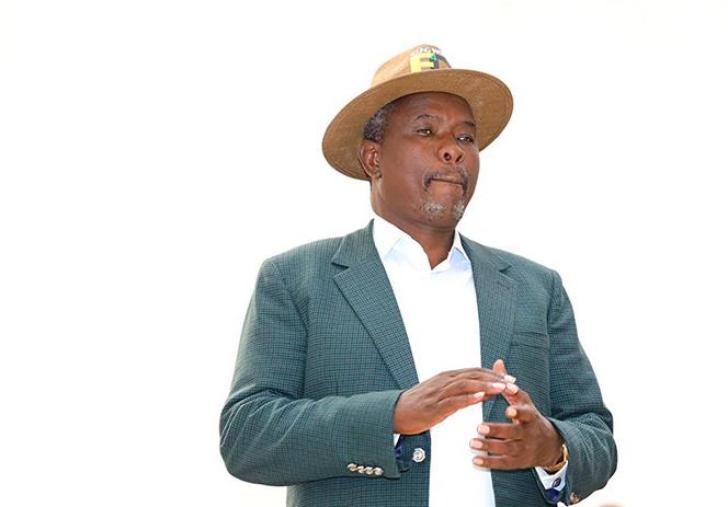
Standing in a 12-hour fuel queue once marked frustration for many Zimbabweans—but for businessman Kudakwashe Tagwirei, it became the turning point that sparked the creation of a powerful business empire.
Speaking at the Zimbabwe CEOs Policy Roundtable in Victoria Falls, the Sakunda Holdings founder delivered a rare, candid account of his journey from a retrenched systems analyst to one of the country's most influential business figures.
What began as a moment of frustration in a fuel queue in Hatfield, Harare, eventually evolved into the foundation of Sakunda Holdings.
"One day, my wife and I wanted to go to South Africa. I went to Caltex garage in Hatfield and it took me 12 hours, from 4am to 4pm to get served. I just felt this was not right," he recalled.
That experience triggered a bold entry into the fuel sector, although the path was far from smooth. After being rejected for an oil licence over his informal attire, Tagwirei acquired a licence through a car hire company for US$10 000—an early sign of his unconventional approach to business.
He also shared the origin of the name "Sakunda," which combines his and his wife's names.
The journey included significant setbacks. During the 2005 foreign currency crisis, a chicken farming venture collapsed, forcing him to liquidate assets, including a blast freezer, his car, and eventually his house.
"I lost all 15 tonnes of chicken," he said, highlighting the harsh realities of early entrepreneurial risk.
He returned to fuel trading, eventually securing a US$500 000 loan using fuel as collateral. By 2009, he was operating a fleet of 100 trucks transporting fuel from Beira.
A pivotal moment came when he challenged inefficiencies in Zimbabwe's fuel pipeline system after a conversation with the late senior government official Justin Mupamhanga.
This led to a "take-or-pay" agreement, a bold move that committed him to supply 40 million litres monthly—even when his sales were far lower at the time.
Despite the risk, Tagwirei adapted by leveraging financial strategies such as hedging, which he learned at an international oil conference in London.
"I realised the money is in trading. You do not even need to see the fuel, you just need to move paper from one point to another," he explained.
To meet obligations, he drastically reduced margins, prioritising volume over profit. This strategy allowed him to scale rapidly while contributing to lower fuel costs in the broader economy.
"I left between 18 and 28 cents on the table… If I didn't sell the fuel, I would lose about US$1.5 million a month," he said.
Within six months, he was moving 40 million litres monthly—demonstrating how scale and efficiency can outweigh short-term margins.
Tagwirei also reflected on broader economic principles, warning against excessive profit margins, citing examples of financial institutions that collapsed due to unsustainable returns.
He further recounted his involvement in a government-linked transaction involving the Beira pipeline, where he intervened in a proposed sale to a South African consortium.
Although initially given an opportunity to acquire the asset, he said he chose not to, with government eventually securing full ownership through a revised arrangement.
"If those who are listening to my voice were in my shoes, you most probably would have wanted to take it and make it yours, right?" he said.
Closing his address, Tagwirei emphasised that sustainable success lies in solving real problems, pricing responsibly, and aligning business decisions with broader national interests.
"Most people who have succeeded in life actually do so by solving problems. That's how you make it," he told the gathering of executives.
His story reflects a broader narrative of risk, resilience, and the intersection of business and national development in Zimbabwe's evolving economic landscape.
Speaking at the Zimbabwe CEOs Policy Roundtable in Victoria Falls, the Sakunda Holdings founder delivered a rare, candid account of his journey from a retrenched systems analyst to one of the country's most influential business figures.
What began as a moment of frustration in a fuel queue in Hatfield, Harare, eventually evolved into the foundation of Sakunda Holdings.
"One day, my wife and I wanted to go to South Africa. I went to Caltex garage in Hatfield and it took me 12 hours, from 4am to 4pm to get served. I just felt this was not right," he recalled.
That experience triggered a bold entry into the fuel sector, although the path was far from smooth. After being rejected for an oil licence over his informal attire, Tagwirei acquired a licence through a car hire company for US$10 000—an early sign of his unconventional approach to business.
He also shared the origin of the name "Sakunda," which combines his and his wife's names.
The journey included significant setbacks. During the 2005 foreign currency crisis, a chicken farming venture collapsed, forcing him to liquidate assets, including a blast freezer, his car, and eventually his house.
"I lost all 15 tonnes of chicken," he said, highlighting the harsh realities of early entrepreneurial risk.
He returned to fuel trading, eventually securing a US$500 000 loan using fuel as collateral. By 2009, he was operating a fleet of 100 trucks transporting fuel from Beira.
A pivotal moment came when he challenged inefficiencies in Zimbabwe's fuel pipeline system after a conversation with the late senior government official Justin Mupamhanga.
This led to a "take-or-pay" agreement, a bold move that committed him to supply 40 million litres monthly—even when his sales were far lower at the time.
"I realised the money is in trading. You do not even need to see the fuel, you just need to move paper from one point to another," he explained.
To meet obligations, he drastically reduced margins, prioritising volume over profit. This strategy allowed him to scale rapidly while contributing to lower fuel costs in the broader economy.
"I left between 18 and 28 cents on the table… If I didn't sell the fuel, I would lose about US$1.5 million a month," he said.
Within six months, he was moving 40 million litres monthly—demonstrating how scale and efficiency can outweigh short-term margins.
Tagwirei also reflected on broader economic principles, warning against excessive profit margins, citing examples of financial institutions that collapsed due to unsustainable returns.
He further recounted his involvement in a government-linked transaction involving the Beira pipeline, where he intervened in a proposed sale to a South African consortium.
Although initially given an opportunity to acquire the asset, he said he chose not to, with government eventually securing full ownership through a revised arrangement.
"If those who are listening to my voice were in my shoes, you most probably would have wanted to take it and make it yours, right?" he said.
Closing his address, Tagwirei emphasised that sustainable success lies in solving real problems, pricing responsibly, and aligning business decisions with broader national interests.
"Most people who have succeeded in life actually do so by solving problems. That's how you make it," he told the gathering of executives.
His story reflects a broader narrative of risk, resilience, and the intersection of business and national development in Zimbabwe's evolving economic landscape.
Source - The Chronicle
Join the discussion
Loading comments…


