News / National
Zimra roadblocks spark outrage
26 Mar 2026 at 20:34hrs |
0 Views
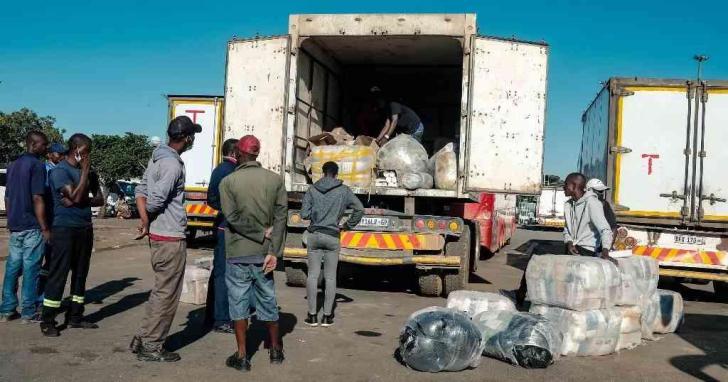
Members of Parliament have raised fresh concerns over inland checkpoints mounted by the Zimbabwe Revenue Authority along the busy Beitbridge-Gwanda highway, citing legal questions and growing frustration among travellers and traders.
The issue was brought before Parliament by Nonhlanhla Mlotshwa, who queried the need for additional inspections after vehicles have already been cleared at the Beitbridge Border Post.
Mlotshwa highlighted complaints from the public over newly established checkpoints in Gwanda and along the Plumtree route, where travellers report lengthy delays disrupting movement along one of the country's busiest trade corridors.
Responding to the concerns, Deputy Minister of Economic Development and Investment Promotion Kudakwashe Mnangagwa defended the checkpoints, saying they are necessary to combat rampant smuggling.
"Inland checkpoints along the major trunk roads leading to and from the border are necessitated by a high incidence of smuggling through porous lines," he said.
Mnangagwa revealed that authorities had recorded multiple seizures since late 2024, with cross-border transporters allegedly picking up smuggled goods inland.
He added that the operations are backed by law, with ZIMRA's mandate provided for under the Revenue Authority Act, while customs enforcement measures fall under the Customs and Excise Act.
Security personnel have also been deployed at the checkpoints for national security purposes, he said.
However, Mnangagwa sought to reassure the public, noting that not all vehicles are stopped and that inspections are conducted with passenger cooperation to minimise delays.
To improve efficiency, the government is implementing several measures at ports of entry, including upgrades at Beitbridge, extended operating hours, and modern technologies such as electronic cargo tracking, X-ray scanners and drone surveillance.
He added that processing times for bills of entry have improved significantly—from 3 hours 42 minutes in 2022 to 2 hours 45 minutes by the end of 2025.
Despite these assurances, MPs say the growing number of inland checkpoints continues to inconvenience legitimate travellers and could undermine trade efficiency if not properly managed.
The issue was brought before Parliament by Nonhlanhla Mlotshwa, who queried the need for additional inspections after vehicles have already been cleared at the Beitbridge Border Post.
Mlotshwa highlighted complaints from the public over newly established checkpoints in Gwanda and along the Plumtree route, where travellers report lengthy delays disrupting movement along one of the country's busiest trade corridors.
Responding to the concerns, Deputy Minister of Economic Development and Investment Promotion Kudakwashe Mnangagwa defended the checkpoints, saying they are necessary to combat rampant smuggling.
"Inland checkpoints along the major trunk roads leading to and from the border are necessitated by a high incidence of smuggling through porous lines," he said.
Mnangagwa revealed that authorities had recorded multiple seizures since late 2024, with cross-border transporters allegedly picking up smuggled goods inland.
Security personnel have also been deployed at the checkpoints for national security purposes, he said.
However, Mnangagwa sought to reassure the public, noting that not all vehicles are stopped and that inspections are conducted with passenger cooperation to minimise delays.
To improve efficiency, the government is implementing several measures at ports of entry, including upgrades at Beitbridge, extended operating hours, and modern technologies such as electronic cargo tracking, X-ray scanners and drone surveillance.
He added that processing times for bills of entry have improved significantly—from 3 hours 42 minutes in 2022 to 2 hours 45 minutes by the end of 2025.
Despite these assurances, MPs say the growing number of inland checkpoints continues to inconvenience legitimate travellers and could undermine trade efficiency if not properly managed.
Source - Southern Eye
Join the discussion
Loading comments…



