News / National
Mnangagwa's panicky government feels the heat
29 Mar 2026 at 11:09hrs |
0 Views
The administration of President Emmerson Mnangagwa has announced a salary adjustment for civil servants and pensioners effective April 1, 2026, under a new remuneration framework informed by a recent job evaluation exercise.
Public Service and Labour Minister Edgar Moyo said the move forms part of broader reforms aimed at improving incomes, strengthening working conditions, and enhancing welfare across the public sector.
"These interventions form part of a phased and sustainable approach to promote decent work in the public service, guided by fiscal prudence and economic realities," Moyo said.
The reforms include a revised pay structure, enhanced occupational safety and health measures, and expanded access to affordable housing for civil servants.
Government says the new framework reflects ongoing engagement with workers' representatives and is aligned with national development goals.
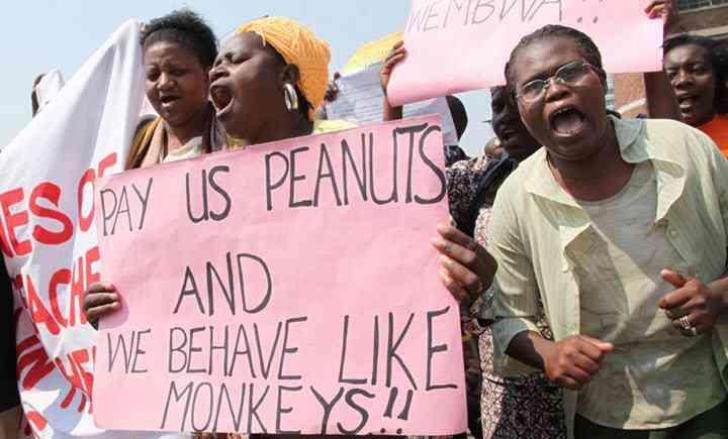
However, the policy has already sparked resistance from key labour groups. The Progressive Teachers' Union of Zimbabwe has rejected the job evaluation outcomes, citing lack of consultation and what it describes as the downgrading of teachers' roles.
"We believe that any evaluation impacting our members must include their voices and insights," said PTUZ president Takavafira Zhou.
The union also raised concerns about disparities in the grading system, warning that the framework undermines the professional standing of educators.
At the same time, tensions are escalating in the health sector. The Zimbabwe Nurses Association has issued notice of a nationwide strike set to begin on April 15, threatening to disrupt services in an already strained public health system.
Recent demonstrations by nurses at major institutions, including Sally Mugabe Hospital and Parirenyatwa Group of Hospitals, highlight growing frustration over declining real incomes amid rising living costs.
The discontent comes against a backdrop of increasing fuel prices and transport costs, linked in part to global geopolitical tensions involving the United States and Iran, which have pushed up the cost of basic goods and services.
While government maintains the salary review demonstrates its commitment to improving livelihoods, analysts warn that without broader economic stability and meaningful engagement with workers, the reforms may struggle to contain rising labour unrest.
Public Service and Labour Minister Edgar Moyo said the move forms part of broader reforms aimed at improving incomes, strengthening working conditions, and enhancing welfare across the public sector.
"These interventions form part of a phased and sustainable approach to promote decent work in the public service, guided by fiscal prudence and economic realities," Moyo said.
The reforms include a revised pay structure, enhanced occupational safety and health measures, and expanded access to affordable housing for civil servants.
Government says the new framework reflects ongoing engagement with workers' representatives and is aligned with national development goals.
However, the policy has already sparked resistance from key labour groups. The Progressive Teachers' Union of Zimbabwe has rejected the job evaluation outcomes, citing lack of consultation and what it describes as the downgrading of teachers' roles.
"We believe that any evaluation impacting our members must include their voices and insights," said PTUZ president Takavafira Zhou.
The union also raised concerns about disparities in the grading system, warning that the framework undermines the professional standing of educators.
At the same time, tensions are escalating in the health sector. The Zimbabwe Nurses Association has issued notice of a nationwide strike set to begin on April 15, threatening to disrupt services in an already strained public health system.
Recent demonstrations by nurses at major institutions, including Sally Mugabe Hospital and Parirenyatwa Group of Hospitals, highlight growing frustration over declining real incomes amid rising living costs.
The discontent comes against a backdrop of increasing fuel prices and transport costs, linked in part to global geopolitical tensions involving the United States and Iran, which have pushed up the cost of basic goods and services.
While government maintains the salary review demonstrates its commitment to improving livelihoods, analysts warn that without broader economic stability and meaningful engagement with workers, the reforms may struggle to contain rising labour unrest.
Source - New Zimbabwe
Join the discussion
Loading comments…





