News / National
Only one Zimbabwe school is exempt from Zimsec directive
10 May 2026 at 19:40hrs |
0 Views
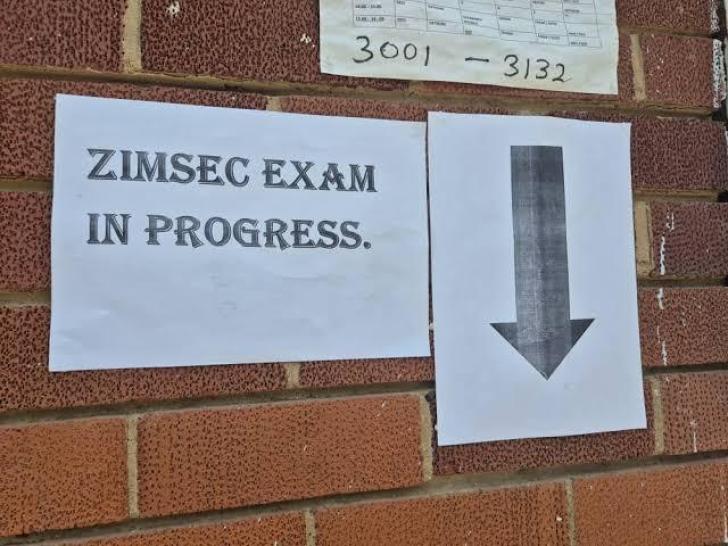
The government has moved to consolidate its education policy under a unified national framework, announcing that nearly all schools in Zimbabwe will be required to prioritise local examinations administered by Zimbabwe School Examinations Council as part of the rollout of the “heritage-based curriculum.”
Primary and Secondary Education Minister Torerayi Moyo told senators that the policy is designed to align the education system with Vision 2030 and strengthen what he described as Zimbabwe’s educational sovereignty.
Under the new directive, all government, missionary and private schools, including elite independent institutions, must ensure learners register for Zimsec examinations first, starting with full implementation expected by 2027.
However, one institution has been explicitly exempted: Harare International School. Moyo said the school would not be required to shift to the local curriculum because it caters largely to diplomats and their families.
He described it as a special case that would not be affected by the broader transition.
For all other schools, the government has taken a firmer stance, arguing that Zimbabwe has become overly dependent on foreign curricula and must restore emphasis on local languages, history and technical skills development.
Moyo said the reform is intended to produce learners better equipped for industrialisation and national development, rather than purely academic pathways shaped by external systems.
While schools may still offer Cambridge or other foreign examination systems, they are now required to prioritise Zimsec registration for their students. The minister stressed that dual-exam pathways remain permissible but only after compliance with the national system.
The announcement has generated uncertainty among parents and school administrators, particularly in private education circles, as institutions begin adjusting to the phased transition.
Despite the concerns, the government maintains that the shift is necessary to unify the curriculum and ensure all learners are grounded in what it defines as a nationally relevant education system.
Primary and Secondary Education Minister Torerayi Moyo told senators that the policy is designed to align the education system with Vision 2030 and strengthen what he described as Zimbabwe’s educational sovereignty.
Under the new directive, all government, missionary and private schools, including elite independent institutions, must ensure learners register for Zimsec examinations first, starting with full implementation expected by 2027.
However, one institution has been explicitly exempted: Harare International School. Moyo said the school would not be required to shift to the local curriculum because it caters largely to diplomats and their families.
He described it as a special case that would not be affected by the broader transition.
For all other schools, the government has taken a firmer stance, arguing that Zimbabwe has become overly dependent on foreign curricula and must restore emphasis on local languages, history and technical skills development.
Moyo said the reform is intended to produce learners better equipped for industrialisation and national development, rather than purely academic pathways shaped by external systems.
While schools may still offer Cambridge or other foreign examination systems, they are now required to prioritise Zimsec registration for their students. The minister stressed that dual-exam pathways remain permissible but only after compliance with the national system.
The announcement has generated uncertainty among parents and school administrators, particularly in private education circles, as institutions begin adjusting to the phased transition.
Despite the concerns, the government maintains that the shift is necessary to unify the curriculum and ensure all learners are grounded in what it defines as a nationally relevant education system.
Source - The Standard
Join the discussion
Loading comments…


