News / National
Backlash over Mnangagwa's CAB 3 consensus claim
13 Jul 2026 at 17:04hrs |
0 Views
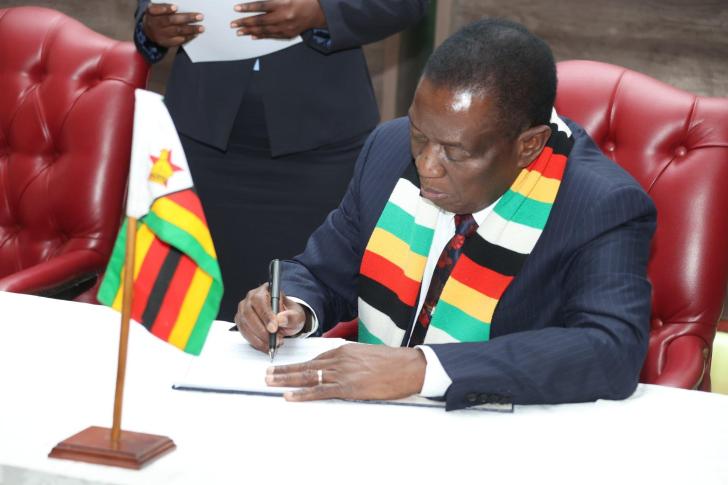
President Emmerson Mnangagwa's assertion that the Constitution of Zimbabwe Amendment No. 3 Act was the product of "collective wisdom" has triggered renewed political debate, with some Zanu-PF insiders and political analysts disputing the claim and alleging the reforms were driven by factional interests.
The differing accounts have reignited discussion over the legitimacy of the constitutional changes, succession politics within Zanu-PF and the process through which the legislation was enacted.
In an interview with The Sunday Mail, Mnangagwa described the constitutional amendments as a product of "collective evolution," saying he always carried "Cabinet and the country" with him in making major decisions.
The President last week signed Constitution Amendment No. 3 into law after it was approved by Parliament.
Among its provisions, the Act extends the tenure of the President, Members of Parliament and councillors from five to seven years and provides for the election of the President by Parliament under specified circumstances.
However, a senior Zanu-PF member, speaking to NewsDay on condition of anonymity, disputed the President's characterisation of the process.
"CAB 3 was never a collective decision," the source alleged.
"It was driven by a small faction around the President and imposed on the rest of the party through threats, inducements and brute parliamentary arithmetic."
The source further claimed that Zanu-PF relied on the support of opposition legislators aligned with Sengezo Tshabangu to secure the two-thirds majority required to pass the constitutional amendment.
"How can something be a collective decision when your own party cannot muster the votes without opposition help?" the source said.
The allegations have not been independently verified.
Political analysts say the debate surrounding the amendment has highlighted underlying tensions within the ruling party, particularly over succession.
One political observer, who also spoke on condition of anonymity, alleged that the process exposed significant factional divisions.
"The CAB 3 debate has exposed serious infighting and factionalism in the party, with cash and vehicle donations playing a significant role in swaying support," the observer claimed.
Another source close to the party leadership predicted that internal divisions could deepen.
"There is no doubt there will be a rupture in Zanu-PF, whether instigated by the Vice-President Constantino Chiwenga faction or the Mnangagwa faction," the source alleged.
The same insider claimed that party members who opposed the Bill were threatened with disciplinary action and possible expulsion.
The allegations follow remarks previously attributed to Masvingo Minister of State for Provincial Affairs and Devolution Ezra Chadzamira, who reportedly warned that Zanu-PF members opposing the constitutional amendment "will regret it once the amendment process is wrapped up."
"That is not how you treat colleagues in a collective decision," the source said. "That is how you treat enemies. The President cannot claim collective wisdom when his own allies are threatening to purge those who disagree."
The anonymous party source also questioned the absence of a referendum on the constitutional changes.
"Where is the collective in denying 14 million Zimbabweans a voice? A Constitution belongs to the people. It is neither the private property of Parliament nor the personal instrument of an incumbent President," the source said.
Australia-based political commentator Reason Wafawarova argued that the apparent consensus around the amendment did not necessarily reflect genuine political support.
"Zimbabwe's political establishment may publicly appear united behind Constitutional Amendment No. 3 Act, but beneath the official slogans lies perhaps the country's worst-kept secret: the overwhelming majority of the political establishment does not genuinely support the project," Wafawarova said.
He described the amendments as "constitutional vandalism," "political trickery" and "an imposition," arguing that they would struggle to gain public approval in a referendum.
Wafawarova also challenged the notion that parliamentary approval alone conferred legitimacy on the constitutional changes.
"Procedure and legitimacy are not the same thing," he said.
"Apartheid had procedures. UDI had procedures. One-party states had procedures. Parliament voting for something does not automatically make it legitimate, nor does it necessarily make it constitutional. The real issue is why Parliament became a substitute for the people."
Commenting on reports that critics of the amendment had faced pressure within the ruling party, Wafawarova said such actions reflected political insecurity.
"Victimisation of CAB 3 critics is a confession of fear," he said.
He argued that the constitutional changes primarily served political interests rather than addressing the immediate concerns of ordinary Zimbabweans.
"CAB 3 is structural political engineering, not a public welfare or economic development programme. There is nothing in CAB 3 for ordinary Zanu-PF supporters. It is legislation by the elite and for the elite," Wafawarova said.
Government and Zanu-PF have consistently defended the constitutional amendments, maintaining that they were lawfully enacted through Parliament and are intended to strengthen governance and improve the functioning of the State.
The differing accounts have reignited discussion over the legitimacy of the constitutional changes, succession politics within Zanu-PF and the process through which the legislation was enacted.
In an interview with The Sunday Mail, Mnangagwa described the constitutional amendments as a product of "collective evolution," saying he always carried "Cabinet and the country" with him in making major decisions.
The President last week signed Constitution Amendment No. 3 into law after it was approved by Parliament.
Among its provisions, the Act extends the tenure of the President, Members of Parliament and councillors from five to seven years and provides for the election of the President by Parliament under specified circumstances.
However, a senior Zanu-PF member, speaking to NewsDay on condition of anonymity, disputed the President's characterisation of the process.
"CAB 3 was never a collective decision," the source alleged.
"It was driven by a small faction around the President and imposed on the rest of the party through threats, inducements and brute parliamentary arithmetic."
The source further claimed that Zanu-PF relied on the support of opposition legislators aligned with Sengezo Tshabangu to secure the two-thirds majority required to pass the constitutional amendment.
"How can something be a collective decision when your own party cannot muster the votes without opposition help?" the source said.
The allegations have not been independently verified.
Political analysts say the debate surrounding the amendment has highlighted underlying tensions within the ruling party, particularly over succession.
One political observer, who also spoke on condition of anonymity, alleged that the process exposed significant factional divisions.
"The CAB 3 debate has exposed serious infighting and factionalism in the party, with cash and vehicle donations playing a significant role in swaying support," the observer claimed.
Another source close to the party leadership predicted that internal divisions could deepen.
"There is no doubt there will be a rupture in Zanu-PF, whether instigated by the Vice-President Constantino Chiwenga faction or the Mnangagwa faction," the source alleged.
The same insider claimed that party members who opposed the Bill were threatened with disciplinary action and possible expulsion.
The allegations follow remarks previously attributed to Masvingo Minister of State for Provincial Affairs and Devolution Ezra Chadzamira, who reportedly warned that Zanu-PF members opposing the constitutional amendment "will regret it once the amendment process is wrapped up."
"That is not how you treat colleagues in a collective decision," the source said. "That is how you treat enemies. The President cannot claim collective wisdom when his own allies are threatening to purge those who disagree."
The anonymous party source also questioned the absence of a referendum on the constitutional changes.
"Where is the collective in denying 14 million Zimbabweans a voice? A Constitution belongs to the people. It is neither the private property of Parliament nor the personal instrument of an incumbent President," the source said.
Australia-based political commentator Reason Wafawarova argued that the apparent consensus around the amendment did not necessarily reflect genuine political support.
"Zimbabwe's political establishment may publicly appear united behind Constitutional Amendment No. 3 Act, but beneath the official slogans lies perhaps the country's worst-kept secret: the overwhelming majority of the political establishment does not genuinely support the project," Wafawarova said.
He described the amendments as "constitutional vandalism," "political trickery" and "an imposition," arguing that they would struggle to gain public approval in a referendum.
Wafawarova also challenged the notion that parliamentary approval alone conferred legitimacy on the constitutional changes.
"Procedure and legitimacy are not the same thing," he said.
"Apartheid had procedures. UDI had procedures. One-party states had procedures. Parliament voting for something does not automatically make it legitimate, nor does it necessarily make it constitutional. The real issue is why Parliament became a substitute for the people."
Commenting on reports that critics of the amendment had faced pressure within the ruling party, Wafawarova said such actions reflected political insecurity.
"Victimisation of CAB 3 critics is a confession of fear," he said.
He argued that the constitutional changes primarily served political interests rather than addressing the immediate concerns of ordinary Zimbabweans.
"CAB 3 is structural political engineering, not a public welfare or economic development programme. There is nothing in CAB 3 for ordinary Zanu-PF supporters. It is legislation by the elite and for the elite," Wafawarova said.
Government and Zanu-PF have consistently defended the constitutional amendments, maintaining that they were lawfully enacted through Parliament and are intended to strengthen governance and improve the functioning of the State.
Source - newsday
Join the discussion
Loading comments…



