Dear Dr Arikana Chihombori: Dear Bishop Joshua Maponga
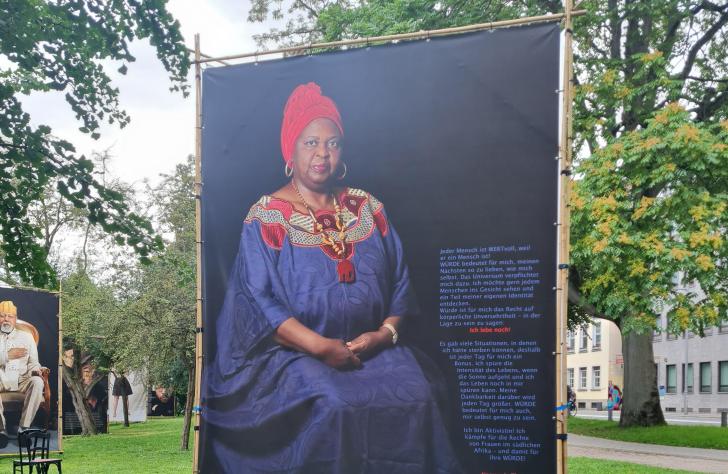
Ndinokukwazisai, vanunguna vangu, vana veZimbabwe; ndinotenda munofara ikoko kwamuri kumativi mana enyika.
I am writing to you because I am getting irritated by your contradictory statements regarding the African revolution. You keep repeating statements you have been making for the past four years about Burkina Faso, Niger and Mali. Much as your critiques were powerful back then, repeating them like a record playing the same music endlessly is becoming tiresome to the ears of decent citizens.
I commiserated with you over the unceremonious removal from your position as AU ambassador to the USA. I believe it was perceived by many as a reaction rooted in post-colonial attitudes and power dynamics. It felt as though Africans must still be controlled and evaluated by former colonial masters; such positions are often given to Africans who toe the line, mascots. Dr Chihombori, you are not.
Initially, we were grateful for your critical voice that resonated across Africa, castigating France and other colonial countries that still maintain influence over African resources; the daylight exploitation of critical West African resources to benefit European citizens at the expense of Africans. Revolutionary forces globally understood your grievances, especially Africans. The echoes of your voice were powerful and we remain deeply grateful for the courage you took in addressing such painful issues, matters that were taboo to speak about back then.
However, it escaped those same African voices to ask pertinent questions about the absence of that powerful voice in your own country, Zimbabwe; to critically question the absence of human rights and democratic freedoms. Zimbabwe is a difficult country in which to critique the Mnangagwa administration openly. Are you afraid to criticise the Emmerson Mnangagwa government, Dr Chihombori? During the CAB 3 deliberations, your voice was silent. Zimbabwe has seen constitutional changes that critics argue have concentrated power around the presidency. It is now months since those amendments were formalised. You have said nothing, remaining silent about what many citizens view as a loss of constitutional values.
Your silence is very loud, Dr Chihombori. Your public interventions appear selective. Have you spoken sufficiently about the objectives of the Sustainable Development Goals initiated by the United Nations to address social, political, environmental and economic challenges associated with poverty, inequality and climate change? While many countries globally have recorded progress towards SDG targets, African countries continue to lag behind. These SDGs should have been your Bible verses, guiding Africa out of its current quagmire.
Have you seriously addressed factors such as limited access to basic services across African countries; health, education, clean water and sanitation; high unemployment, income disparities between men and women, and limited economic opportunities for the youth? Has it ever dawned on you that African governments often undermine the implementation of SDGs, leaving citizens trapped in perpetual survival mode? Again, African governments have rarely demonstrated sufficient urgency in implementing the SDGs. To realise these goals, there must be good leadership that understands them technically, strategic thinking, commitment and Sustainable Development Action. Let alone Agenda 2063, which for many still appears a pie in the sky.
In your speeches, you have kept yourself safe by not sufficiently questioning the failures of African leadership in meeting basic social demands across the continent, fundamental pillars by which SDG success is measured. Have you spoken extensively about climate change and its effect on agricultural production, creating chronic food insecurity in many communities? Have you spoken about Africa, a continent marred by political instability, tribal conflicts, civil wars, failing states, terrorist insurgencies, piracy, human trafficking and drug trafficking, all of which destabilise fragile governments? Some countries are collapsing or have already collapsed. Have you spoken about independence that, in many places, has failed to improve the lives of ordinary Africans? Yes, I am sure you have addressed some of these issues well, Dr Chihombori; credit where it is due.
Charity begins at home. In Zimbabwe, you are aware of the absence of a safe space to openly critique government. Yet you have chosen not to publicly focus on what many citizens regard as governance failures in Harare. Somehow, you see wrong in colonial France and other Western governments, but speak far less about African governments that have failed Africa for nearly 70 years. Your activism appears selective. You keep yourself safe by not openly critiquing a government many critics describe as intolerant of dissent.
Neglect of roads, hospitals, schools, water and sanitation in Zimbabwe provides ample material for critique. Yet you appear reluctant to scrutinise the Harare government. You must also be aware of citizens who allege abuses and political repression. These are issues deserving of your attention.
I hasten to say that repeatedly shouting at former colonial powers while merely reminding them of historical wrongs has become tired rhetoric. We are tired of critiquing colonialism without offering tangible solutions to the continent's present challenges. Why not tell President Mnangagwa directly what you believe is wrong with his administration? Repeating criticisms of France for years on end has achieved little practical change. President Macron is unlikely to listen simply because you are shouting louder.
Recently you were asked for your opinion about xenophobia in South Africa. Evidently, you appeared uncomfortable with the question. It seemed easier to criticise distant governments than governments closer to home. The crisis in South Africa has regional dimensions, including migration pressures linked to broader governance failures across southern Africa. Ramaphosa and Mnangagwa are often compared by critics because of similar challenges facing their administrations. Seeing you struggle to find a strong public voice regarding xenophobic violence next door diminished some of the respect I had held for you.
I have listened to Bishop Maponga speaking on several platforms. His intellect is powerful and can easily captivate audiences. A gifted person, no less, but sometimes his expressions are deeply controversial. An open debate with Maponga can leave one incandescent. I would advise no one to debate with him except Apostle Chiwenga. I lost respect for him when I saw one of his videos in a cave; he appeared beside a beer bottle. One is left with the impression of someone preaching water while quietly drinking wine.
The recent Bishop Maponga video involved a Nigerian investigative journalist discussing allegations surrounding the administration of President Samia Suluhu Hassan during the 2025 elections. It appeared to me that he was defending the Tanzanian government. He argued there were no mass graves in Tanzania and dismissed some opposition claims. He labelled the opposition party Chadema as traitors, appendages and stooges of Western countries. That argument sat well with those defending the government, which critics have accused of serious human rights violations.
Listening to Maponga was nauseating. He spoke with self-given authority while disregarding the feelings of parents who lost their children. Many Tanzanians allege severe political repression during and around the 2025 election period. The irony, critics say, is that these events unfolded under a female president. After the elections, there was no national mourning for young people who lost their lives; life simply carried on. If African countries do not value African lives, who will?
Maponga argues that democracy in Africa is not working. I share aspects of that sentiment. Elections symbolise authority given by the people to form governments accountable to citizens. Yet in many African countries leaders appear accountable to few. They operate in political bubbles and often lack the competence required to run complex state institutions. Weak accountability systems produce weak governance and mass corruption, stealing the future of the youth without conscience.
Curiously, Bishop Maponga agrees with criticisms of failed democracy in Africa. Yet he has also endorsed aspects of Mnangagwa's symbolic ascendency to the Kingdom of Munhumutapa despite debates around lineage and legitimacy. Like Dr Chihombori, he appears unwilling to openly challenge Mnangagwa. Consequently, he was largely absent from debates around the CAB 3 amendment process. These shortcomings put both Maponga and Chihombori under scrutiny. They appear selective in their political judgement on matters affecting millions of Africans, especially the youth.
I ask one thing from these two, Maponga and Chihombori: never go to Burkina Faso seeking easy money. Young President Ibrahim Traoré is struggling to put bread and butter on the tables of Burkinabè citizens. It would be wholly irresponsible to line your pockets after years of shouting "Pan-Africanism". Va Maponga and Dr Chihombori, please provide leadership to the youth of Zimbabwe and assist in charting a new national direction. We must begin resetting what has been lost over the past 45 years. We cannot afford to die and leave behind a broken nation.



