Opinion / Columnist
Constructive Counterargument to '7 Wasted Years: How Ramaphosa's Presidency Betrayed Its Promise'
10 Dec 2025 at 23:09hrs |
0 Views
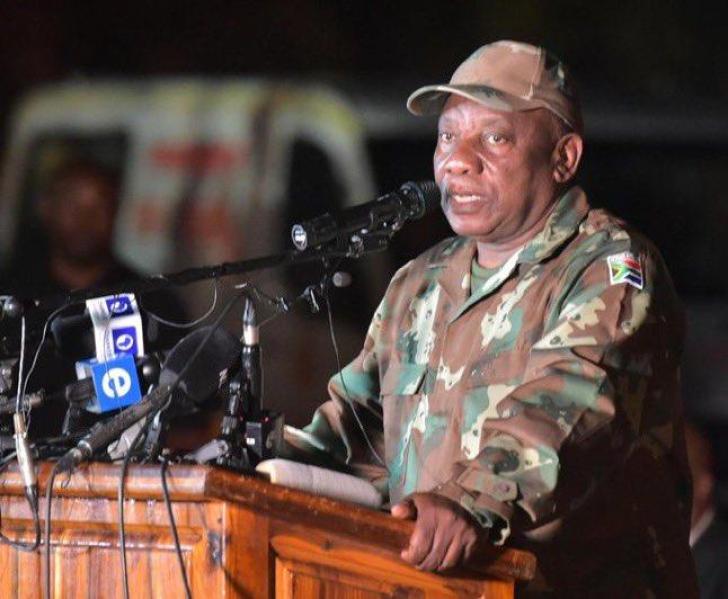
The Bulawayo24 article titled "7 wasted Years: How Ramaphosa's Presidency Betrayed Its Promise" paints Cyril Ramaphosa's presidency as an outright failure marked by betrayal, impunity, and stagnation. However, this interpretation, while capturing genuine frustrations - rests on selective readings of events, underplays measurable reforms, and overlooks structural constraints that predate his administration. A more balanced assessment reveals a mixed record, not the unmitigated collapse depicted in the article. Below is a more balanced assessment done by an ordinary citizen.
1. The article treats long-standing structural crises as if they began under Ramaphosa
South Africa's economic decline, SOE collapse, and corruption networks were not only entrenched before 2018 - they were the very inheritance Ramaphosa assumed.
State capture, according to the Zondo Commission, occurred primarily between 2009 and 2017, entrenching patronage networks in Eskom, Transnet, Prasa, SAA, Denel, State agencies and multiple departments.
The energy crisis began in 2008, with Eskom's coal fleet in long-term decline due to mismanagement and under-investment spanning decades. So Eskom's woes predates former president Jacob Zuma.
Municipal collapse, cadre deployment, and procurement abuse are systemic ANC governance problems, not Ramaphosa-specific inventions. These are a result of care deployment and rampant nepotism.
This context does not excuse failure, but it counters the narrative that South Africa was stable, prosperous, and functional until 2018 and then deteriorated solely because of Ramaphosa. This sadly underplays or deliberately ignores the destruction of the Zuma era.
2. Anti-corruption reforms - though slow, are deeper and more institutional than the article admits.
Contrary to the claim that corruption worsened or that "nothing has changed," the past seven years saw the most significant anti-corruption reforms since 1994, including:
• Establishment of the Investigating Directorate (ID/NPA)
This unit led major arrests (e.g., Ace Magashule, multiple mayors, VBS syndicate leaders) and recovered billions.
• Zondo Commission completion and adoption of its recommendations
Ramaphosa is the first president to give evidence under oath before a judicial commission.
• New procurement and anti-corruption legislation, including:
●Public Procurement Bill
●Whistle-blower reform proposals
●Lifestyle audits for senior officials (finally rolled out)
• Arrest and conviction of COVID-19 PPE corruption offenders
While the article claims impunity, dozens of cases have resulted in disciplinary action, arrests, and Special Tribunal recoveries.
Again, the pace is slower than citizens demand - but the claim that corruption prosecution "stalled or fizzled out" is factually inaccurate.
3. The Phala Phala scandal did not "fizzle without consequence"
While public anger is justified, several formal processes scrutinised the matter:
The Public Protector investigation (cleared him of wrongdoing in relation to state authority).
The SARB investigation (found no exchange control violation).
The Hawks inquiry (closed without criminal evidence).
The Section 89 Parliamentary Panel (produced findings that were debated).
Reasonable people can criticise aspects of these outcomes - but asserting that "institutions shielded him" ignores the independence of these bodies and oversimplifies a complex debate.
Another significant factor in this case that those in conversation over this case tend to forget that of the huge sum of US$ stolen while stashed in a couch at Phala Phala not a cent came from tax payers.
4. The depiction of the COVID-19 response ignores international context and global complexity
The article condemns the lockdown as if South Africa acted uniquely harshly or irrationally. Several counterpoints are necessary:
South Africa followed WHO-aligned protocols at a time when the global scientific community urged lockdowns.
Many countries - including those in the West - implemented stricter and longer lockdowns.
South Africa's social relief measures, including the SRD R350 grant, supported millions and became a permanent policy instrument.
Corruption in PPE procurement was real and scandalous, but it occurred across the world, even in wealthy nations. Culprits are being exposed and prosecutions have taken place and are still ongoing.
5. The energy crisis improved significantly from 2023–2025, contradicting "nothing has changed". What remains are localised grid problems resulting in load reduction.
Load-shedding has not disappeared, but significant structural reforms took place:
• The unbundling of Eskom into generation, transmission, and distribution
A reform resisted for over a decade was finally implemented.
• Lifting the 100MW cap on embedded generation
This unleashed the largest private-energy investment wave in SA history.
• Accelerated renewable procurement and grid expansion
• Municipal self-generation approvals
These reforms will show full impact over a longer horizon, but it is inaccurate to claim that Ramaphosa "did nothing" or "lacked the will" to confront entrenched interests. These changes required political courage precisely because they diminished the monopoly of patronage networks in the energy sector.
6. The portrayal of Ramaphosa as indifferent to Marikana is one-sided and ignores documented actions
Ramaphosa's role in Marikana remains a painful controversy. However:
He has publicly expressed remorse, contrary to the article's claim of "never apologized."
The Farlam Commission did not assign him criminal responsibility. The tragedy is that this massacre discourse deliberately ignores the deaths of people allegedly at the hands of striking miners. It is these dastardly murders that caused the tragic massacre not what Ramaphosa wrote.
Compensation processes for families have been completed for most victims; others are ongoing.
The tragedy predates his presidency, and laying seven years of governance failure on Marikana is emotionally compelling but analytically shallow.
7. The article overstates the president's personal power in a party-dominant political system
South Africa's governance dysfunction is heavily shaped by the ANC's internal dynamics, factional battles, NEC constraints, and alliance politics. Ramaphosa governs in a context where:
The ANC's parliamentary caucus limits executive action.
Factional resistance from RET and other blocs obstructs reforms.
SOEs and bureaucracy are staffed by decades-old networks of political deployments.
This is not a defence it is a recognition that presidential agency is constrained in a dominant-party system.
The article assumes a U.S.-style presidency with unilateral power, which is simply not how South Africa's political system works.
8. Ordinary citizens have not experienced the "complete stagnation" the article claims. The problems are exacerbated by population growth accompanied by dwindling tax paying class not ignoring rampant corruption in procurement.
While challenges remain, several changes under Ramaphosa are tangible:
Recovered billions from state capture repatriated into the fiscus
Expansion of social grants
Growth in independent power production
Record-high clean audits in some key departments
Renewal of SARS
Greater transparency in public appointments
Stabilisation, not collapse, of key institutions (NPA, SARB, judiciary)
These gains coexist with failures, but the narrative of "nothing improved" is misleading.
Conclusion: A mixed presidency - not the "seven wasted years" claimed.
Ramaphosa's presidency is far from perfect. Criticisms about slow reform, caution, and indecision are valid. The economic pain, corruption scandals, and institutional weaknesses are real.
But to claim the seven years were a total betrayal ignores:
the catastrophic baseline he inherited,
the measurable institutional stabilisation achieved,
the long-term economic and energy reforms underway,
and the real constraints of party politics and governance complexity.
A credible critique must hold two truths simultaneously:
1. Ramaphosa has been too cautious, too slow, and often indecisive.
2. But he has also advanced significant reforms, strengthened key institutions, and did not preside over the outright collapse portrayed in the article.
South Africa's challenges are structural, decades-old, and systemic, not the product of a single leader's failings.
Wa Motsamai is a politics and governance analyst based in Johannesburg. He can be contacted at fikile.ntolilo@gmail.com.
1. The article treats long-standing structural crises as if they began under Ramaphosa
South Africa's economic decline, SOE collapse, and corruption networks were not only entrenched before 2018 - they were the very inheritance Ramaphosa assumed.
State capture, according to the Zondo Commission, occurred primarily between 2009 and 2017, entrenching patronage networks in Eskom, Transnet, Prasa, SAA, Denel, State agencies and multiple departments.
The energy crisis began in 2008, with Eskom's coal fleet in long-term decline due to mismanagement and under-investment spanning decades. So Eskom's woes predates former president Jacob Zuma.
Municipal collapse, cadre deployment, and procurement abuse are systemic ANC governance problems, not Ramaphosa-specific inventions. These are a result of care deployment and rampant nepotism.
This context does not excuse failure, but it counters the narrative that South Africa was stable, prosperous, and functional until 2018 and then deteriorated solely because of Ramaphosa. This sadly underplays or deliberately ignores the destruction of the Zuma era.
2. Anti-corruption reforms - though slow, are deeper and more institutional than the article admits.
Contrary to the claim that corruption worsened or that "nothing has changed," the past seven years saw the most significant anti-corruption reforms since 1994, including:
• Establishment of the Investigating Directorate (ID/NPA)
This unit led major arrests (e.g., Ace Magashule, multiple mayors, VBS syndicate leaders) and recovered billions.
• Zondo Commission completion and adoption of its recommendations
Ramaphosa is the first president to give evidence under oath before a judicial commission.
• New procurement and anti-corruption legislation, including:
●Public Procurement Bill
●Whistle-blower reform proposals
●Lifestyle audits for senior officials (finally rolled out)
• Arrest and conviction of COVID-19 PPE corruption offenders
While the article claims impunity, dozens of cases have resulted in disciplinary action, arrests, and Special Tribunal recoveries.
Again, the pace is slower than citizens demand - but the claim that corruption prosecution "stalled or fizzled out" is factually inaccurate.
3. The Phala Phala scandal did not "fizzle without consequence"
While public anger is justified, several formal processes scrutinised the matter:
The Public Protector investigation (cleared him of wrongdoing in relation to state authority).
The SARB investigation (found no exchange control violation).
The Hawks inquiry (closed without criminal evidence).
The Section 89 Parliamentary Panel (produced findings that were debated).
Reasonable people can criticise aspects of these outcomes - but asserting that "institutions shielded him" ignores the independence of these bodies and oversimplifies a complex debate.
Another significant factor in this case that those in conversation over this case tend to forget that of the huge sum of US$ stolen while stashed in a couch at Phala Phala not a cent came from tax payers.
4. The depiction of the COVID-19 response ignores international context and global complexity
The article condemns the lockdown as if South Africa acted uniquely harshly or irrationally. Several counterpoints are necessary:
South Africa followed WHO-aligned protocols at a time when the global scientific community urged lockdowns.
Many countries - including those in the West - implemented stricter and longer lockdowns.
South Africa's social relief measures, including the SRD R350 grant, supported millions and became a permanent policy instrument.
Corruption in PPE procurement was real and scandalous, but it occurred across the world, even in wealthy nations. Culprits are being exposed and prosecutions have taken place and are still ongoing.
5. The energy crisis improved significantly from 2023–2025, contradicting "nothing has changed". What remains are localised grid problems resulting in load reduction.
Load-shedding has not disappeared, but significant structural reforms took place:
• The unbundling of Eskom into generation, transmission, and distribution
A reform resisted for over a decade was finally implemented.
• Lifting the 100MW cap on embedded generation
This unleashed the largest private-energy investment wave in SA history.
• Accelerated renewable procurement and grid expansion
• Municipal self-generation approvals
These reforms will show full impact over a longer horizon, but it is inaccurate to claim that Ramaphosa "did nothing" or "lacked the will" to confront entrenched interests. These changes required political courage precisely because they diminished the monopoly of patronage networks in the energy sector.
6. The portrayal of Ramaphosa as indifferent to Marikana is one-sided and ignores documented actions
Ramaphosa's role in Marikana remains a painful controversy. However:
He has publicly expressed remorse, contrary to the article's claim of "never apologized."
The Farlam Commission did not assign him criminal responsibility. The tragedy is that this massacre discourse deliberately ignores the deaths of people allegedly at the hands of striking miners. It is these dastardly murders that caused the tragic massacre not what Ramaphosa wrote.
Compensation processes for families have been completed for most victims; others are ongoing.
The tragedy predates his presidency, and laying seven years of governance failure on Marikana is emotionally compelling but analytically shallow.
7. The article overstates the president's personal power in a party-dominant political system
South Africa's governance dysfunction is heavily shaped by the ANC's internal dynamics, factional battles, NEC constraints, and alliance politics. Ramaphosa governs in a context where:
The ANC's parliamentary caucus limits executive action.
Factional resistance from RET and other blocs obstructs reforms.
SOEs and bureaucracy are staffed by decades-old networks of political deployments.
This is not a defence it is a recognition that presidential agency is constrained in a dominant-party system.
The article assumes a U.S.-style presidency with unilateral power, which is simply not how South Africa's political system works.
8. Ordinary citizens have not experienced the "complete stagnation" the article claims. The problems are exacerbated by population growth accompanied by dwindling tax paying class not ignoring rampant corruption in procurement.
While challenges remain, several changes under Ramaphosa are tangible:
Recovered billions from state capture repatriated into the fiscus
Expansion of social grants
Growth in independent power production
Record-high clean audits in some key departments
Renewal of SARS
Greater transparency in public appointments
Stabilisation, not collapse, of key institutions (NPA, SARB, judiciary)
These gains coexist with failures, but the narrative of "nothing improved" is misleading.
Conclusion: A mixed presidency - not the "seven wasted years" claimed.
Ramaphosa's presidency is far from perfect. Criticisms about slow reform, caution, and indecision are valid. The economic pain, corruption scandals, and institutional weaknesses are real.
But to claim the seven years were a total betrayal ignores:
the catastrophic baseline he inherited,
the measurable institutional stabilisation achieved,
the long-term economic and energy reforms underway,
and the real constraints of party politics and governance complexity.
A credible critique must hold two truths simultaneously:
1. Ramaphosa has been too cautious, too slow, and often indecisive.
2. But he has also advanced significant reforms, strengthened key institutions, and did not preside over the outright collapse portrayed in the article.
South Africa's challenges are structural, decades-old, and systemic, not the product of a single leader's failings.
Wa Motsamai is a politics and governance analyst based in Johannesburg. He can be contacted at fikile.ntolilo@gmail.com.
Source - Fikile wa Motsamai
All articles and letters published on Bulawayo24 have been independently written by members of Bulawayo24's community. The views of users published on Bulawayo24 are therefore their own and do not necessarily represent the views of Bulawayo24. Bulawayo24 editors also reserve the right to edit or delete any and all comments received.
Join the discussion
Loading comments…





