Opinion / National
7 wasted years: How Ramaphosa's Presidency betrayed its promise
06 Dec 2025 at 19:01hrs |
0 Views
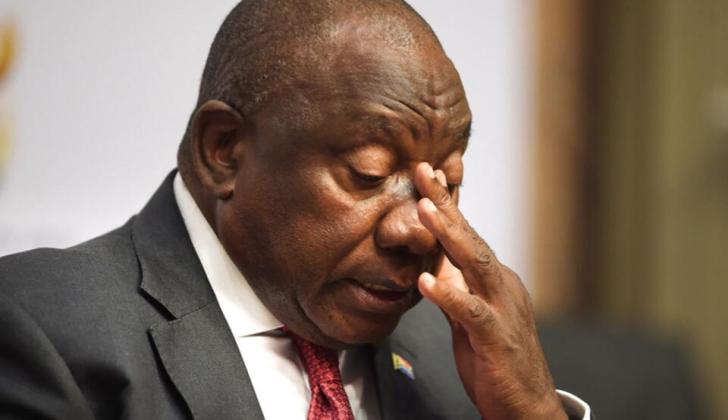
When Cyril Ramaphosa took over the presidency of South Africa in 2018, he pledged a "new dawn" of integrity, economic renewal, and responsive governance. The hope was that his leadership would end the era of state capture, restore public trust in institutions, and give ordinary South Africans a fair shot at prosperity. Seven years on, however, the record shows something very different: broken promises, growing corruption, economic stagnation, and repeated cases where political expediency trumped justice.
One of the earliest stains under Ramaphosa - and a lasting symbol of failure - is the unresolved legacy of the Marikana Massacre. As a former director of mining firm Lonmin, Ramaphosa infamously called striking mineworkers "criminals" and backed what police described as "concomitant action." The result was a police massacre of 34 workers in August 2012 - the deadliest such killing in post-apartheid South Africa.
Despite repeated calls for reckoning, Ramaphosa has never publicly apologized to the victims' families, and the state's silence on this tragedy suggests a troubling devaluation of working-class lives in favour of corporate and political interests.
Then came the scandal known as Phala Phala Scandal - arguably the biggest test of Ramaphosa's integrity. In 2020, burglars stole hundreds of thousands of dollars in foreign currency from Ramaphosa's private farm. Questions immediately surfaced: why was such large cash stored there, was it declared properly, and why did government institutions move so hesitantly to investigate?
What unfolded was more than just a robbery - it exposed deep flaws in accountability. Institutions that should have held the president to account instead became shields. Investigations stalled, political pressure mounted on prosecutors, and ultimately the scandal fizzled without meaningful consequences - sending a message that the rules apply differently for the elite.
If the Phala Phala affair stripped away the moral veneer, the mismanagement of the COVID-19 crisis revealed the structural failures under Ramaphosa's watch. The government's nationwide lockdown was arguably among the strictest globally, shutting down entire sectors of the economy, destroying livelihoods, and leaving small businesses and informal workers destitute. Officially, massive relief funds - including billions in PPE procurement and social relief - were meant to cushion the blow. Yet corruption, fraud and misallocation proliferated. Despite the establishment of special auditing and investigative mechanisms, many of the funds remain unaccounted for, and prosecutions have been sluggish or non-existent.
Rather than saving jobs and stabilizing the economy, the post-COVID fallout deepened inequality, unemployment and social despair.
Economic mismanagement under Ramaphosa's watch cannot be ignored. Seven years after promising a prosperous "new dawn," South Africa remains mired in economic decline, high unemployment, chronic load-shedding and decaying public services.
The energy crisis - once supposed to be resolved - persists; many businesses still struggle with power cuts, undermining productivity and discouraging investment. Critics argue that the president's failure to tackle structural problems in key sectors reflects a deeper unwillingness to challenge entrenched state-capture networks or confront powerful interests.
Meanwhile, corruption remains as endemic as ever, if not more so. What began as grand promises to root out graft has devolved into repeated scandals and a pervasive culture of impunity. The disappearance or mis-use of COVID-19 relief funds, the construction-industry patronage, municipal collapse, and ongoing looting of public resources all indicate that Ramaphosa's anti-corruption narrative has failed to produce justice.
As one recent critic put it, his "promises of integrity have failed to curb corruption in seven years."
This erosion of trust is not just a political problem - it is a social and economic catastrophe. When institutions meant to protect citizens instead enable looting and concealment, democracy is weakened, and ordinary people suffer. Public services fail, jobs vanish, inequality deepens, and the promise of a country "for all" becomes a hollow slogan. As some analysts argue, the governing party has devolved from a liberation movement into what they call "a mafia organisation" - using its political muscle to shield insiders, redirect tenders, and silence accountability.
It must be said: some of Ramaphosa's words - about reform, transparency and reconstruction - remain aspirational. There have been reform proposals, new legislation, and repeated pledges to build stronger institutions.
But ambition and speeches mean little when the systems themselves remain broken, and when the leadership either lacks the will or the power to enforce honest governance.
What South Africans must ask themselves is: seven years in, what has truly changed for the ordinary citizen? Is the energy crisis resolved? Are schools functioning? Are small businesses thriving again? Has corruption been tamed? Have the victims of state violence received justice?
For many, the answer is a resounding no. The "new dawn" has failed to dawn. Instead, the country remains trapped in stagnation, inequality, and institutional decay - with a government that appears more interested in protecting itself than empowering its people.
If Ramaphosa truly cares about the legacy he leaves behind, the time for rhetoric has passed. What South Africa - its citizens, its economy, and its democracy - needs now is accountability, justice, real reform, and leadership that puts the people before the powerful.
One of the earliest stains under Ramaphosa - and a lasting symbol of failure - is the unresolved legacy of the Marikana Massacre. As a former director of mining firm Lonmin, Ramaphosa infamously called striking mineworkers "criminals" and backed what police described as "concomitant action." The result was a police massacre of 34 workers in August 2012 - the deadliest such killing in post-apartheid South Africa.
Despite repeated calls for reckoning, Ramaphosa has never publicly apologized to the victims' families, and the state's silence on this tragedy suggests a troubling devaluation of working-class lives in favour of corporate and political interests.
Then came the scandal known as Phala Phala Scandal - arguably the biggest test of Ramaphosa's integrity. In 2020, burglars stole hundreds of thousands of dollars in foreign currency from Ramaphosa's private farm. Questions immediately surfaced: why was such large cash stored there, was it declared properly, and why did government institutions move so hesitantly to investigate?
What unfolded was more than just a robbery - it exposed deep flaws in accountability. Institutions that should have held the president to account instead became shields. Investigations stalled, political pressure mounted on prosecutors, and ultimately the scandal fizzled without meaningful consequences - sending a message that the rules apply differently for the elite.
If the Phala Phala affair stripped away the moral veneer, the mismanagement of the COVID-19 crisis revealed the structural failures under Ramaphosa's watch. The government's nationwide lockdown was arguably among the strictest globally, shutting down entire sectors of the economy, destroying livelihoods, and leaving small businesses and informal workers destitute. Officially, massive relief funds - including billions in PPE procurement and social relief - were meant to cushion the blow. Yet corruption, fraud and misallocation proliferated. Despite the establishment of special auditing and investigative mechanisms, many of the funds remain unaccounted for, and prosecutions have been sluggish or non-existent.
Rather than saving jobs and stabilizing the economy, the post-COVID fallout deepened inequality, unemployment and social despair.
Economic mismanagement under Ramaphosa's watch cannot be ignored. Seven years after promising a prosperous "new dawn," South Africa remains mired in economic decline, high unemployment, chronic load-shedding and decaying public services.
Meanwhile, corruption remains as endemic as ever, if not more so. What began as grand promises to root out graft has devolved into repeated scandals and a pervasive culture of impunity. The disappearance or mis-use of COVID-19 relief funds, the construction-industry patronage, municipal collapse, and ongoing looting of public resources all indicate that Ramaphosa's anti-corruption narrative has failed to produce justice.
As one recent critic put it, his "promises of integrity have failed to curb corruption in seven years."
This erosion of trust is not just a political problem - it is a social and economic catastrophe. When institutions meant to protect citizens instead enable looting and concealment, democracy is weakened, and ordinary people suffer. Public services fail, jobs vanish, inequality deepens, and the promise of a country "for all" becomes a hollow slogan. As some analysts argue, the governing party has devolved from a liberation movement into what they call "a mafia organisation" - using its political muscle to shield insiders, redirect tenders, and silence accountability.
It must be said: some of Ramaphosa's words - about reform, transparency and reconstruction - remain aspirational. There have been reform proposals, new legislation, and repeated pledges to build stronger institutions.
But ambition and speeches mean little when the systems themselves remain broken, and when the leadership either lacks the will or the power to enforce honest governance.
What South Africans must ask themselves is: seven years in, what has truly changed for the ordinary citizen? Is the energy crisis resolved? Are schools functioning? Are small businesses thriving again? Has corruption been tamed? Have the victims of state violence received justice?
For many, the answer is a resounding no. The "new dawn" has failed to dawn. Instead, the country remains trapped in stagnation, inequality, and institutional decay - with a government that appears more interested in protecting itself than empowering its people.
If Ramaphosa truly cares about the legacy he leaves behind, the time for rhetoric has passed. What South Africa - its citizens, its economy, and its democracy - needs now is accountability, justice, real reform, and leadership that puts the people before the powerful.
Source - Byo24News
All articles and letters published on Bulawayo24 have been independently written by members of Bulawayo24's community. The views of users published on Bulawayo24 are therefore their own and do not necessarily represent the views of Bulawayo24. Bulawayo24 editors also reserve the right to edit or delete any and all comments received.
Join the discussion
Loading comments…





