Matabeleland's rising scholars debunk education stereotypes
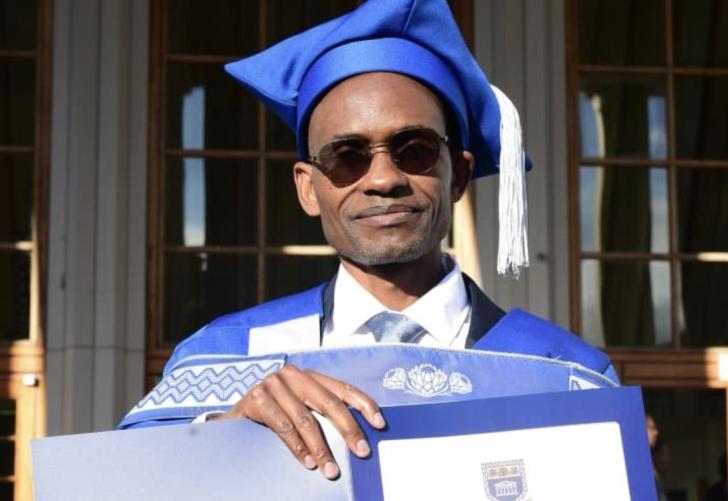
BULAWAYO - The graduation of Dr Ishmael Sibanda with a Doctor of Philosophy (PhD) in Science Education from the University of the Western Cape has added to a growing list of academic achievements emerging from Matabeleland, challenging long-held stereotypes about education in the region.
Dr Sibanda, who hails from Kezi in Matabeleland South, graduated on Friday and joins a growing number of academics from the region who have attained some of the highest qualifications in their respective fields.
His achievement comes more than a decade after negative stereotypes were directed at people from Matabeleland, portraying them as lacking educational attainment and professional success.
Despite challenges often associated with the region, including drought, poverty, underdevelopment and poor examination pass rates, many scholars from Matabeleland continue to excel locally and internationally.
Speaking to this publication, Dr Sibanda described obtaining his doctorate as a journey shaped by sacrifice, resilience and family support.
"This is a journey of sacrifice, not only for me but for my family and my late mother," he said.
His doctoral research focused on the use of a Dialogical Argumentation Instructional Model (DAIM) to improve Grade 11 learners' understanding of scientific and indigenous conceptions of heat and temperature in the OR Tambo Coastal District of South Africa's Eastern Cape.
Behind the academic achievement lies a story of determination against considerable odds.
Dr Sibanda lost his father at the age of five and was raised by his mother, a peasant farmer in Kezi, who worked tirelessly to provide educational opportunities for her children.
Tragically, she passed away shortly after he obtained his Diploma in Education from Hillside Teachers' College and did not live to see her son's academic accomplishments.
Reflecting on his upbringing, Dr Sibanda said many last-born children face unique challenges due to declining family resources and ageing parents.
"Most last-born children face problems when growing up. Sometimes resources are limited, and they have to rely on their parents' pensions. Naturally, by the time the last-born child is growing up, parents may be older, and the family's resources may have diminished," he said.
After qualifying as a teacher, Dr Sibanda secured employment at Dombodema Secondary School in Plumtree. However, his ambition to further his education led him to make difficult choices.
Determined to continue his studies, he reportedly sold personal belongings to finance his education, while his siblings provided additional support.
He later graduated with a Bachelor of Education in Chemistry from Midlands State University before relocating to South Africa, where he completed a Bachelor of Education Honours degree, a Master of Education degree and ultimately a PhD in Science Education.
His achievement adds to a growing list of distinguished academics and professionals with roots in Kezi and the wider Matabeleland region.
Among them is his brother, Dr Bhekimpilo Sibanda, an accomplished educationist from Donkwe-Donkwe.
The region is also associated with internationally recognised scientist Professor Sikhulile Moyo, whose research team at the Botswana Harvard AIDS Institute for HIV Research played a key role in identifying and sequencing the Omicron variant of COVID-19 in 2021.
Another notable academic linked to Kezi is Professor Doreen Zandile Moyo, who earned a PhD in Veterinary Parasitology and has built a distinguished career in research and academic leadership.
The achievements of these scholars continue to demonstrate the intellectual talent emerging from Matabeleland and challenge perceptions that have long undermined the region's educational accomplishments.


