News / National
Zimbabwe economy grows 8,29% in 2025
20 Jun 2026 at 10:35hrs |
0 Views
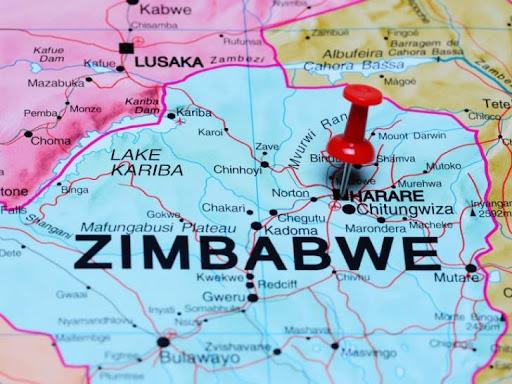
Zimbabwe's economy expanded by 8.29 percent in 2025, supported by a strong agricultural season, increased mining production and improved macroeconomic stability, according to the latest Gross Domestic Product (GDP) figures released by the Zimbabwe National Statistics Agency.
Presenting the annual GDP report in Harare on Thursday, national accounts manager Grown Chirongwe said the economy benefited from favourable conditions across several key sectors.
"The year 2025 was deemed a stable year, coupled with low inflation, a good agricultural season, a booming mining industry and firm mineral prices such as gold," Chirongwe said.
He noted that the improved economic environment prompted ZimStat to revise the country's GDP base year from 2023 to 2025 to better reflect current economic realities.
According to the report, Zimbabwe's GDP at current prices nearly doubled from ZiG822.9 billion in 2024 to ZiG1.55 trillion in 2025. At constant 2025 prices, GDP increased from ZiG1.43 trillion to ZiG1.55 trillion, resulting in annual growth of 8.29 percent.
The manufacturing sector remained the largest contributor to economic activity, accounting for 16.8 percent of GDP. Mining and quarrying followed at 15.9 percent, while agriculture contributed 11.1 percent. Wholesale and retail trade accounted for 11 percent, with finance and insurance contributing 6.3 percent.
Agriculture emerged as the fastest-growing sector during the year, expanding by 27.9 percent on the back of improved rainfall and stronger production.
"In terms of value added, the top five growing industries in 2025 were agriculture at 27.9 percent, electricity at 14.9 percent, accommodation and food services at 12.8 percent, transport and storage at 10.4 percent and mining and quarrying at 10.4 percent," Chirongwe said.
The expenditure-based GDP analysis showed that household spending continued to underpin economic activity.
Private consumption expenditure reached ZWG1.21 trillion, representing 77.9 percent of GDP, while government final consumption expenditure accounted for 12.8 percent. Gross capital formation stood at ZWG116.5 billion, equivalent to 7.5 percent of GDP.
The report also highlighted an improvement in Zimbabwe's external sector, with the trade deficit narrowing significantly. Net exports improved from negative ZWG44.4 billion in 2024 to negative ZWG14.8 billion in 2025.
Zimbabwe's Gross National Income (GNI) also recorded substantial growth, rising from ZWG814.3 billion in 2024 to ZWG1.53 trillion in 2025, reflecting stronger domestic income generation.
Using the income approach to GDP measurement, compensation of employees accounted for the largest share of economic output at 43.1 percent, amounting to ZWG668.3 billion. Gross operating surplus reached ZWG517.9 billion.
Chirongwe said private sector investment continued to play a significant role in economic expansion, contributing nearly half of total gross fixed capital formation.
Private sector investment accounted for 49.5 percent of total capital formation, compared to 43 percent contributed by government.
The latest figures point to a broad-based recovery across the economy, with agriculture, mining, manufacturing and services sectors all contributing to growth amid improving macroeconomic conditions and stronger production across major industries.
Presenting the annual GDP report in Harare on Thursday, national accounts manager Grown Chirongwe said the economy benefited from favourable conditions across several key sectors.
"The year 2025 was deemed a stable year, coupled with low inflation, a good agricultural season, a booming mining industry and firm mineral prices such as gold," Chirongwe said.
He noted that the improved economic environment prompted ZimStat to revise the country's GDP base year from 2023 to 2025 to better reflect current economic realities.
According to the report, Zimbabwe's GDP at current prices nearly doubled from ZiG822.9 billion in 2024 to ZiG1.55 trillion in 2025. At constant 2025 prices, GDP increased from ZiG1.43 trillion to ZiG1.55 trillion, resulting in annual growth of 8.29 percent.
The manufacturing sector remained the largest contributor to economic activity, accounting for 16.8 percent of GDP. Mining and quarrying followed at 15.9 percent, while agriculture contributed 11.1 percent. Wholesale and retail trade accounted for 11 percent, with finance and insurance contributing 6.3 percent.
Agriculture emerged as the fastest-growing sector during the year, expanding by 27.9 percent on the back of improved rainfall and stronger production.
"In terms of value added, the top five growing industries in 2025 were agriculture at 27.9 percent, electricity at 14.9 percent, accommodation and food services at 12.8 percent, transport and storage at 10.4 percent and mining and quarrying at 10.4 percent," Chirongwe said.
Private consumption expenditure reached ZWG1.21 trillion, representing 77.9 percent of GDP, while government final consumption expenditure accounted for 12.8 percent. Gross capital formation stood at ZWG116.5 billion, equivalent to 7.5 percent of GDP.
The report also highlighted an improvement in Zimbabwe's external sector, with the trade deficit narrowing significantly. Net exports improved from negative ZWG44.4 billion in 2024 to negative ZWG14.8 billion in 2025.
Zimbabwe's Gross National Income (GNI) also recorded substantial growth, rising from ZWG814.3 billion in 2024 to ZWG1.53 trillion in 2025, reflecting stronger domestic income generation.
Using the income approach to GDP measurement, compensation of employees accounted for the largest share of economic output at 43.1 percent, amounting to ZWG668.3 billion. Gross operating surplus reached ZWG517.9 billion.
Chirongwe said private sector investment continued to play a significant role in economic expansion, contributing nearly half of total gross fixed capital formation.
Private sector investment accounted for 49.5 percent of total capital formation, compared to 43 percent contributed by government.
The latest figures point to a broad-based recovery across the economy, with agriculture, mining, manufacturing and services sectors all contributing to growth amid improving macroeconomic conditions and stronger production across major industries.
Source - the herald
Join the discussion
Loading comments…





