News / National
Zimbabwe banks poised to cut ZiG lending rates
23 Jun 2026 at 10:04hrs |
0 Views
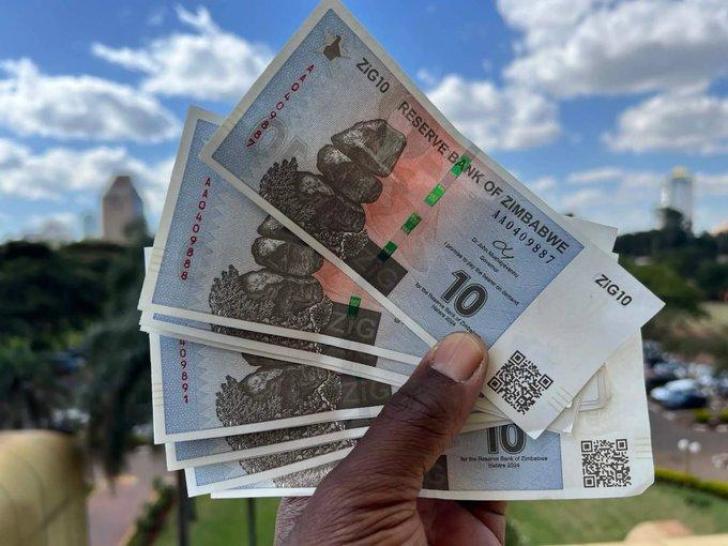
Zimbabwean banks are expected to gradually reduce lending rates following the Reserve Bank of Zimbabwe's decision to cut the Bank Policy Rate from 35 percent to 30 percent, a move aimed at aligning borrowing costs with significantly improved inflation conditions.
The reduction marks the first policy rate cut since the introduction of the Zimbabwe Gold (ZiG) currency in April 2024 and comes after months of declining inflation under the central bank's tight monetary policy framework.
For years, high lending rates have been a feature of Zimbabwe's financial sector as authorities sought to contain inflation and maintain macroeconomic stability in an economy historically prone to currency volatility and price instability.
However, business groups and consumers have increasingly called for lower borrowing costs following the sharp decline in inflation since the introduction of the ZiG.
According to the Reserve Bank's Monetary Policy Committee (MPC), annual inflation fell to 4.4 percent in May from 4.8 percent in April and remains significantly lower than the peak of 95.8 percent recorded in July 2025.
The MPC said inflation has remained below five percent since January, creating room for the policy adjustment.
The Bank Policy Rate serves as the benchmark for credit pricing across the economy and influences the rates charged by commercial banks on loans and other financing facilities.
Responding to questions about whether customers should expect lower loan repayments, John Mushayavanhu said the impact would depend on the structure of individual loan agreements.
"That question is for the banks to answer. Remember, there are various types of loan contracts. Some borrowers may have borrowed on fixed interest rate contracts, while some may have borrowed on floating rate contracts where the interest rate is based on the lending bank's minimum lending rate plus a margin," he said.
"Under this scenario, the effective rate will automatically reduce when the bank reviews its minimum lending rate downwards."
Mushayavanhu stressed that the reduction should not be interpreted as a shift toward loose monetary policy.
"The MPC's decision to reduce the Bank Policy Rate does not entail easing monetary policy at this stage, but a realignment of the policy rate to the structural shift in inflation dynamics," he said.
Meanwhile, Fanwell Mutogo, chief executive officer of the Bankers Association of Zimbabwe (BAZ), said the reduction in the policy rate would eventually translate into lower borrowing costs for many customers.
"The Reserve Bank of Zimbabwe's decision to cut the Bank Policy Rate from 35 percent to 30 percent reduces the benchmark cost of credit across the banking sector," said Mutogo.
"While existing loan interest rates are typically adjusted downward as a result, the immediate impact depends heavily on the specific loan agreement."
He explained that most loans in Zimbabwe's banking sector are structured on variable interest rates, meaning many borrowers are likely to benefit from the adjustment.
"The vast majority of bank loans are variable. For these borrowers, banks will adjust their prime lending rates downward in tandem with the RBZ's cut. The monthly interest charges will be recalculated, resulting in lower monthly repayments," he said.
However, borrowers on fixed-rate contracts should not expect immediate relief.
"If one signed a fixed-rate contract, their interest rate is legally locked for the duration of the loan. The repayments will remain exactly the same," Mutogo said.
Economists believe lower lending rates could stimulate business activity, encourage investment and improve access to credit for both households and companies.
The move is also expected to strengthen confidence in the ZiG currency by demonstrating that monetary policy can gradually adjust to improved economic fundamentals while preserving price stability.
Analysts say the challenge for policymakers will be balancing lower borrowing costs with the need to maintain the inflation gains achieved since the introduction of the ZiG, which remains central to the government's broader economic stabilisation agenda.
The reduction marks the first policy rate cut since the introduction of the Zimbabwe Gold (ZiG) currency in April 2024 and comes after months of declining inflation under the central bank's tight monetary policy framework.
For years, high lending rates have been a feature of Zimbabwe's financial sector as authorities sought to contain inflation and maintain macroeconomic stability in an economy historically prone to currency volatility and price instability.
However, business groups and consumers have increasingly called for lower borrowing costs following the sharp decline in inflation since the introduction of the ZiG.
According to the Reserve Bank's Monetary Policy Committee (MPC), annual inflation fell to 4.4 percent in May from 4.8 percent in April and remains significantly lower than the peak of 95.8 percent recorded in July 2025.
The MPC said inflation has remained below five percent since January, creating room for the policy adjustment.
The Bank Policy Rate serves as the benchmark for credit pricing across the economy and influences the rates charged by commercial banks on loans and other financing facilities.
Responding to questions about whether customers should expect lower loan repayments, John Mushayavanhu said the impact would depend on the structure of individual loan agreements.
"That question is for the banks to answer. Remember, there are various types of loan contracts. Some borrowers may have borrowed on fixed interest rate contracts, while some may have borrowed on floating rate contracts where the interest rate is based on the lending bank's minimum lending rate plus a margin," he said.
"Under this scenario, the effective rate will automatically reduce when the bank reviews its minimum lending rate downwards."
Mushayavanhu stressed that the reduction should not be interpreted as a shift toward loose monetary policy.
Meanwhile, Fanwell Mutogo, chief executive officer of the Bankers Association of Zimbabwe (BAZ), said the reduction in the policy rate would eventually translate into lower borrowing costs for many customers.
"The Reserve Bank of Zimbabwe's decision to cut the Bank Policy Rate from 35 percent to 30 percent reduces the benchmark cost of credit across the banking sector," said Mutogo.
"While existing loan interest rates are typically adjusted downward as a result, the immediate impact depends heavily on the specific loan agreement."
He explained that most loans in Zimbabwe's banking sector are structured on variable interest rates, meaning many borrowers are likely to benefit from the adjustment.
"The vast majority of bank loans are variable. For these borrowers, banks will adjust their prime lending rates downward in tandem with the RBZ's cut. The monthly interest charges will be recalculated, resulting in lower monthly repayments," he said.
However, borrowers on fixed-rate contracts should not expect immediate relief.
"If one signed a fixed-rate contract, their interest rate is legally locked for the duration of the loan. The repayments will remain exactly the same," Mutogo said.
Economists believe lower lending rates could stimulate business activity, encourage investment and improve access to credit for both households and companies.
The move is also expected to strengthen confidence in the ZiG currency by demonstrating that monetary policy can gradually adjust to improved economic fundamentals while preserving price stability.
Analysts say the challenge for policymakers will be balancing lower borrowing costs with the need to maintain the inflation gains achieved since the introduction of the ZiG, which remains central to the government's broader economic stabilisation agenda.
Source - The Chronicle
Join the discussion
Loading comments…



