News / National
Zimbabwe trials locally-produced hard wheat
03 Dec 2025 at 08:03hrs |
801 Views
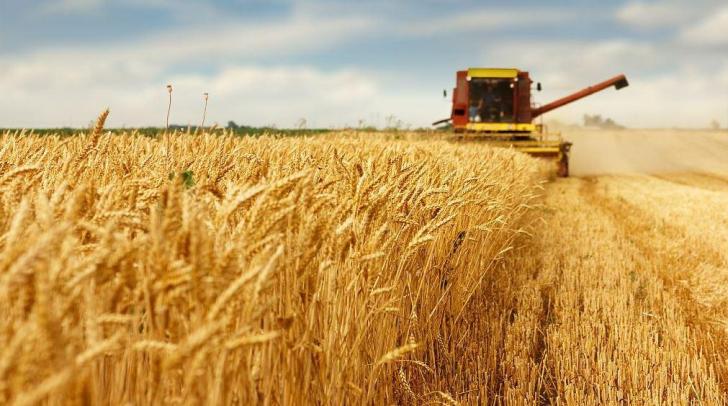
Zimbabwe is moving to begin cultivating hard wheat varieties after local seed producers achieved a breakthrough in developing seed suitable for domestic production, a Cabinet minister has revealed.
The development comes on the back of a record-breaking winter wheat harvest, with the 2025 season yielding 640 195 tonnes - the highest output in the country's history. Zimbabwe requires about 360 000 tonnes of wheat annually to meet national demand for bread and related products.
The latest figures mark the country's third consecutive year of wheat self-sufficiency. Zimbabwe currently grows soft wheat and imports roughly 30 percent of its hard wheat requirements for blending. Some bakeries, however, have already shifted to using 100 percent locally-produced wheat.
Barley production has also improved, with 47 709 tonnes harvested this year at an average yield of 7,75 tonnes per hectare, up from 7 tonnes per hectare last season.
Briefing journalists after Tuesday's Cabinet meeting, Information, Publicity and Broadcasting Services Minister Dr Jenfan Muswere said trials were underway to develop wheat with hard wheat characteristics.
"Cabinet was updated on the 2024–2025 summer crops marketing, 2025 winter season production and the 2025–2026 summer production plan," he said.
"The Grain Marketing Board stock as at November 27, 2025 stands at 180 063 tonnes, of which ARDA contributed 60 347 tonnes.
"The harvesting of the winter wheat crop has been completed, with 640 195 tonnes realised from 122 146 hectares at an average yield of 5,2 tonnes per hectare. Trials are underway at ARDA to produce a variety with hard wheat characteristics."
Lands, Agriculture, Fisheries, Water and Rural Development Minister Dr Anxious Masuka told journalists the breakthrough seed varieties represented a major step forward.
"Zimbabwe produces spring wheat, which is classified as soft wheat. This requires mixing with hard wheat grown in temperate regions," he said.
"The climate conditions in Zimbabwe were traditionally considered unsuitable for hard wheat. However, several seed companies have been researching varieties with hard wheat characteristics. Hard wheat is usually associated with lower yields, but this is the first major breakthrough combining hard wheat traits with higher yields."
Dr Masuka said the country had spent the last four years trialling varieties with high gluten content and consistent performance across environments.
"We are now confident that we can begin policy discussions on producing both soft and hard wheat domestically, with the medium- to long-term goal of achieving full self-sufficiency," he said.
He added that Government remains committed to promoting local value chains and enhancing crop genetics suited to Zimbabwe's climatic conditions.
Zimbabwe's wheat output has been rising steadily in recent years — from 94 685 tonnes in 2019, to approximately 468 000 tonnes in 2023, breaking a 56-year record, before increasing further to 562 091 tonnes in 2024.
The development comes on the back of a record-breaking winter wheat harvest, with the 2025 season yielding 640 195 tonnes - the highest output in the country's history. Zimbabwe requires about 360 000 tonnes of wheat annually to meet national demand for bread and related products.
The latest figures mark the country's third consecutive year of wheat self-sufficiency. Zimbabwe currently grows soft wheat and imports roughly 30 percent of its hard wheat requirements for blending. Some bakeries, however, have already shifted to using 100 percent locally-produced wheat.
Barley production has also improved, with 47 709 tonnes harvested this year at an average yield of 7,75 tonnes per hectare, up from 7 tonnes per hectare last season.
Briefing journalists after Tuesday's Cabinet meeting, Information, Publicity and Broadcasting Services Minister Dr Jenfan Muswere said trials were underway to develop wheat with hard wheat characteristics.
"Cabinet was updated on the 2024–2025 summer crops marketing, 2025 winter season production and the 2025–2026 summer production plan," he said.
"The Grain Marketing Board stock as at November 27, 2025 stands at 180 063 tonnes, of which ARDA contributed 60 347 tonnes.
Lands, Agriculture, Fisheries, Water and Rural Development Minister Dr Anxious Masuka told journalists the breakthrough seed varieties represented a major step forward.
"Zimbabwe produces spring wheat, which is classified as soft wheat. This requires mixing with hard wheat grown in temperate regions," he said.
"The climate conditions in Zimbabwe were traditionally considered unsuitable for hard wheat. However, several seed companies have been researching varieties with hard wheat characteristics. Hard wheat is usually associated with lower yields, but this is the first major breakthrough combining hard wheat traits with higher yields."
Dr Masuka said the country had spent the last four years trialling varieties with high gluten content and consistent performance across environments.
"We are now confident that we can begin policy discussions on producing both soft and hard wheat domestically, with the medium- to long-term goal of achieving full self-sufficiency," he said.
He added that Government remains committed to promoting local value chains and enhancing crop genetics suited to Zimbabwe's climatic conditions.
Zimbabwe's wheat output has been rising steadily in recent years — from 94 685 tonnes in 2019, to approximately 468 000 tonnes in 2023, breaking a 56-year record, before increasing further to 562 091 tonnes in 2024.
Source - The Herald
Join the discussion
Loading comments…





