News / National
Iran opens the gates of hell on Trump
03 Mar 2026 at 15:12hrs |
0 Views
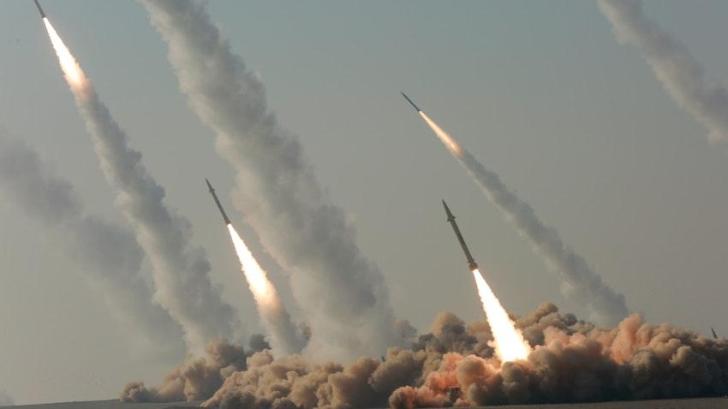
Iran has launched drone attacks targeting the United States' largest military installation in the Middle East, warning that "the gates of hell will open" in response to U.S.-Israeli strikes.
Iranian forces said they had targeted the Al Udeid Air Base in Qatar, which hosts up to 10,000 troops and serves as the forward headquarters of U.S. Central Command. There were no immediate reports of casualties or major damage.
The attack came as Israel carried out fresh airstrikes on Tehran, warning civilians to evacuate the Hakimiya Industrial Zone and areas around Payam Airport in Karaj ahead of strikes on what it described as military targets.
The conflict has rapidly expanded across the region, with Iran launching hundreds of drones toward Israel and U.S. positions, as well as toward regional states including Saudi Arabia, Bahrain and the United Arab Emirates.
U.S. President Donald Trump dismissed reports that America was running low on anti-drone interceptors, declaring the U.S. has "unlimited mid to upper tier weaponry." He also claimed Iran's leadership was "gone" and that Tehran was seeking talks, writing on Truth Social: "Too late."
However, Iranian officials signaled continued resistance. Ali Mohammad Naini of the Islamic Revolutionary Guard Corps warned on state television that "the gates of hell will open more and more, moment by moment, upon the United States and Israel."
The U.S. Embassy in Saudi Arabia issued an urgent security alert warning of "imminent" missile and drone attacks over Dhahran, a key oil hub and home to Saudi Aramco's headquarters. Americans were instructed to shelter in place.
U.S. diplomatic facilities in Kuwait were also closed, and the State Department ordered the evacuation of non-emergency personnel and families from Kuwait, Bahrain, Iraq, Qatar, Jordan and the UAE. Washington has urged citizens to leave more than a dozen Middle Eastern countries, though widespread airspace closures have left many stranded.
According to the Iranian Red Crescent Society, at least 787 people have been killed in U.S.-Israeli strikes. Iranian missile attacks have killed 11 people in Israel. Hezbollah, the Iran-backed group in Lebanon, has joined the conflict, prompting Israeli retaliation that has reportedly killed 52 people in Lebanon.
The U.S. military confirmed six American troop fatalities, while additional civilian casualties have been reported in the UAE, Kuwait and Bahrain.
Oil prices surged after Iran ordered the closure of the Strait of Hormuz, through which roughly one-fifth of the world's crude oil passes. U.S. gasoline prices rose to $3.11 per gallon, up from under $3 at the start of the week, according to the American Automobile Association.
The war has severely disrupted global energy supplies, shipping lanes and air travel.
The United Nations' nuclear watchdog, the International Atomic Energy Agency, said Iran's Natanz enrichment facility sustained "some recent damage" but reported no expected radiological consequences.
Israeli Prime Minister Benjamin Netanyahu claimed Iran was rebuilding underground nuclear sites, though he offered no public evidence. Tehran maintains its nuclear program is peaceful and says it has not enriched uranium since June.
The conflict has spilled into Lebanon, where Israeli ground troops have reportedly taken up new positions near the southern border following missile exchanges with Hezbollah.
In Qatar, Foreign Ministry spokesman Majed Al Ansari said Iranian strikes on the gas-rich nation "will not go unanswered."
Analysts warn that the breadth of Iranian retaliation, the intensity of U.S.-Israeli strikes and the absence of a clear diplomatic exit strategy point to a potentially prolonged and destabilizing regional war.
Iranian forces said they had targeted the Al Udeid Air Base in Qatar, which hosts up to 10,000 troops and serves as the forward headquarters of U.S. Central Command. There were no immediate reports of casualties or major damage.
The attack came as Israel carried out fresh airstrikes on Tehran, warning civilians to evacuate the Hakimiya Industrial Zone and areas around Payam Airport in Karaj ahead of strikes on what it described as military targets.
The conflict has rapidly expanded across the region, with Iran launching hundreds of drones toward Israel and U.S. positions, as well as toward regional states including Saudi Arabia, Bahrain and the United Arab Emirates.
U.S. President Donald Trump dismissed reports that America was running low on anti-drone interceptors, declaring the U.S. has "unlimited mid to upper tier weaponry." He also claimed Iran's leadership was "gone" and that Tehran was seeking talks, writing on Truth Social: "Too late."
However, Iranian officials signaled continued resistance. Ali Mohammad Naini of the Islamic Revolutionary Guard Corps warned on state television that "the gates of hell will open more and more, moment by moment, upon the United States and Israel."
The U.S. Embassy in Saudi Arabia issued an urgent security alert warning of "imminent" missile and drone attacks over Dhahran, a key oil hub and home to Saudi Aramco's headquarters. Americans were instructed to shelter in place.
U.S. diplomatic facilities in Kuwait were also closed, and the State Department ordered the evacuation of non-emergency personnel and families from Kuwait, Bahrain, Iraq, Qatar, Jordan and the UAE. Washington has urged citizens to leave more than a dozen Middle Eastern countries, though widespread airspace closures have left many stranded.
The U.S. military confirmed six American troop fatalities, while additional civilian casualties have been reported in the UAE, Kuwait and Bahrain.
Oil prices surged after Iran ordered the closure of the Strait of Hormuz, through which roughly one-fifth of the world's crude oil passes. U.S. gasoline prices rose to $3.11 per gallon, up from under $3 at the start of the week, according to the American Automobile Association.
The war has severely disrupted global energy supplies, shipping lanes and air travel.
The United Nations' nuclear watchdog, the International Atomic Energy Agency, said Iran's Natanz enrichment facility sustained "some recent damage" but reported no expected radiological consequences.
Israeli Prime Minister Benjamin Netanyahu claimed Iran was rebuilding underground nuclear sites, though he offered no public evidence. Tehran maintains its nuclear program is peaceful and says it has not enriched uranium since June.
The conflict has spilled into Lebanon, where Israeli ground troops have reportedly taken up new positions near the southern border following missile exchanges with Hezbollah.
In Qatar, Foreign Ministry spokesman Majed Al Ansari said Iranian strikes on the gas-rich nation "will not go unanswered."
Analysts warn that the breadth of Iranian retaliation, the intensity of U.S.-Israeli strikes and the absence of a clear diplomatic exit strategy point to a potentially prolonged and destabilizing regional war.
Source - online
Join the discussion
Loading comments…





