News / National
Mark Hook revives Boran and Nkone cattle societies in Zimbabwe
05 Feb 2026 at 19:42hrs |
0 Views
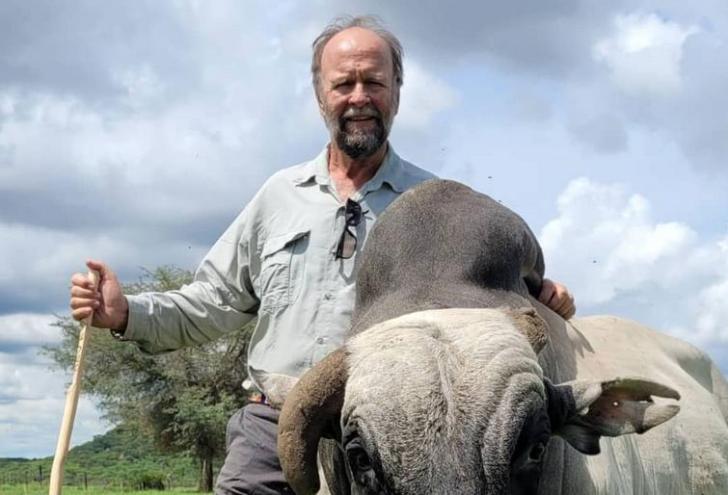
Veteran cattle breeder Mark Hook has played a pivotal role in reviving Zimbabwe's Boran and Nkone cattle societies, breathing new life into the country's livestock industry. Hook, who serves as chairperson of the Cattle Producers Association, the Nkone Cattle Breeders Society, and the Boran Breeders Society, is also a member of the Zimbabwe Herd Book (ZHB) executive committee, where his leadership has been instrumental in restoring these societies after years of dormancy.
Both the Boran and Nkone societies had become inactive following the exodus of farmers after Zimbabwe's land reform programme, which began in 2000. The Boran was first introduced to the country at Forrester Estates in Mvurwi in 1993, when about 600 embryos were imported from Kenya, producing nearly 300 calves. This led to the formation of the Boran Breeders Society. However, by 2004, the society became dormant as several breeders left the country.
In 2011, Hook, alongside Dave Jobson, Solomon Zawe, and Les Mallett, revived the society, renaming it the Zimbabwe Boran Breeders Society. Hook, who initially served as a committee member, assumed the role of chairperson in 2014. Under his stewardship, the society has grown from two breeders to 89, with over 8,600 animals registered with the ZHB, making the Boran Zimbabwe's second-largest cattle breed after the Brahman.
Hook's personal herd reflects his commitment to quality breeding. Born in Harare, he graduated from Chibero Agricultural College in 1982 with first-class distinction and later acquired his own 120-hectare Doonside Farm in Mutorashanga, Mashonaland West. Initially focused on tobacco, paprika, and maize production, Hook began investing in cattle in 1993, starting with Beefmasters, and later importing Beefmaster semen from the US in 1995.
He introduced Boran cattle to his farm in 2005, acquiring 11 animals from Forrester Estates. Hook quickly recognized the breed's adaptability, noting that Boran cattle remained active during the heat of the day while his Beefmasters rested under trees. He subsequently acquired an additional 33 Boran and registered them with the ZHB. Today, his herd comprises approximately 650 Boran, 250 Beefmasters, and 100 Nkone cattle.
Hook praises the Boran for their fertility, disease resistance, and ability to endure harsh conditions. “Ninety percent of cattle in Zimbabwe are raised in rural areas, where conditions are very hard, with little grass and high competition for food,” he explains. He adds that Boran cattle can go two to three days without water due to their large stomach capacity, an advantage under local management conditions.
The herd follows two bulling seasons, a 63-day summer period starting in January and a 42-day winter period beginning in June. Hook aims for an 80% weaning rate and an 85% pregnancy diagnosis rate, with cows failing to conceive after both seasons being culled to maintain breeding quality.
In 2019, Hook extended his efforts to revive the Nkone Society. After the last herd was deregistered in 2017, Hook and his colleague George Hulme retrieved records and located approximately 50 Nkone cows, enabling the society's re-registration. Today, 600 Nkone cattle are registered with the ZHB across seven breeders.
Despite significant challenges such as veld fires, which Hook estimates prevent 200,000 calves from being born annually, and land tenure uncertainties that complicate herd management, he remains committed to strengthening Zimbabwe's cattle industry. His leadership continues to provide vital guidance to farmers and safeguard the country's livestock heritage.
Mark Hook's dedication demonstrates that with strategic breeding, strong leadership, and perseverance, Zimbabwe's cattle industry can overcome historical setbacks and thrive once more.
Both the Boran and Nkone societies had become inactive following the exodus of farmers after Zimbabwe's land reform programme, which began in 2000. The Boran was first introduced to the country at Forrester Estates in Mvurwi in 1993, when about 600 embryos were imported from Kenya, producing nearly 300 calves. This led to the formation of the Boran Breeders Society. However, by 2004, the society became dormant as several breeders left the country.
In 2011, Hook, alongside Dave Jobson, Solomon Zawe, and Les Mallett, revived the society, renaming it the Zimbabwe Boran Breeders Society. Hook, who initially served as a committee member, assumed the role of chairperson in 2014. Under his stewardship, the society has grown from two breeders to 89, with over 8,600 animals registered with the ZHB, making the Boran Zimbabwe's second-largest cattle breed after the Brahman.
Hook's personal herd reflects his commitment to quality breeding. Born in Harare, he graduated from Chibero Agricultural College in 1982 with first-class distinction and later acquired his own 120-hectare Doonside Farm in Mutorashanga, Mashonaland West. Initially focused on tobacco, paprika, and maize production, Hook began investing in cattle in 1993, starting with Beefmasters, and later importing Beefmaster semen from the US in 1995.
He introduced Boran cattle to his farm in 2005, acquiring 11 animals from Forrester Estates. Hook quickly recognized the breed's adaptability, noting that Boran cattle remained active during the heat of the day while his Beefmasters rested under trees. He subsequently acquired an additional 33 Boran and registered them with the ZHB. Today, his herd comprises approximately 650 Boran, 250 Beefmasters, and 100 Nkone cattle.
The herd follows two bulling seasons, a 63-day summer period starting in January and a 42-day winter period beginning in June. Hook aims for an 80% weaning rate and an 85% pregnancy diagnosis rate, with cows failing to conceive after both seasons being culled to maintain breeding quality.
In 2019, Hook extended his efforts to revive the Nkone Society. After the last herd was deregistered in 2017, Hook and his colleague George Hulme retrieved records and located approximately 50 Nkone cows, enabling the society's re-registration. Today, 600 Nkone cattle are registered with the ZHB across seven breeders.
Despite significant challenges such as veld fires, which Hook estimates prevent 200,000 calves from being born annually, and land tenure uncertainties that complicate herd management, he remains committed to strengthening Zimbabwe's cattle industry. His leadership continues to provide vital guidance to farmers and safeguard the country's livestock heritage.
Mark Hook's dedication demonstrates that with strategic breeding, strong leadership, and perseverance, Zimbabwe's cattle industry can overcome historical setbacks and thrive once more.
Source - farmersweakly
Join the discussion
Loading comments…





