News / National
Colonisers concern over Zimbabwe's 'muted' civil society
23 Feb 2026 at 19:41hrs |
0 Views
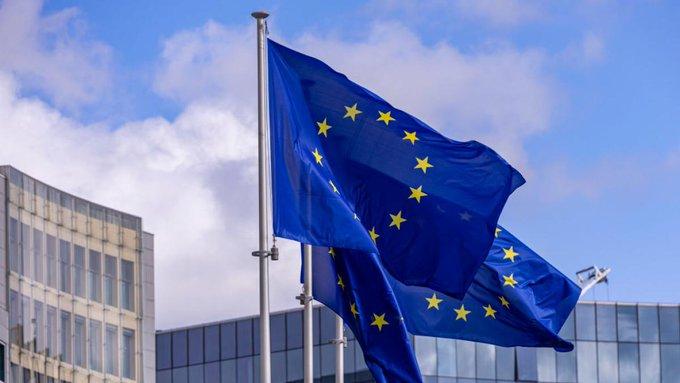
The European Union's ambassador to Zimbabwe, Katrin Hagemann, has expressed deep concern over what she described as a shrinking civic space and increasing political repression in the country, warning that developments affecting fundamental freedoms are troubling for Brussels.
Speaking to journalists in Harare, Hagemann said the EU remains committed to cooperation with Zimbabwe but is closely monitoring the human rights situation. She highlighted recent restrictions on civil society and opposition figures, including the police ban of a public meeting organized by the Accountability Lab to debate proposed constitutional amendments and the abduction and assault of activist Baird Gore.
"It's quite interesting to see how muted the response has been so far, including from civil society," Hagemann said. "Many have been unresponsive, and we understand why. In some cases, it has become very difficult for civil society to speak up as long as they are not registered."
She noted that the Private Voluntary Organisations (PVO) Act, signed into law last year, is already having a chilling effect, discouraging advocacy and public engagement. The ambassador also raised concerns over repeated arrests and the suppression of opposition political activities, citing instances where press conferences were disrupted, venues shut down, or buildings destroyed.
Despite these worries, Hagemann welcomed certain reforms in Zimbabwe's prison system, including a new parole framework announced last year that allows for the conditional release of inmates under supervision, aiming to decongest prisons and promote rehabilitation.
She stressed that Zimbabwe's economic recovery depends heavily on progress in the Structured Dialogue on Arrears Clearance and Debt Restructuring, which the EU is supporting. "Arrears clearance is not just a technical exercise; it is central to rebuilding confidence and unlocking new opportunities for investment," she said. Hagemann co-chairs the Governance Track under the dialogue alongside Zimbabwe's minister of justice, Ziyambi Ziyambi, and emphasized the need for transparency, rule of law, and predictable governance as foundations for financial stability.
Hagemann also highlighted the potential for strengthening trade between Zimbabwe and the EU. While Zimbabwe exports nearly US$1 billion worth of goods annually to the EU, only around 200 companies are involved, leaving significant untapped capacity. She called for increased participation by Zimbabwean businesses in the EU market, stressing that predictability, strong institutions, and compliance with standards are crucial to attracting investment.
The ambassador cited EU-backed projects under the Global Gateway programme, including the rehabilitation of Kariba Dam, as essential for Zimbabwe's long-term energy security. Looking ahead, she said she intends to travel widely across Zimbabwe to engage directly with communities, stating, "I want to listen, to learn and to understand the hopes and aspirations that drive Zimbabweans forward."
Speaking to journalists in Harare, Hagemann said the EU remains committed to cooperation with Zimbabwe but is closely monitoring the human rights situation. She highlighted recent restrictions on civil society and opposition figures, including the police ban of a public meeting organized by the Accountability Lab to debate proposed constitutional amendments and the abduction and assault of activist Baird Gore.
"It's quite interesting to see how muted the response has been so far, including from civil society," Hagemann said. "Many have been unresponsive, and we understand why. In some cases, it has become very difficult for civil society to speak up as long as they are not registered."
She noted that the Private Voluntary Organisations (PVO) Act, signed into law last year, is already having a chilling effect, discouraging advocacy and public engagement. The ambassador also raised concerns over repeated arrests and the suppression of opposition political activities, citing instances where press conferences were disrupted, venues shut down, or buildings destroyed.
Despite these worries, Hagemann welcomed certain reforms in Zimbabwe's prison system, including a new parole framework announced last year that allows for the conditional release of inmates under supervision, aiming to decongest prisons and promote rehabilitation.
She stressed that Zimbabwe's economic recovery depends heavily on progress in the Structured Dialogue on Arrears Clearance and Debt Restructuring, which the EU is supporting. "Arrears clearance is not just a technical exercise; it is central to rebuilding confidence and unlocking new opportunities for investment," she said. Hagemann co-chairs the Governance Track under the dialogue alongside Zimbabwe's minister of justice, Ziyambi Ziyambi, and emphasized the need for transparency, rule of law, and predictable governance as foundations for financial stability.
Hagemann also highlighted the potential for strengthening trade between Zimbabwe and the EU. While Zimbabwe exports nearly US$1 billion worth of goods annually to the EU, only around 200 companies are involved, leaving significant untapped capacity. She called for increased participation by Zimbabwean businesses in the EU market, stressing that predictability, strong institutions, and compliance with standards are crucial to attracting investment.
The ambassador cited EU-backed projects under the Global Gateway programme, including the rehabilitation of Kariba Dam, as essential for Zimbabwe's long-term energy security. Looking ahead, she said she intends to travel widely across Zimbabwe to engage directly with communities, stating, "I want to listen, to learn and to understand the hopes and aspirations that drive Zimbabweans forward."
Source - zimlive
Join the discussion
Loading comments…





