News / National
RBZ clamps down on mobile money abuse
03 Apr 2026 at 20:43hrs |
0 Views
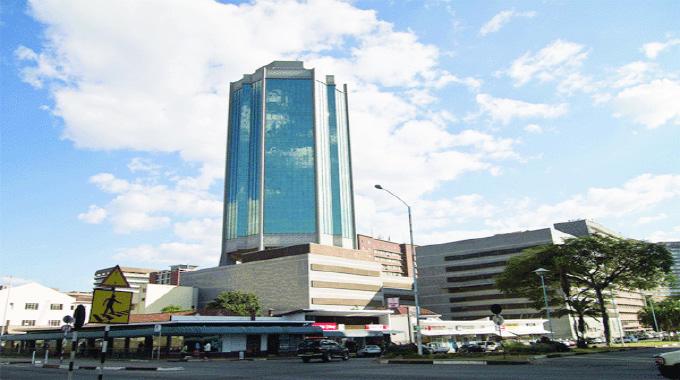
The Reserve Bank of Zimbabwe has announced sweeping new regulatory measures targeting mobile network operators, citing rising concerns over fraud, unregulated lending, and threats to financial stability in the country's digital payments ecosystem.
Addressing recent developments in the financial sector, RBZ Governor John Mushayavanhu said authorities had uncovered widespread abuse of mobile money platforms, including cases where individuals allegedly held dozens of SIM-linked wallets.
He cited a case in Chitungwiza where some individuals were found with up to 50 SIM cards, each linked to a mobile wallet, raising concerns over identity fraud and financial crime.
"Some individuals were found with up to 50 SIM cards each and each of those SIM cards is a wallet," Mushayavanhu said.
According to the central bank, many of the accounts are fraudulently registered, including under the identities of deceased persons, making it difficult for law enforcement to trace illicit transactions.
"When law enforcement tries to track perpetrators they hit a dead end because the account belongs to a deceased person," he said.
In response, the RBZ has ordered all mobile network operators to verify and clean up their customer databases in coordination with the Registrar General's Office Zimbabwe. Operators have been given until the end of June to complete the exercise, after which the central bank will conduct a full audit.
Authorities have warned that any accounts that cannot be linked to valid identification will be deactivated.
"We cannot have an environment where people are laundering money through ghost accounts," the Governor said.
The RBZ also accused mobile operators of selectively applying financial regulations, particularly on transaction charges, insisting that rules requiring zero charges on small transactions between US$0 and US$5 must be uniformly enforced across all platforms.
Mushayavanhu said some operators "want to be banks when it suits them but not when it doesn't," urging the public to report non-compliance, with potential licence withdrawal for offenders.
The central bank also raised concerns over instant micro-lending services offered through mobile platforms, often accessed via USSD codes, describing them as unregulated "nano loans" that effectively create money outside formal banking supervision.
"Imagine an operator with millions of subscribers giving each US$10 — that's money being created without backing," he said.
The RBZ has now directed that such lending must be fully underwritten by commercial banks and reflected on their balance sheets, subject to regulatory audit.
On broader monetary policy, Mushayavanhu indicated a shift in Zimbabwe's timeline for adopting a single currency, stating that focus has moved away from a fixed 2030 target toward meeting key economic "conditions precedent."
These include sustained low inflation, adequate foreign currency reserves covering three to six months of imports, and improved foreign exchange system efficiency.
While Zimbabwe has recently recorded single-digit inflation, the Governor cautioned against premature optimism.
"It's too early to celebrate. We want to sustain that over time," he said.
He added that the introduction of a mono-currency system could come earlier or later than 2030, depending on economic stability.
The measures reflect ongoing efforts by authorities to tighten oversight of the financial sector as Zimbabwe continues its currency reforms and seeks to restore long-term confidence in its monetary system.
Addressing recent developments in the financial sector, RBZ Governor John Mushayavanhu said authorities had uncovered widespread abuse of mobile money platforms, including cases where individuals allegedly held dozens of SIM-linked wallets.
He cited a case in Chitungwiza where some individuals were found with up to 50 SIM cards, each linked to a mobile wallet, raising concerns over identity fraud and financial crime.
"Some individuals were found with up to 50 SIM cards each and each of those SIM cards is a wallet," Mushayavanhu said.
According to the central bank, many of the accounts are fraudulently registered, including under the identities of deceased persons, making it difficult for law enforcement to trace illicit transactions.
"When law enforcement tries to track perpetrators they hit a dead end because the account belongs to a deceased person," he said.
In response, the RBZ has ordered all mobile network operators to verify and clean up their customer databases in coordination with the Registrar General's Office Zimbabwe. Operators have been given until the end of June to complete the exercise, after which the central bank will conduct a full audit.
Authorities have warned that any accounts that cannot be linked to valid identification will be deactivated.
"We cannot have an environment where people are laundering money through ghost accounts," the Governor said.
The RBZ also accused mobile operators of selectively applying financial regulations, particularly on transaction charges, insisting that rules requiring zero charges on small transactions between US$0 and US$5 must be uniformly enforced across all platforms.
The central bank also raised concerns over instant micro-lending services offered through mobile platforms, often accessed via USSD codes, describing them as unregulated "nano loans" that effectively create money outside formal banking supervision.
"Imagine an operator with millions of subscribers giving each US$10 — that's money being created without backing," he said.
The RBZ has now directed that such lending must be fully underwritten by commercial banks and reflected on their balance sheets, subject to regulatory audit.
On broader monetary policy, Mushayavanhu indicated a shift in Zimbabwe's timeline for adopting a single currency, stating that focus has moved away from a fixed 2030 target toward meeting key economic "conditions precedent."
These include sustained low inflation, adequate foreign currency reserves covering three to six months of imports, and improved foreign exchange system efficiency.
While Zimbabwe has recently recorded single-digit inflation, the Governor cautioned against premature optimism.
"It's too early to celebrate. We want to sustain that over time," he said.
He added that the introduction of a mono-currency system could come earlier or later than 2030, depending on economic stability.
The measures reflect ongoing efforts by authorities to tighten oversight of the financial sector as Zimbabwe continues its currency reforms and seeks to restore long-term confidence in its monetary system.
Source - online
Join the discussion
Loading comments…


