News / National
Ndebele king claimant meets Zulu King
04 Apr 2026 at 05:53hrs |
1534 Views
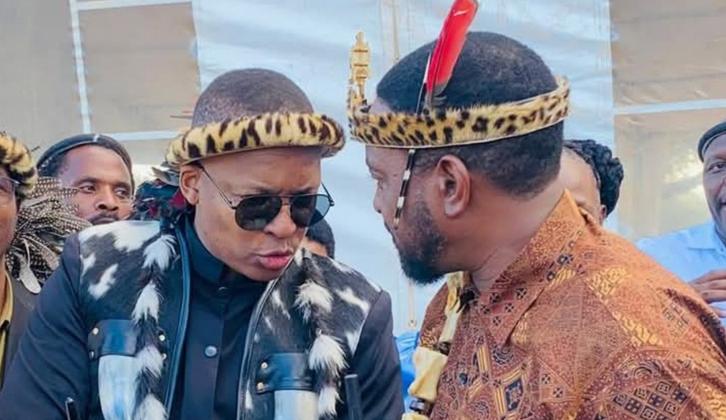
Meetings between King Misuzulu kaZwelithini and Ndebele king claimant Bulelani Lobengula Khumalo have been widely hailed as a landmark moment, signalling a renewed rapprochement between the Zulu and Ndebele nations, whose shared ancestry stretches back centuries.
The engagements are being viewed as symbolic of a long-awaited reunion between two towering historical figures — King Shaka and King Mzilikazi — whose alliance and eventual split shaped much of southern Africa's early 19th-century history.
Shaka and Mzilikazi were once close allies, working together to establish the Zulu Kingdom during its formative years. However, their relationship fractured dramatically around 1822 during the upheaval known as the Mfecane — a period of widespread conflict and migration that reshaped the region from present-day South Africa to as far north as Tanzania.
Historians attribute the split largely to disputes over the spoils of war, particularly cattle seized during Zulu military campaigns against neighbouring communities such as the Sotho. According to oral tradition, Mzilikazi, a senior commander under Shaka, refused to surrender cattle he had captured, prompting a bitter fallout. To this day, Zulu elders often jokingly ask their Ndebele counterparts, 'Ziphi inkomo zenkosi?' (Where is the king's cattle?), reflecting the enduring cultural memory of the dispute.
Following the break, Mzilikazi led his followers northward, carving out new territories across the Transvaal before moving through present-day Botswana and Zambia, and eventually settling in what is now Zimbabwe. His leadership laid the foundation of the Ndebele nation.
King Misuzulu, son of the late King Goodwill Zwelithini, descends from Shaka's lineage through his half-brothers, including King Dingane, King Mpande, and later King Cetshwayo — all sons of Senzangakhona.
On the Ndebele side, Bulelani Lobengula Khumalo is recognised by the mainstream Khumalo royal house as a legitimate heir, tracing his lineage to King Lobengula through his son Njube. Lobengula's rule came to an end following defeat by colonial forces led by Cecil John Rhodes during the Anglo-Ndebele War.
Bulelani's life reflects the complex legacy of colonial disruption. A South African citizen born in Makhanda in the Eastern Cape, he descends from a lineage forcibly relocated from Zimbabwe during colonial efforts to dismantle the Ndebele state. Despite lacking formal recognition by the Zimbabwean government, he has gained broad cultural acceptance among Ndebele communities.
His claim has not gone uncontested, with figures such as Peter Zwide KaLanga Khumalo and Stanley Raphael Tshuma also asserting competing claims to the throne.
The renewed engagement between the Zulu and Ndebele leadership comes against the backdrop of ongoing cultural revival efforts. Each September, the Ndebele nation commemorates Mzilikazi Day, marking the death of the founding king in 1868. The event draws large gatherings from across southern Africa, uniting Nguni-descended communities from South Africa, Zambia, Malawi, and Tanzania, with efforts underway to include delegations from Mozambique's Shangani people.
Observers say the recent meetings could mark a turning point in healing a centuries-old rift, reinforcing shared heritage and strengthening cultural ties between the two nations.
The engagements are being viewed as symbolic of a long-awaited reunion between two towering historical figures — King Shaka and King Mzilikazi — whose alliance and eventual split shaped much of southern Africa's early 19th-century history.
Shaka and Mzilikazi were once close allies, working together to establish the Zulu Kingdom during its formative years. However, their relationship fractured dramatically around 1822 during the upheaval known as the Mfecane — a period of widespread conflict and migration that reshaped the region from present-day South Africa to as far north as Tanzania.
Historians attribute the split largely to disputes over the spoils of war, particularly cattle seized during Zulu military campaigns against neighbouring communities such as the Sotho. According to oral tradition, Mzilikazi, a senior commander under Shaka, refused to surrender cattle he had captured, prompting a bitter fallout. To this day, Zulu elders often jokingly ask their Ndebele counterparts, 'Ziphi inkomo zenkosi?' (Where is the king's cattle?), reflecting the enduring cultural memory of the dispute.
Following the break, Mzilikazi led his followers northward, carving out new territories across the Transvaal before moving through present-day Botswana and Zambia, and eventually settling in what is now Zimbabwe. His leadership laid the foundation of the Ndebele nation.
On the Ndebele side, Bulelani Lobengula Khumalo is recognised by the mainstream Khumalo royal house as a legitimate heir, tracing his lineage to King Lobengula through his son Njube. Lobengula's rule came to an end following defeat by colonial forces led by Cecil John Rhodes during the Anglo-Ndebele War.
Bulelani's life reflects the complex legacy of colonial disruption. A South African citizen born in Makhanda in the Eastern Cape, he descends from a lineage forcibly relocated from Zimbabwe during colonial efforts to dismantle the Ndebele state. Despite lacking formal recognition by the Zimbabwean government, he has gained broad cultural acceptance among Ndebele communities.
His claim has not gone uncontested, with figures such as Peter Zwide KaLanga Khumalo and Stanley Raphael Tshuma also asserting competing claims to the throne.
The renewed engagement between the Zulu and Ndebele leadership comes against the backdrop of ongoing cultural revival efforts. Each September, the Ndebele nation commemorates Mzilikazi Day, marking the death of the founding king in 1868. The event draws large gatherings from across southern Africa, uniting Nguni-descended communities from South Africa, Zambia, Malawi, and Tanzania, with efforts underway to include delegations from Mozambique's Shangani people.
Observers say the recent meetings could mark a turning point in healing a centuries-old rift, reinforcing shared heritage and strengthening cultural ties between the two nations.
Source - online
Join the discussion
Loading comments…





