News / National
Teacher unions alarmed by limited recruitment drive
18 May 2026 at 18:33hrs |
0 Views
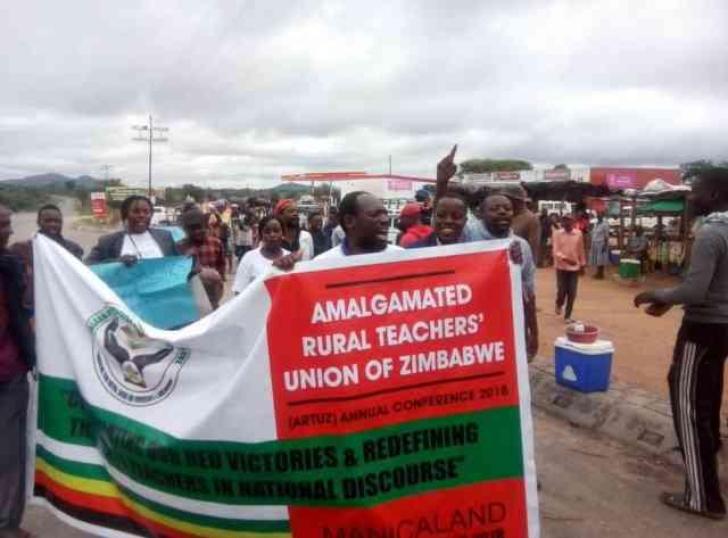
GOVERNMENT'S decision to recruit only 2 000 teachers this year has sparked concern among education stakeholders, with unions warning that the move falls far short of addressing Zimbabwe's worsening staffing crisis in public schools.
During a recent parliamentary question-and-answer session, Edgar Moyo said Government remained committed to employing more teachers but was constrained by limited fiscal resources.
He said recruitment of teachers and other civil servants depended largely on Treasury allocations and the country's broader economic capacity.
"This year, the Ministry of Primary and Secondary Education was to employ about 2 000 additional teachers. I am sure the recruitment is currently ongoing and that may not be enough, but that is what Treasury has provided for," Moyo said.
However, teachers' unions say the recruitment exercise is insignificant compared to the scale of shortages affecting schools nationwide, particularly in rural areas.
Amalgamated Rural Teachers Union of Zimbabwe (Artuz) spokesperson Thembakuye Moyo said the country requires nearly 90 000 teachers to adequately address the staffing gap.
"The number to be recruited is an insignificant 2,22%. The said recruitment is but a psychological band-aid for teachers," he said.
According to Artuz, the average teacher-pupil ratio in public schools currently stands at 1:45, above recommended standards of 1:20 for Early Childhood Development and 1:40 for primary schools.
Some teachers are reportedly handling classes with more than 60 learners, while others are forced to teach composite classes involving multiple grades simultaneously.
Moyo warned that the shortages were compromising learning quality, especially in marginalised rural communities.
"The shortage of teachers compromises education quality, especially in marginalised rural schools, leading to overcrowded classrooms, high workloads for remaining teachers and poor individual attention for students," he said.
He added that critical subjects such as Science, Mathematics and Agriculture were becoming increasingly difficult to teach effectively because of understaffing and deteriorating working conditions.
The union also linked the staffing crisis to poor remuneration, saying low salaries continue to drive trained teachers out of the profession.
"The few dedicated teachers are poorly remunerated, leading to brain drain. This suggests that the parliamentary-approved recruitment of 2 000 teachers will not improve the shortage but will be replacing those who would have left due to poor wages," Moyo said.
Similar concerns were raised by Progressive Teachers Union of Zimbabwe president Takavafira Zhou, who said Zimbabwe loses approximately 15 000 teachers annually through migration, retirement and death.
"We need 40 000 teachers more, but the recent job evaluation exercise unilaterally carried out by the Public Service Commission put the deficit at 10 000," Zhou said.
"What is more worrisome with the 2 000 recruitment per year is that we are losing 15 000 teachers per year due to brain drain, death and retirement."
Zhou said some secondary school teachers were now handling classes with more than 80 learners, including Advanced Level classes where smaller class sizes are recommended.
"Teachers are burnt out, overstretched and cannot concentrate on every pupil's weakness to give remedial work so that every child can catch up," he said.
Education analysts warn that continued understaffing could erode Zimbabwe's once highly regarded education standards, particularly in rural and disadvantaged communities already struggling with limited infrastructure and resources.
During a recent parliamentary question-and-answer session, Edgar Moyo said Government remained committed to employing more teachers but was constrained by limited fiscal resources.
He said recruitment of teachers and other civil servants depended largely on Treasury allocations and the country's broader economic capacity.
"This year, the Ministry of Primary and Secondary Education was to employ about 2 000 additional teachers. I am sure the recruitment is currently ongoing and that may not be enough, but that is what Treasury has provided for," Moyo said.
However, teachers' unions say the recruitment exercise is insignificant compared to the scale of shortages affecting schools nationwide, particularly in rural areas.
Amalgamated Rural Teachers Union of Zimbabwe (Artuz) spokesperson Thembakuye Moyo said the country requires nearly 90 000 teachers to adequately address the staffing gap.
"The number to be recruited is an insignificant 2,22%. The said recruitment is but a psychological band-aid for teachers," he said.
According to Artuz, the average teacher-pupil ratio in public schools currently stands at 1:45, above recommended standards of 1:20 for Early Childhood Development and 1:40 for primary schools.
Some teachers are reportedly handling classes with more than 60 learners, while others are forced to teach composite classes involving multiple grades simultaneously.
Moyo warned that the shortages were compromising learning quality, especially in marginalised rural communities.
"The shortage of teachers compromises education quality, especially in marginalised rural schools, leading to overcrowded classrooms, high workloads for remaining teachers and poor individual attention for students," he said.
He added that critical subjects such as Science, Mathematics and Agriculture were becoming increasingly difficult to teach effectively because of understaffing and deteriorating working conditions.
The union also linked the staffing crisis to poor remuneration, saying low salaries continue to drive trained teachers out of the profession.
"The few dedicated teachers are poorly remunerated, leading to brain drain. This suggests that the parliamentary-approved recruitment of 2 000 teachers will not improve the shortage but will be replacing those who would have left due to poor wages," Moyo said.
Similar concerns were raised by Progressive Teachers Union of Zimbabwe president Takavafira Zhou, who said Zimbabwe loses approximately 15 000 teachers annually through migration, retirement and death.
"We need 40 000 teachers more, but the recent job evaluation exercise unilaterally carried out by the Public Service Commission put the deficit at 10 000," Zhou said.
"What is more worrisome with the 2 000 recruitment per year is that we are losing 15 000 teachers per year due to brain drain, death and retirement."
Zhou said some secondary school teachers were now handling classes with more than 80 learners, including Advanced Level classes where smaller class sizes are recommended.
"Teachers are burnt out, overstretched and cannot concentrate on every pupil's weakness to give remedial work so that every child can catch up," he said.
Education analysts warn that continued understaffing could erode Zimbabwe's once highly regarded education standards, particularly in rural and disadvantaged communities already struggling with limited infrastructure and resources.
Source - newsday
Join the discussion
Loading comments…





