News / National
BCC dismisses siltation claims
20 Apr 2026 at 12:57hrs |
0 Views
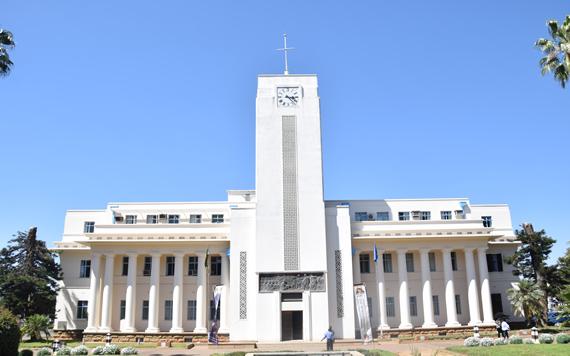
The Bulawayo City Council has dismissed concerns over alleged siltation in its water supply dams, insisting that there is no significant silt build-up and that no de-silting programme is currently planned.
The council's position comes as Bulawayo continues to grapple with a worsening water crisis driven by ageing infrastructure, prolonged water-shedding and persistently low dam levels affecting more than a million residents.
Officials from the city and the Zimbabwe National Water Authority made the remarks during a recent tour of Insiza Dam, where they attributed supply challenges not to siltation but to the degradation of water servitudes and infrastructure inefficiencies.
ZINWA official Walter Moyà said water abstraction systems remain operational and that controlled releases to the city are maintained through established pipeline and valve systems.
"Water is released downstream to council through pipes and valves that are open daily," he said.
Bulawayo town clerk Christopher Dube also rejected claims that dams were affected by siltation, stating that technical assessments had not identified any significant accumulation.
"There is no silt in our dams and there will be no desiltation taking place," he said, adding that the main challenge lies in the deterioration of water servitudes.
Principal water engineer Kwanele Sibanda echoed this position, saying monitoring systems had not detected evidence of silt build-up across the city's dam network.
However, despite these assurances, the water situation in Bulawayo remains severe. Independent assessments, including those by the Friedrich Naumann Foundation for Freedom, indicate that the city is experiencing a long-term water crisis.
The report notes that Bulawayo requires approximately 165 megalitres of water per day but frequently receives significantly less due to low dam levels and infrastructure constraints. It also highlights that nearly half of treated water is lost through leaks and ageing pipe networks.
Climate-related pressures, including recurring droughts linked to El Niño conditions, have further reduced inflows into key supply dams, some of which are now at critically low levels.
The city has implemented extended water-shedding schedules exceeding 130 hours in some cases since late 2024, while several reservoirs have been decommissioned due to low levels.
In response, authorities have turned to short-term interventions such as borehole drilling, rehabilitation of the Nyamandlovu aquifer and increased water trucking. However, officials acknowledge that long-term solutions, including the Matabeleland Zambezi Water Project, remain critical to resolving the crisis.
Bulawayo currently relies on six main dams—Upper Ncema, Lower Ncema, Umzingwane, Insiza, Mtshabezi and Inyankuni—as pressure mounts to secure a sustainable water supply for the city's growing population.
The council's position comes as Bulawayo continues to grapple with a worsening water crisis driven by ageing infrastructure, prolonged water-shedding and persistently low dam levels affecting more than a million residents.
Officials from the city and the Zimbabwe National Water Authority made the remarks during a recent tour of Insiza Dam, where they attributed supply challenges not to siltation but to the degradation of water servitudes and infrastructure inefficiencies.
ZINWA official Walter Moyà said water abstraction systems remain operational and that controlled releases to the city are maintained through established pipeline and valve systems.
"Water is released downstream to council through pipes and valves that are open daily," he said.
Bulawayo town clerk Christopher Dube also rejected claims that dams were affected by siltation, stating that technical assessments had not identified any significant accumulation.
"There is no silt in our dams and there will be no desiltation taking place," he said, adding that the main challenge lies in the deterioration of water servitudes.
However, despite these assurances, the water situation in Bulawayo remains severe. Independent assessments, including those by the Friedrich Naumann Foundation for Freedom, indicate that the city is experiencing a long-term water crisis.
The report notes that Bulawayo requires approximately 165 megalitres of water per day but frequently receives significantly less due to low dam levels and infrastructure constraints. It also highlights that nearly half of treated water is lost through leaks and ageing pipe networks.
Climate-related pressures, including recurring droughts linked to El Niño conditions, have further reduced inflows into key supply dams, some of which are now at critically low levels.
The city has implemented extended water-shedding schedules exceeding 130 hours in some cases since late 2024, while several reservoirs have been decommissioned due to low levels.
In response, authorities have turned to short-term interventions such as borehole drilling, rehabilitation of the Nyamandlovu aquifer and increased water trucking. However, officials acknowledge that long-term solutions, including the Matabeleland Zambezi Water Project, remain critical to resolving the crisis.
Bulawayo currently relies on six main dams—Upper Ncema, Lower Ncema, Umzingwane, Insiza, Mtshabezi and Inyankuni—as pressure mounts to secure a sustainable water supply for the city's growing population.
Source - NewsDay
Join the discussion
Loading comments…




