Opinion / Columnist
Beyond the 5 year horizon: Rethinking Zimbabwe's electoral cycle
06 May 2026 at 14:42hrs |
0 Views
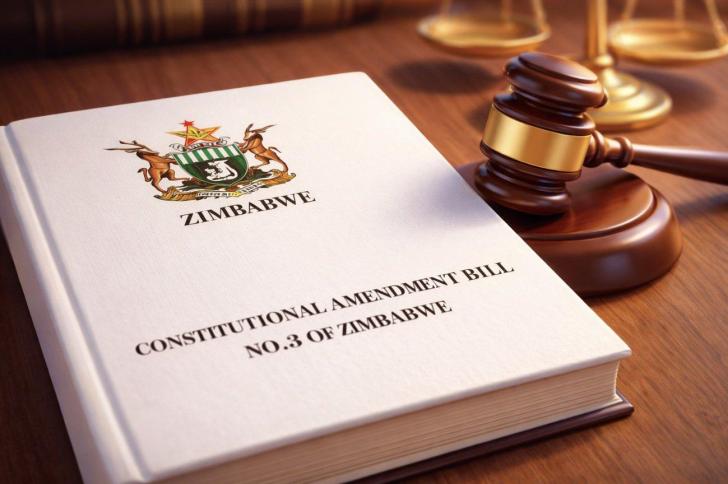
Zimbabwe's current debate around constitutional reform, particularly the proposal to move toward a seven-year parliamentary presidency under Constitutional Amendment Bill No. 3 (CA3), is not emerging in a vacuum.
It is rooted in a long and often turbulent electoral history, where cycles of contestation, instability, and economic disruption have shaped the country's political trajectory.
A History of Contested Mandates
Since independence, Zimbabwe's elections have frequently been disputed, with periods of instability that have had measurable political and economic consequences. The most cited example remains the 2008 elections, where violence surrounding the presidential runoff led to over 200 reported deaths, according to Human Rights Watch. Opposition leader Morgan Tsvangirai ultimately withdrew from the runoff, citing an environment that he described as neither free nor fair.
Internationally, the crisis escalated to the United Nations Security Council, where Western-backed efforts to impose broader sanctions were ultimately blocked by vetoes from Russia and China. Despite this, Zimbabwe remained under targeted sanctions from the United States and European Union, measures that the International Monetary Fund and World Bank have repeatedly linked to constrained access to international capital markets.
The pattern that followed is difficult to ignore. Nearly every electoral cycle since has been accompanied by disputes over legitimacy, legal challenges, or allegations of irregularities. Reports by Freedom House consistently rank Zimbabwe's elections as "not free," citing political intimidation, media bias, and institutional weaknesses.
This history has contributed to what can be described as a state of "permanent electoral mode." In practical terms, governance is compressed between cycles of political mobilisation. The ruling government operates under continuous pressure to defend its legitimacy, while opposition parties remain in campaign posture well beyond election periods.
Political scientists have long warned about this phenomenon. Research published by the Brookings Institution notes that in politically polarised systems, frequent elections can "reduce governance efficiency by incentivising short-term decision-making and perpetual campaigning."
In Zimbabwe's case, this dynamic has tangible consequences. Policy implementation is often disrupted by political uncertainty, while investor confidence is weakened by the perception of instability. According to the World Bank, political uncertainty remains one of the key constraints on Zimbabwe's economic recovery and foreign direct investment inflows.
The Limits of a Five-Year Cycle
The five-year electoral cycle, introduced through Constitutional Amendment No. 18, was designed to harmonise elections and reduce costs. While it achieved administrative alignment, it also introduced structural limitations.
In practice, a five-year term is often shorter than it appears. The first 12–18 months are typically spent stabilising the government, appointing officials, and setting policy direction. The final 18–24 months are dominated by political positioning ahead of the next election. This leaves a narrow execution window for long-term development projects.
Large-scale infrastructure, energy reform, and industrial policy programmes, central to Zimbabwe's Vision 2030, require longer planning and implementation horizons. The African Development Bank has repeatedly emphasised that infrastructure-led growth strategies in developing economies often require consistent policy continuity over 7–10 years to deliver measurable impact.
The CA3 proposal introduces two major shifts: extending the electoral cycle to seven years and transitioning from direct presidential elections to a parliamentary selection model. Supporters argue that this is less about limiting democracy and more about recalibrating it for stability and effectiveness.
Policy Continuity and Delivery
A seven-year term provides a more realistic timeframe for executing national development plans. It allows governments to move beyond short-term interventions and focus on structural transformation. Evidence from countries with longer policy cycles shows improved project completion rates and greater consistency in economic planning.
Fiscal Efficiency
Elections are expensive. In Zimbabwe, harmonised elections have cost hundreds of millions of dollars when factoring in logistics, security, and administration. The Zimbabwe Electoral Commission has previously highlighted the significant fiscal burden of nationwide polls. Extending the cycle reduces the frequency of these costs, freeing resources for social and economic priorities.
Institutional Strengthening
A parliamentary presidency shifts the centre of political accountability. Instead of a highly personalised national contest, leadership emerges from within the legislature. This model is used in various forms across established democracies, where it strengthens party systems and reinforces parliamentary oversight.
Lowering Political Tension
Direct presidential elections in highly polarised environments tend to be high-stakes and divisive. Moving the selection process into Parliament reduces the intensity of national electoral contests. Comparative political studies, including work by the International IDEA, suggest that parliamentary systems can mitigate electoral conflict in divided societies.
Stability and Development: A Comparative Lens
Supporters of reform often point to countries that have prioritised political stability as a foundation for economic growth. While Zimbabwe's context is unique, examples such as China illustrate how long-term policy continuity can accelerate development.
Over the past four decades, China's governance model has enabled sustained infrastructure expansion and industrialisation, contributing to the lifting of over 800 million people out of poverty, according to the World Bank.
The comparison is not about replicating systems wholesale, but about recognising the link between stability, policy consistency, and development outcomes.
Zimbabwe's constitutional framework has never been static. From the Lancaster House Agreement to the 2013 Constitution, reforms have consistently reflected shifting national priorities.
The debate around CA3 should be understood in this tradition. It is not a departure from democratic principles, but an attempt to refine institutional design in response to lived political and economic realities.
At its heart, this debate is about trade-offs. The five-year model prioritises frequency of electoral accountability. The proposed seven-year parliamentary system prioritises stability, continuity, and institutional coherence.
For Zimbabwe, the question is not simply which system is more democratic in theory, but which system is more effective in practice, one that enables the state to govern decisively, deliver development, and reduce cycles of political crisis. That is the conversation the country needs to have, not the current mudslinging.
* Karabo Ngoepe is a journalist with over 15 years of experience in political, investigative, and human interest journalism who specialises in pan-African politics with a particular interest in SADC and Global South news. He is a former CEO of Rubicon Media Group in Eswatini.
It is rooted in a long and often turbulent electoral history, where cycles of contestation, instability, and economic disruption have shaped the country's political trajectory.
A History of Contested Mandates
Since independence, Zimbabwe's elections have frequently been disputed, with periods of instability that have had measurable political and economic consequences. The most cited example remains the 2008 elections, where violence surrounding the presidential runoff led to over 200 reported deaths, according to Human Rights Watch. Opposition leader Morgan Tsvangirai ultimately withdrew from the runoff, citing an environment that he described as neither free nor fair.
Internationally, the crisis escalated to the United Nations Security Council, where Western-backed efforts to impose broader sanctions were ultimately blocked by vetoes from Russia and China. Despite this, Zimbabwe remained under targeted sanctions from the United States and European Union, measures that the International Monetary Fund and World Bank have repeatedly linked to constrained access to international capital markets.
The pattern that followed is difficult to ignore. Nearly every electoral cycle since has been accompanied by disputes over legitimacy, legal challenges, or allegations of irregularities. Reports by Freedom House consistently rank Zimbabwe's elections as "not free," citing political intimidation, media bias, and institutional weaknesses.
This history has contributed to what can be described as a state of "permanent electoral mode." In practical terms, governance is compressed between cycles of political mobilisation. The ruling government operates under continuous pressure to defend its legitimacy, while opposition parties remain in campaign posture well beyond election periods.
Political scientists have long warned about this phenomenon. Research published by the Brookings Institution notes that in politically polarised systems, frequent elections can "reduce governance efficiency by incentivising short-term decision-making and perpetual campaigning."
In Zimbabwe's case, this dynamic has tangible consequences. Policy implementation is often disrupted by political uncertainty, while investor confidence is weakened by the perception of instability. According to the World Bank, political uncertainty remains one of the key constraints on Zimbabwe's economic recovery and foreign direct investment inflows.
The Limits of a Five-Year Cycle
The five-year electoral cycle, introduced through Constitutional Amendment No. 18, was designed to harmonise elections and reduce costs. While it achieved administrative alignment, it also introduced structural limitations.
In practice, a five-year term is often shorter than it appears. The first 12–18 months are typically spent stabilising the government, appointing officials, and setting policy direction. The final 18–24 months are dominated by political positioning ahead of the next election. This leaves a narrow execution window for long-term development projects.
Large-scale infrastructure, energy reform, and industrial policy programmes, central to Zimbabwe's Vision 2030, require longer planning and implementation horizons. The African Development Bank has repeatedly emphasised that infrastructure-led growth strategies in developing economies often require consistent policy continuity over 7–10 years to deliver measurable impact.
The CA3 proposal introduces two major shifts: extending the electoral cycle to seven years and transitioning from direct presidential elections to a parliamentary selection model. Supporters argue that this is less about limiting democracy and more about recalibrating it for stability and effectiveness.
Policy Continuity and Delivery
A seven-year term provides a more realistic timeframe for executing national development plans. It allows governments to move beyond short-term interventions and focus on structural transformation. Evidence from countries with longer policy cycles shows improved project completion rates and greater consistency in economic planning.
Fiscal Efficiency
Elections are expensive. In Zimbabwe, harmonised elections have cost hundreds of millions of dollars when factoring in logistics, security, and administration. The Zimbabwe Electoral Commission has previously highlighted the significant fiscal burden of nationwide polls. Extending the cycle reduces the frequency of these costs, freeing resources for social and economic priorities.
Institutional Strengthening
A parliamentary presidency shifts the centre of political accountability. Instead of a highly personalised national contest, leadership emerges from within the legislature. This model is used in various forms across established democracies, where it strengthens party systems and reinforces parliamentary oversight.
Lowering Political Tension
Direct presidential elections in highly polarised environments tend to be high-stakes and divisive. Moving the selection process into Parliament reduces the intensity of national electoral contests. Comparative political studies, including work by the International IDEA, suggest that parliamentary systems can mitigate electoral conflict in divided societies.
Stability and Development: A Comparative Lens
Supporters of reform often point to countries that have prioritised political stability as a foundation for economic growth. While Zimbabwe's context is unique, examples such as China illustrate how long-term policy continuity can accelerate development.
Over the past four decades, China's governance model has enabled sustained infrastructure expansion and industrialisation, contributing to the lifting of over 800 million people out of poverty, according to the World Bank.
The comparison is not about replicating systems wholesale, but about recognising the link between stability, policy consistency, and development outcomes.
Zimbabwe's constitutional framework has never been static. From the Lancaster House Agreement to the 2013 Constitution, reforms have consistently reflected shifting national priorities.
The debate around CA3 should be understood in this tradition. It is not a departure from democratic principles, but an attempt to refine institutional design in response to lived political and economic realities.
At its heart, this debate is about trade-offs. The five-year model prioritises frequency of electoral accountability. The proposed seven-year parliamentary system prioritises stability, continuity, and institutional coherence.
For Zimbabwe, the question is not simply which system is more democratic in theory, but which system is more effective in practice, one that enables the state to govern decisively, deliver development, and reduce cycles of political crisis. That is the conversation the country needs to have, not the current mudslinging.
* Karabo Ngoepe is a journalist with over 15 years of experience in political, investigative, and human interest journalism who specialises in pan-African politics with a particular interest in SADC and Global South news. He is a former CEO of Rubicon Media Group in Eswatini.
Source - IOL
All articles and letters published on Bulawayo24 have been independently written by members of Bulawayo24's community. The views of users published on Bulawayo24 are therefore their own and do not necessarily represent the views of Bulawayo24. Bulawayo24 editors also reserve the right to edit or delete any and all comments received.
Join the discussion
Loading comments…



