News / National
Zimbabwe education system is failing learners
08 Feb 2026 at 21:05hrs |
0 Views
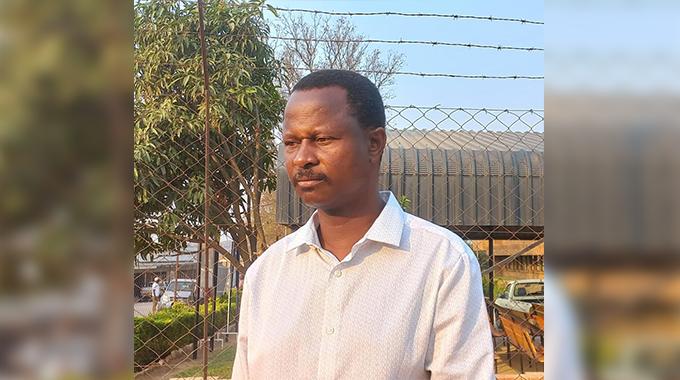
Gwanda South legislator Omphile Marupi has raised alarm over what he describes as deep-rooted challenges in the constituency's education system, warning that poor subject choices, weak discipline and limited parental involvement are leaving learners ill-prepared for tertiary education and the job market.
In a constituency update issued on February 4, Marupi acknowledged improvements in pass rates at some schools but said the gains were being undermined by systemic weaknesses, including non-payment of school fees, substance abuse among pupils, lack of homework supervision and subject combinations that do not align with viable career pathways.
"Many learners are doing seven or eight subjects, but the question is — seven or eight subjects of what value?" Marupi wrote.
He expressed concern over subject combinations dominated by non-practical courses such as Family and Religious Studies, Heritage Studies, Mass Display, Physical Education and Ndebele Literature, arguing that these offered limited progression opportunities.
At A-level, Marupi said some learners were enrolling for four or five subjects with little relevance to university programmes or the labour market, despite the standard requirement being three A-level passes.
"As a result, many cannot qualify for anything meaningful after Form Four or A-level," he warned.
In an interview, Marupi said while poverty remained a major challenge, parents and communities could not continue shifting responsibility entirely to government.
"Paying school fees is every parent's responsibility," he said.
"Where parents genuinely cannot afford, schools and even universities have work-for-fees programmes. What we need is commitment."
He said school administrations should take the lead in guiding learners on subject selection through career expos, company visits and structured guidance programmes, with strong parental support.
"If communities can fund soccer tournaments and prize-giving ceremonies, what stops them from organising career guidance programmes at cluster level?" Marupi asked.
On discipline, the MP blamed weak parental supervision, particularly among learners living with extended families.
"We cannot afford children loitering at business centres late into the night, some even drinking with adults," he said.
Marupi also dismissed claims that schools in Gwanda South lacked digital learning infrastructure, saying many institutions had acquired Starlink internet connectivity through government initiatives, alumni contributions and a constituency programme he introduced.
He added that efforts were underway to revive school libraries, citing Bethel Primary School as one example.
"The bigger challenge now is that our children no longer have a reading culture," Marupi said.
Bulawayo-based social commentator Effie Ncube said Marupi's concerns reflected a broader national crisis in education planning, arguing that Zimbabwe's curriculum remained poorly aligned with economic and industrial development goals.
"Our education system must be aligned from primary school to university with the economy we want to build," Ncube said.
"Learners are choosing subjects that are easier but not transformative, which makes it harder for them to find employment."
He said education should serve as a driver of industrialisation and economic growth, warning that failure to reform subject pathways would continue producing graduates whose skills do not match labour market needs.
Ncube also stressed that student discipline required a collective response involving parents, schools, communities and the state.
"Young learners have easy access to alcohol and drugs, which shows a gap between policy and enforcement," he said, calling for tougher regulation alongside early education on values, discipline and long-term career planning.
In a constituency update issued on February 4, Marupi acknowledged improvements in pass rates at some schools but said the gains were being undermined by systemic weaknesses, including non-payment of school fees, substance abuse among pupils, lack of homework supervision and subject combinations that do not align with viable career pathways.
"Many learners are doing seven or eight subjects, but the question is — seven or eight subjects of what value?" Marupi wrote.
He expressed concern over subject combinations dominated by non-practical courses such as Family and Religious Studies, Heritage Studies, Mass Display, Physical Education and Ndebele Literature, arguing that these offered limited progression opportunities.
At A-level, Marupi said some learners were enrolling for four or five subjects with little relevance to university programmes or the labour market, despite the standard requirement being three A-level passes.
"As a result, many cannot qualify for anything meaningful after Form Four or A-level," he warned.
In an interview, Marupi said while poverty remained a major challenge, parents and communities could not continue shifting responsibility entirely to government.
"Paying school fees is every parent's responsibility," he said.
"Where parents genuinely cannot afford, schools and even universities have work-for-fees programmes. What we need is commitment."
He said school administrations should take the lead in guiding learners on subject selection through career expos, company visits and structured guidance programmes, with strong parental support.
"If communities can fund soccer tournaments and prize-giving ceremonies, what stops them from organising career guidance programmes at cluster level?" Marupi asked.
"We cannot afford children loitering at business centres late into the night, some even drinking with adults," he said.
Marupi also dismissed claims that schools in Gwanda South lacked digital learning infrastructure, saying many institutions had acquired Starlink internet connectivity through government initiatives, alumni contributions and a constituency programme he introduced.
He added that efforts were underway to revive school libraries, citing Bethel Primary School as one example.
"The bigger challenge now is that our children no longer have a reading culture," Marupi said.
Bulawayo-based social commentator Effie Ncube said Marupi's concerns reflected a broader national crisis in education planning, arguing that Zimbabwe's curriculum remained poorly aligned with economic and industrial development goals.
"Our education system must be aligned from primary school to university with the economy we want to build," Ncube said.
"Learners are choosing subjects that are easier but not transformative, which makes it harder for them to find employment."
He said education should serve as a driver of industrialisation and economic growth, warning that failure to reform subject pathways would continue producing graduates whose skills do not match labour market needs.
Ncube also stressed that student discipline required a collective response involving parents, schools, communities and the state.
"Young learners have easy access to alcohol and drugs, which shows a gap between policy and enforcement," he said, calling for tougher regulation alongside early education on values, discipline and long-term career planning.
Source - Southern Eye
Join the discussion
Loading comments…


