News / National
ZiG gamble: Policy push risks backfiring in dollarised economy
24 Mar 2026 at 19:05hrs |
0 Views
A growing chorus of economists and business leaders has issued a stark warning to policymakers, cautioning that recent currency directives could trigger unintended consequences in Zimbabwe's fragile monetary environment.
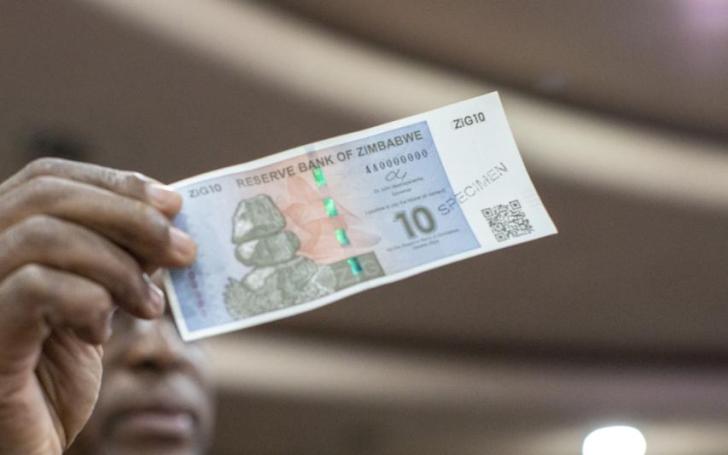
At the centre of concern is the Government's move to compel all public sector suppliers to accept payment exclusively in the local currency, the Zimbabwe Gold (ZiG). While the policy is framed as a decisive step toward strengthening the domestic currency, analysts argue it risks exposing a deeper misalignment between policy ambition and market reality.
Zimbabwe remains overwhelmingly dollarised, with estimates suggesting that between 95% and 99% of transactions are conducted in United States dollars. In such an environment, forcing suppliers - many of whom depend on imported raw materials and equipment - to accept local currency payments may create immediate operational strain.
Economists including Eddie Cross, Vince Musewe and Tony Hawkins have consistently warned that the policy could drive demand for foreign currency into informal channels, fuelling exchange rate volatility and inflationary pressures.
Businesses paid in ZiG will inevitably need US dollars to restock and sustain operations. If access to foreign currency through formal systems proves inadequate or unreliable, the parallel market is likely to resurface as the primary source of liquidity.
This dynamic, analysts say, risks setting off a familiar cycle - widening gaps between official and unofficial exchange rates, pricing distortions, speculative behaviour and, ultimately, erosion of confidence in the local currency.
Zimbabwe has experienced similar outcomes in the past, where attempts to enforce currency usage without adequate market support mechanisms led to economic instability and loss of trust.
Authorities, however, have sought to calm concerns. The Reserve Bank of Zimbabwe has maintained that the directive does not signal the abandonment of the multi-currency system and insists that sufficient foreign currency is available within the Willing-Buyer Willing-Seller framework.
Yet market watchers argue that assurances alone are unlikely to shift sentiment.
"Markets respond to access and predictability, not statements," one analyst noted. Without seamless and competitively priced conversion of ZiG into US dollars, businesses may have little choice but to seek alternatives outside formal channels.
Industry leaders have also flagged practical risks. The Zimbabwe National Chamber of Commerce has warned that benchmark pricing mechanisms, if not aligned with real production costs, could render supply contracts unviable - raising the spectre of supply chain disruptions.
Such disruptions often emerge gradually, beginning with delayed deliveries and reduced inventories before culminating in widespread shortages.
While some observers believe the policy could, under tightly managed conditions, support gradual reintroduction of the local currency, they caution that success hinges on several critical factors: fiscal discipline, reliable foreign currency availability, timely payments and, most importantly, trust.
Without these foundations, the intervention risks becoming what some economists describe as a "self-inflicted currency crisis."
At its core, the debate is not about whether Zimbabwe should strengthen its local currency - an objective widely regarded as necessary - but about the method of doing so.
Analysts argue that currency reform cannot be imposed through administrative directives alone. Instead, it must be built on credibility, stability and confidence, allowing businesses and consumers to adopt the local currency by choice rather than compulsion.
In an economy known for its adaptability, resistance to policy is often subtle but effective. Firms adjust pricing models, traders hedge against risk, and consumers shift behaviour - gradually bypassing formal systems altogether.
It is this quiet but powerful response that now looms as the greatest risk confronting policymakers.
At the centre of concern is the Government's move to compel all public sector suppliers to accept payment exclusively in the local currency, the Zimbabwe Gold (ZiG). While the policy is framed as a decisive step toward strengthening the domestic currency, analysts argue it risks exposing a deeper misalignment between policy ambition and market reality.
Zimbabwe remains overwhelmingly dollarised, with estimates suggesting that between 95% and 99% of transactions are conducted in United States dollars. In such an environment, forcing suppliers - many of whom depend on imported raw materials and equipment - to accept local currency payments may create immediate operational strain.
Economists including Eddie Cross, Vince Musewe and Tony Hawkins have consistently warned that the policy could drive demand for foreign currency into informal channels, fuelling exchange rate volatility and inflationary pressures.
Businesses paid in ZiG will inevitably need US dollars to restock and sustain operations. If access to foreign currency through formal systems proves inadequate or unreliable, the parallel market is likely to resurface as the primary source of liquidity.
This dynamic, analysts say, risks setting off a familiar cycle - widening gaps between official and unofficial exchange rates, pricing distortions, speculative behaviour and, ultimately, erosion of confidence in the local currency.
Zimbabwe has experienced similar outcomes in the past, where attempts to enforce currency usage without adequate market support mechanisms led to economic instability and loss of trust.
Authorities, however, have sought to calm concerns. The Reserve Bank of Zimbabwe has maintained that the directive does not signal the abandonment of the multi-currency system and insists that sufficient foreign currency is available within the Willing-Buyer Willing-Seller framework.
Yet market watchers argue that assurances alone are unlikely to shift sentiment.
Industry leaders have also flagged practical risks. The Zimbabwe National Chamber of Commerce has warned that benchmark pricing mechanisms, if not aligned with real production costs, could render supply contracts unviable - raising the spectre of supply chain disruptions.
Such disruptions often emerge gradually, beginning with delayed deliveries and reduced inventories before culminating in widespread shortages.
While some observers believe the policy could, under tightly managed conditions, support gradual reintroduction of the local currency, they caution that success hinges on several critical factors: fiscal discipline, reliable foreign currency availability, timely payments and, most importantly, trust.
Without these foundations, the intervention risks becoming what some economists describe as a "self-inflicted currency crisis."
At its core, the debate is not about whether Zimbabwe should strengthen its local currency - an objective widely regarded as necessary - but about the method of doing so.
Analysts argue that currency reform cannot be imposed through administrative directives alone. Instead, it must be built on credibility, stability and confidence, allowing businesses and consumers to adopt the local currency by choice rather than compulsion.
In an economy known for its adaptability, resistance to policy is often subtle but effective. Firms adjust pricing models, traders hedge against risk, and consumers shift behaviour - gradually bypassing formal systems altogether.
It is this quiet but powerful response that now looms as the greatest risk confronting policymakers.
Source - Business Times
Join the discussion
Loading comments…


