News / National
Zimbabwe's dam levels surge to 93.4%
16 Apr 2026 at 17:26hrs |
0 Views
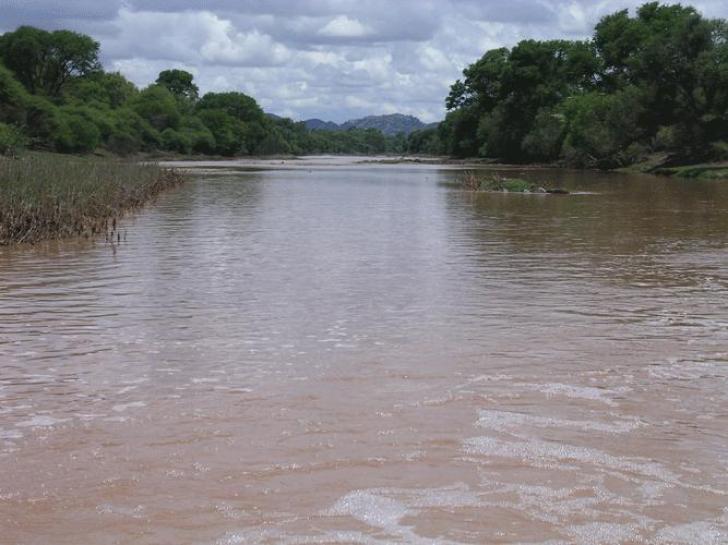
Zimbabwe's national water security has received a major boost, with dam levels rising to an average of 93.4%, signalling a strong recovery driven by the 2025/26 rainy season.
Latest figures released by the Zimbabwe National Water Authority (ZINWA) show that, as of 13 April 2026, the country is holding approximately 7,589.4 million cubic metres of water out of a total capacity of 8,129,148 million cubic metres.
Although this reflects a slight weekly dip of 0.1%, it marks a significant 22.9% increase from November 2025, highlighting improved inflows across the country's major reservoirs.
Water levels are high across most catchments, with the Runde Catchment leading at 99.7% capacity, followed closely by Gwayi at 98.5% and Sanyati at 97.5%. Other key catchments, including Save (92.0%), Mzingwane (87.6%) and Manyame (81.9%), are also performing strongly, while Mazowe remains comparatively lower at 69.3%.
Authorities reported that 98 out of the 154 monitored dams — about 64% — are now full or spilling, having reached or exceeded 99.9% capacity. This development is expected to secure water supply for urban centres and support irrigation schemes ahead of the winter cropping season.
Despite the positive outlook, ZINWA noted that 12 dams remain at critical levels, with storage below 50%, indicating uneven distribution in some areas.
The figures exclude Lake Kariba, the country's largest reservoir, whose usable storage currently stands at 29.0%. Its lower level continues to underscore the importance of coordinated regional management of the Zambezi River.
Overall, the improved dam levels provide a strong buffer for domestic use, agriculture and industry. ZINWA has expressed confidence that most towns and cities now have adequate water supplies to last through the year.
However, authorities have urged continued caution, encouraging households and farmers to use water responsibly, stressing that despite the abundance, water remains a finite and strategically important resource.
Latest figures released by the Zimbabwe National Water Authority (ZINWA) show that, as of 13 April 2026, the country is holding approximately 7,589.4 million cubic metres of water out of a total capacity of 8,129,148 million cubic metres.
Although this reflects a slight weekly dip of 0.1%, it marks a significant 22.9% increase from November 2025, highlighting improved inflows across the country's major reservoirs.
Water levels are high across most catchments, with the Runde Catchment leading at 99.7% capacity, followed closely by Gwayi at 98.5% and Sanyati at 97.5%. Other key catchments, including Save (92.0%), Mzingwane (87.6%) and Manyame (81.9%), are also performing strongly, while Mazowe remains comparatively lower at 69.3%.
Despite the positive outlook, ZINWA noted that 12 dams remain at critical levels, with storage below 50%, indicating uneven distribution in some areas.
The figures exclude Lake Kariba, the country's largest reservoir, whose usable storage currently stands at 29.0%. Its lower level continues to underscore the importance of coordinated regional management of the Zambezi River.
Overall, the improved dam levels provide a strong buffer for domestic use, agriculture and industry. ZINWA has expressed confidence that most towns and cities now have adequate water supplies to last through the year.
However, authorities have urged continued caution, encouraging households and farmers to use water responsibly, stressing that despite the abundance, water remains a finite and strategically important resource.
Source - newsday
Join the discussion
Loading comments…





