News / National
RBZ warns miners as it tightens lithium export compliance
25 Jun 2026 at 20:08hrs |
0 Views
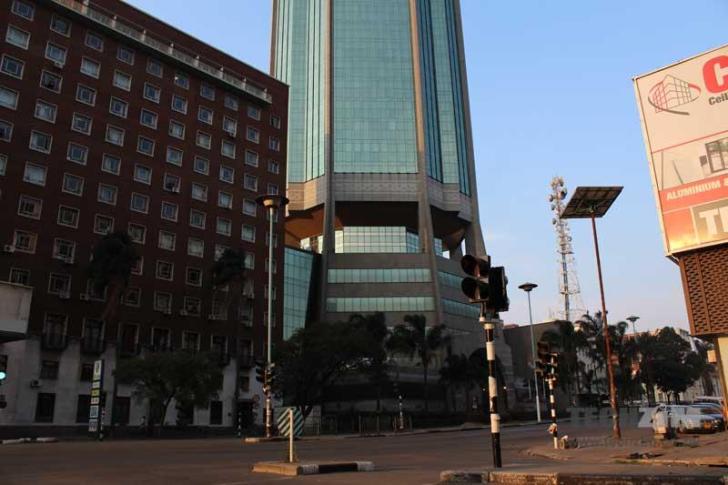
The Reserve Bank of Zimbabwe (RBZ) has warned the mining sector that compliance with export regulations is non-negotiable as it intensifies oversight of the country's fast-growing lithium industry to ensure Zimbabwe derives maximum value from its mineral resources.
Speaking at the Chamber of Mines Annual Conference in Victoria Falls, RBZ Deputy Governor Dr Innocent Matshe defended recent government policy interventions, including the February 2026 suspension of raw mineral and lithium concentrate exports, saying the measures were necessary to safeguard the national interest.
"Sometimes when we say policy changes unexpectedly, I think it's slightly misplaced," Dr Matshe said.
"When we saw, in February 2026, the Minister of Mines suspending the export of all raw minerals and lithium concentrates, it was not because of a lack of reason. It was because there was concern that the measure needed to be taken in the national interest, and it reaffirmed government's commitment to transparency, in-country value addition, beneficiation, compliance and accountability."
Dr Matshe revealed that Zimbabwe exported 1.5 million tonnes of lithium in 2025, generating export earnings of US$488 million.
He said the sector had continued its strong performance in 2026, with export receipts of US$205 million already recorded.
Lithium has now become Zimbabwe's third-largest export commodity.
"It is a welcome development that the industry is developing this quickly, and it will go a long way towards supporting macroeconomic stability," he said.
While describing the lithium industry as largely compliant with central bank regulations, Dr Matshe identified several areas of concern that continue to attract the attention of regulators.
These include overdue export receipts amounting to US$15.8 million, inconsistencies between export documentation, the issuance of credit notes that complicate the tracking of mineral exports, transfer pricing through related-party transactions and the undervaluation of exported minerals.
"Most countries publish their import data, and we take it that the import data is accurate. So when we reconcile any source of import data in a second country with our export data and they don't tally, it's already a red flag," Dr Matshe said.
"The Reserve Bank will go to each and every export destination to make sure that our data ties."
Turning to Zimbabwe's foreign currency surrender requirements, under which exporters are required to surrender 30% of their foreign currency earnings to the central bank, Dr Matshe said the policy remains an important mechanism for distributing foreign exchange throughout the economy.
However, he raised concerns over what he described as "surrender recycling", where some companies convert the surrendered local currency proceeds back into foreign currency through the willing-buyer willing-seller foreign exchange market.
"As soon as companies receive their surrender, they go to the willing-buyer willing-seller market and turn that into foreign currency, and who knows what happens with that," he said.
"It's important for the Reserve Bank to then trace where that foreign currency goes and how it is utilised."
Dr Matshe also rejected claims that the central bank manipulates the exchange rate.
"We publish data on a quarterly basis in the centre spread of all major daily newspapers in this country. If there is an actuary or a practitioner in data science, I invite them to come and look at the data," he said.
The Deputy Governor also highlighted operational challenges encountered by RBZ compliance teams at the country's border posts.
"When our teams from compliance get to the border, all the contracts disappear. When they go to lunch, you will find a mile-long queue. When they come back from lunch, they all disappear again," he said.
He said the central bank was intensifying efforts to detect falsified export documentation and eliminate collusion between exporters and foreign buyers aimed at circumventing exchange control regulations.
Despite the tougher compliance stance, Dr Matshe emphasised that the RBZ remains committed to constructive engagement with the mining industry.
"The Reserve Bank continues to implement enhanced compliance measures, but it keeps its doors open to all of us and assures everyone that it operates an open-door policy, particularly for our associations," he said.
His remarks underscore the central bank's determination to tighten oversight of Zimbabwe's mineral exports while promoting value addition, improving transparency and ensuring the country retains a greater share of the benefits from its rapidly expanding lithium industry.
Speaking at the Chamber of Mines Annual Conference in Victoria Falls, RBZ Deputy Governor Dr Innocent Matshe defended recent government policy interventions, including the February 2026 suspension of raw mineral and lithium concentrate exports, saying the measures were necessary to safeguard the national interest.
"Sometimes when we say policy changes unexpectedly, I think it's slightly misplaced," Dr Matshe said.
"When we saw, in February 2026, the Minister of Mines suspending the export of all raw minerals and lithium concentrates, it was not because of a lack of reason. It was because there was concern that the measure needed to be taken in the national interest, and it reaffirmed government's commitment to transparency, in-country value addition, beneficiation, compliance and accountability."
Dr Matshe revealed that Zimbabwe exported 1.5 million tonnes of lithium in 2025, generating export earnings of US$488 million.
He said the sector had continued its strong performance in 2026, with export receipts of US$205 million already recorded.
Lithium has now become Zimbabwe's third-largest export commodity.
"It is a welcome development that the industry is developing this quickly, and it will go a long way towards supporting macroeconomic stability," he said.
While describing the lithium industry as largely compliant with central bank regulations, Dr Matshe identified several areas of concern that continue to attract the attention of regulators.
These include overdue export receipts amounting to US$15.8 million, inconsistencies between export documentation, the issuance of credit notes that complicate the tracking of mineral exports, transfer pricing through related-party transactions and the undervaluation of exported minerals.
"Most countries publish their import data, and we take it that the import data is accurate. So when we reconcile any source of import data in a second country with our export data and they don't tally, it's already a red flag," Dr Matshe said.
"The Reserve Bank will go to each and every export destination to make sure that our data ties."
However, he raised concerns over what he described as "surrender recycling", where some companies convert the surrendered local currency proceeds back into foreign currency through the willing-buyer willing-seller foreign exchange market.
"As soon as companies receive their surrender, they go to the willing-buyer willing-seller market and turn that into foreign currency, and who knows what happens with that," he said.
"It's important for the Reserve Bank to then trace where that foreign currency goes and how it is utilised."
Dr Matshe also rejected claims that the central bank manipulates the exchange rate.
"We publish data on a quarterly basis in the centre spread of all major daily newspapers in this country. If there is an actuary or a practitioner in data science, I invite them to come and look at the data," he said.
The Deputy Governor also highlighted operational challenges encountered by RBZ compliance teams at the country's border posts.
"When our teams from compliance get to the border, all the contracts disappear. When they go to lunch, you will find a mile-long queue. When they come back from lunch, they all disappear again," he said.
He said the central bank was intensifying efforts to detect falsified export documentation and eliminate collusion between exporters and foreign buyers aimed at circumventing exchange control regulations.
Despite the tougher compliance stance, Dr Matshe emphasised that the RBZ remains committed to constructive engagement with the mining industry.
"The Reserve Bank continues to implement enhanced compliance measures, but it keeps its doors open to all of us and assures everyone that it operates an open-door policy, particularly for our associations," he said.
His remarks underscore the central bank's determination to tighten oversight of Zimbabwe's mineral exports while promoting value addition, improving transparency and ensuring the country retains a greater share of the benefits from its rapidly expanding lithium industry.
Source - Mining Zimbabwe
Join the discussion
Loading comments…





