Opinion / Columnist
There's a simple way to constitutionally avoid a referendum – term extension shouldn't benefit Mnangagwa
05 Apr 2026 at 13:13hrs |
0 Views
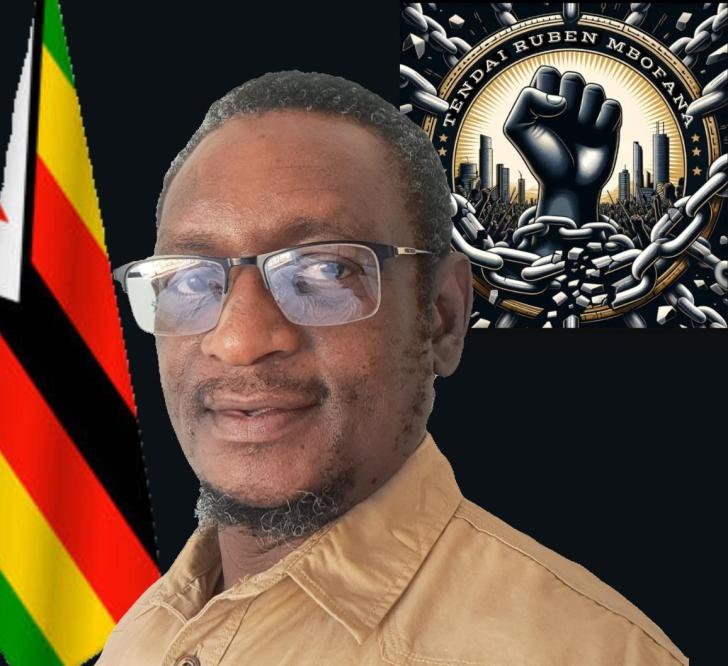
The current political atmosphere in Zimbabwe is thick with the scent of a familiar desperation.
As the whispers of Constitutional Amendment (No. 3) Bill, or CAB3, grow into a cacophonous roar, the nation finds itself at a crossroads between the preservation of democratic integrity and the unchecked expansion of personal power.
If you value my social justice advocacy and writing, please consider a financial contribution to keep it going. Contact me on WhatsApp: +263 715 667 700 or Email: mbofana.tendairuben73@gmail.com
The proposal to extend the presidential term from five to seven years is being framed by its proponents as a necessity for national development and the fulfillment of the heralded Vision 2030.
However, this narrative carefully dances around the most glaring legal hurdle in our supreme law—Section 328 of the Constitution.
This section is an intentional safeguard, a democratic tripwire designed to prevent leaders from rewriting the rules of the game to extend their own stay.
If those pushing for this change are truly acting in the interest of the state rather than the individual, there is a remarkably simple and constitutionally sound solution that would bypass the need for a national referendum.
They should simply make the extension effective for the next president following the 2028 elections.
The Constitution is explicit in its demand that any amendment extending the length of time a person may hold office cannot benefit the incumbent.
To circumvent this, a national referendum is required, essentially asking the people to waive a protection that was put in place to prevent the very scenario we now face.
If the proponents of CAB3 are sincere in their belief that a seven-year term is superior for policy consistency and long-term planning, then the identity of the person holding that office should be irrelevant.
If the goal is the betterment of the Zimbabwean governance framework, then the law should be changed for the office, not for the man.
By delaying the implementation of this extension until 2028, the ruling party would prove its commitment to the rule of law while achieving its stated legislative goal.
Given the current political landscape, where the opposition has been fractured and rendered virtually non-existent through internal squabbles and external pressures, it is almost certain that the next president in 2028 would still hail from within the ranks of ZANU PF.
If the party truly believes its policies are the only viable path for Zimbabwe, why is there such a panicked insistence that only President Emmerson Mnangagwa can be the one to see them through?
A political party that views itself as a national institution should have the confidence to know that its programs can be carried forward by any of its leaders.
To suggest otherwise is to admit that the party is not a vessel for national progress, but a personality cult centered on a single individual.
The narrative of "Vision 2030" is frequently brandished as a shield against any criticism of term extensions.
We are told that programs like road rehabilitation, the construction of traffic interchanges, and the building of new dams require a continuity of leadership that only the current president can provide.
This is a fallacy that insults the intelligence of the Zimbabwean people and the competence of the entire government machinery.
Development is not the miraculous work of a single "strongman" but the result of institutional planning, technocratic expertise, and the labor of the citizenry.
If Vision 2030 is a genuine national program, its success cannot and should not be tethered to the heartbeat of one man.
The roads will still be paved, the dams will still hold water, and the interchanges will still facilitate trade regardless of who sits in the State House, provided the institutions of the state are allowed to function.
Furthermore, we must ask what "development" truly means in the context of the "Second Republic" that came to power in 2017.
While high-profile infrastructure projects make for excellent photo opportunities and social media campaigns, they have done little to alleviate the crushing poverty that defines the lives of ordinary Zimbabweans.
The reality on the ground is a stark contrast to the glossy brochures of Vision 2030.
For the majority of the population, the years since 2017 have been marked by hyperinflation, a crumbling healthcare system, and a job market that offers little hope for the youth.
When a regime asks for more time to "complete its programs," the citizenry has every right to ask why those programs have so far resulted in diminished purchasing power and increased social precarity.
If the push for CAB3 continues with the insistence that President Mnangagwa must be the one to benefit, then the mask of "national interest" will have officially slipped.
It will reveal a much uglier truth—that this entire legislative maneuver is nothing more than the fulfillment of self-serving ambitions.
It is about a small circle of cronies who have enriched themselves at the expense of the nation and fear the loss of patronage that a transition of power might bring.
They are not protecting a vision for the nation.
They are protecting their access to the national trough.
Zimbabweans are tired of being told that their rights and their Constitution must be sacrificed on the altar of a "stability" that only benefits the elite.
If the term extension is such a brilliant idea for the future of the country, then let it be a legacy left for the next leader.
By removing the incumbent from the equation, the government would remove the suspicion of greed and the necessity of a referendum.
However, the reluctance to take this simple, logical path speaks volumes.
It suggests that the drive for more time has nothing to be with the completion of dams or the paving of roads, and everything to do with the consolidation of an eternal presidency.
In the end, the ordinary citizen gains nothing from two extra years of the status quo, and the nation loses the very soul of its constitutional democracy.
© Tendai Ruben Mbofana is a social justice advocate and writer. To directly receive his articles please join his WhatsApp Channel on: https://whatsapp.com/channel/0029VaqprWCIyPtRnKpkHe08
As the whispers of Constitutional Amendment (No. 3) Bill, or CAB3, grow into a cacophonous roar, the nation finds itself at a crossroads between the preservation of democratic integrity and the unchecked expansion of personal power.
If you value my social justice advocacy and writing, please consider a financial contribution to keep it going. Contact me on WhatsApp: +263 715 667 700 or Email: mbofana.tendairuben73@gmail.com
The proposal to extend the presidential term from five to seven years is being framed by its proponents as a necessity for national development and the fulfillment of the heralded Vision 2030.
However, this narrative carefully dances around the most glaring legal hurdle in our supreme law—Section 328 of the Constitution.
This section is an intentional safeguard, a democratic tripwire designed to prevent leaders from rewriting the rules of the game to extend their own stay.
If those pushing for this change are truly acting in the interest of the state rather than the individual, there is a remarkably simple and constitutionally sound solution that would bypass the need for a national referendum.
They should simply make the extension effective for the next president following the 2028 elections.
The Constitution is explicit in its demand that any amendment extending the length of time a person may hold office cannot benefit the incumbent.
To circumvent this, a national referendum is required, essentially asking the people to waive a protection that was put in place to prevent the very scenario we now face.
If the proponents of CAB3 are sincere in their belief that a seven-year term is superior for policy consistency and long-term planning, then the identity of the person holding that office should be irrelevant.
If the goal is the betterment of the Zimbabwean governance framework, then the law should be changed for the office, not for the man.
By delaying the implementation of this extension until 2028, the ruling party would prove its commitment to the rule of law while achieving its stated legislative goal.
Given the current political landscape, where the opposition has been fractured and rendered virtually non-existent through internal squabbles and external pressures, it is almost certain that the next president in 2028 would still hail from within the ranks of ZANU PF.
If the party truly believes its policies are the only viable path for Zimbabwe, why is there such a panicked insistence that only President Emmerson Mnangagwa can be the one to see them through?
A political party that views itself as a national institution should have the confidence to know that its programs can be carried forward by any of its leaders.
To suggest otherwise is to admit that the party is not a vessel for national progress, but a personality cult centered on a single individual.
The narrative of "Vision 2030" is frequently brandished as a shield against any criticism of term extensions.
We are told that programs like road rehabilitation, the construction of traffic interchanges, and the building of new dams require a continuity of leadership that only the current president can provide.
This is a fallacy that insults the intelligence of the Zimbabwean people and the competence of the entire government machinery.
If Vision 2030 is a genuine national program, its success cannot and should not be tethered to the heartbeat of one man.
The roads will still be paved, the dams will still hold water, and the interchanges will still facilitate trade regardless of who sits in the State House, provided the institutions of the state are allowed to function.
Furthermore, we must ask what "development" truly means in the context of the "Second Republic" that came to power in 2017.
While high-profile infrastructure projects make for excellent photo opportunities and social media campaigns, they have done little to alleviate the crushing poverty that defines the lives of ordinary Zimbabweans.
The reality on the ground is a stark contrast to the glossy brochures of Vision 2030.
For the majority of the population, the years since 2017 have been marked by hyperinflation, a crumbling healthcare system, and a job market that offers little hope for the youth.
When a regime asks for more time to "complete its programs," the citizenry has every right to ask why those programs have so far resulted in diminished purchasing power and increased social precarity.
If the push for CAB3 continues with the insistence that President Mnangagwa must be the one to benefit, then the mask of "national interest" will have officially slipped.
It will reveal a much uglier truth—that this entire legislative maneuver is nothing more than the fulfillment of self-serving ambitions.
It is about a small circle of cronies who have enriched themselves at the expense of the nation and fear the loss of patronage that a transition of power might bring.
They are not protecting a vision for the nation.
They are protecting their access to the national trough.
Zimbabweans are tired of being told that their rights and their Constitution must be sacrificed on the altar of a "stability" that only benefits the elite.
If the term extension is such a brilliant idea for the future of the country, then let it be a legacy left for the next leader.
By removing the incumbent from the equation, the government would remove the suspicion of greed and the necessity of a referendum.
However, the reluctance to take this simple, logical path speaks volumes.
It suggests that the drive for more time has nothing to be with the completion of dams or the paving of roads, and everything to do with the consolidation of an eternal presidency.
In the end, the ordinary citizen gains nothing from two extra years of the status quo, and the nation loses the very soul of its constitutional democracy.
© Tendai Ruben Mbofana is a social justice advocate and writer. To directly receive his articles please join his WhatsApp Channel on: https://whatsapp.com/channel/0029VaqprWCIyPtRnKpkHe08
Source - Tendai Ruben Mbofana
All articles and letters published on Bulawayo24 have been independently written by members of Bulawayo24's community. The views of users published on Bulawayo24 are therefore their own and do not necessarily represent the views of Bulawayo24. Bulawayo24 editors also reserve the right to edit or delete any and all comments received.
Join the discussion
Loading comments…





